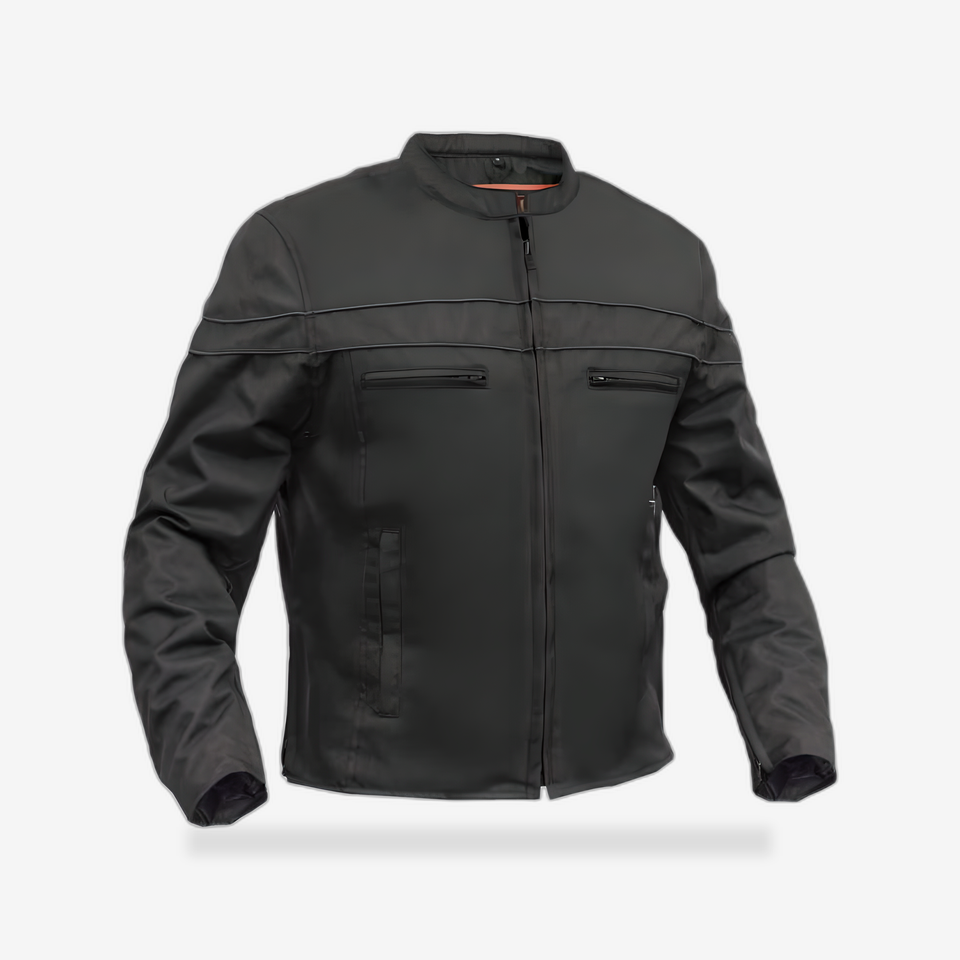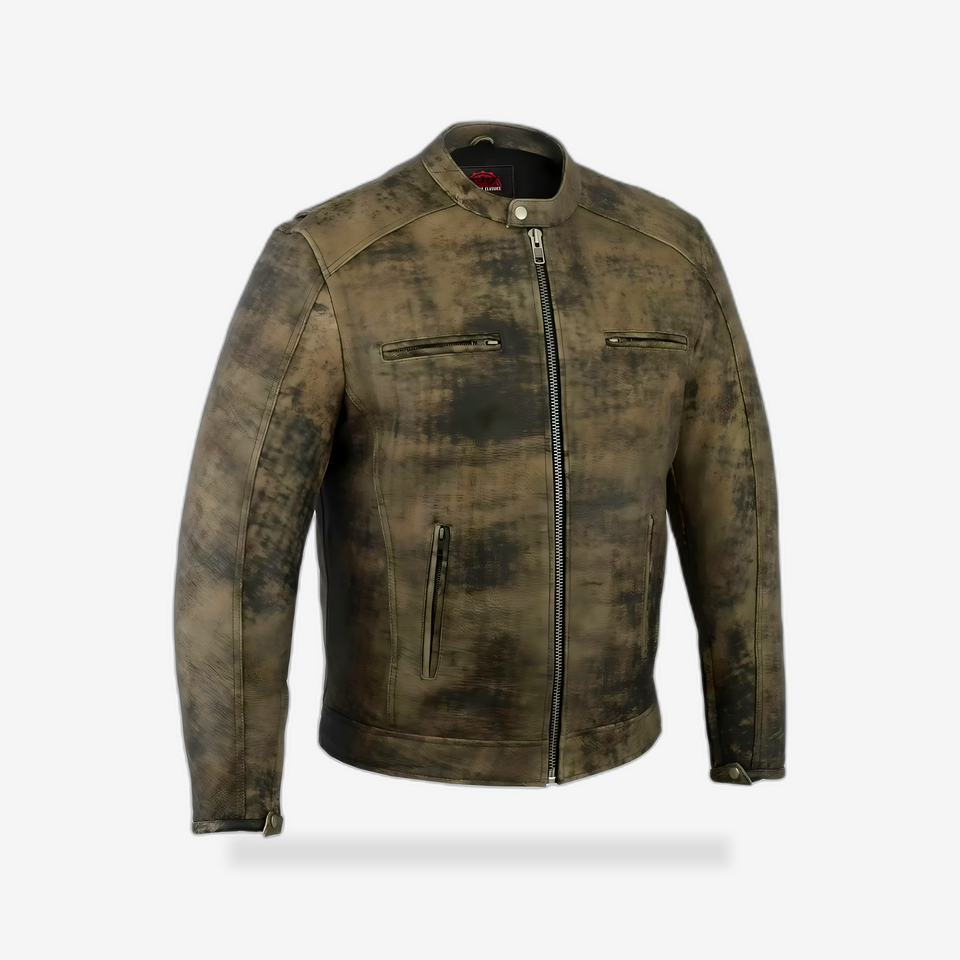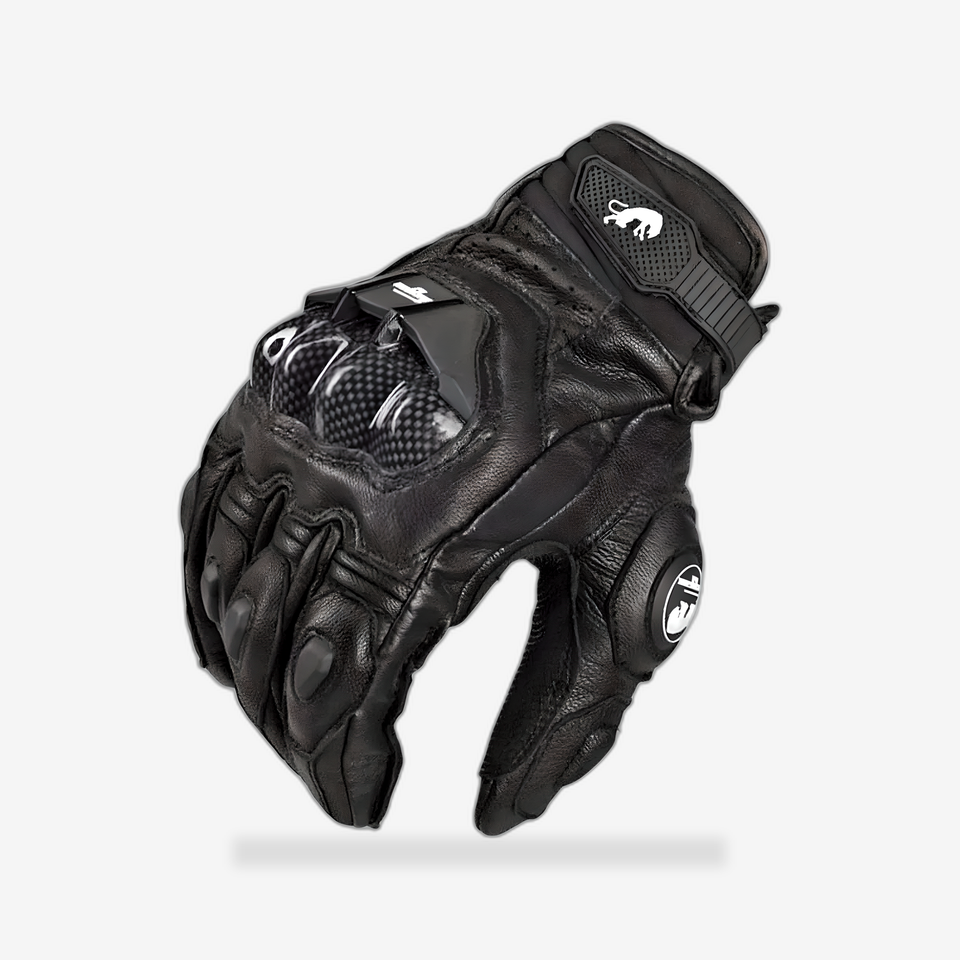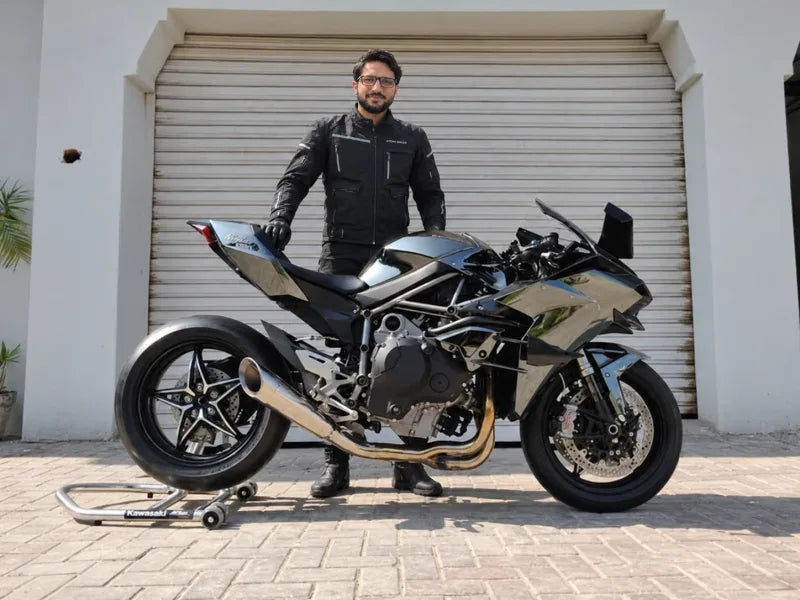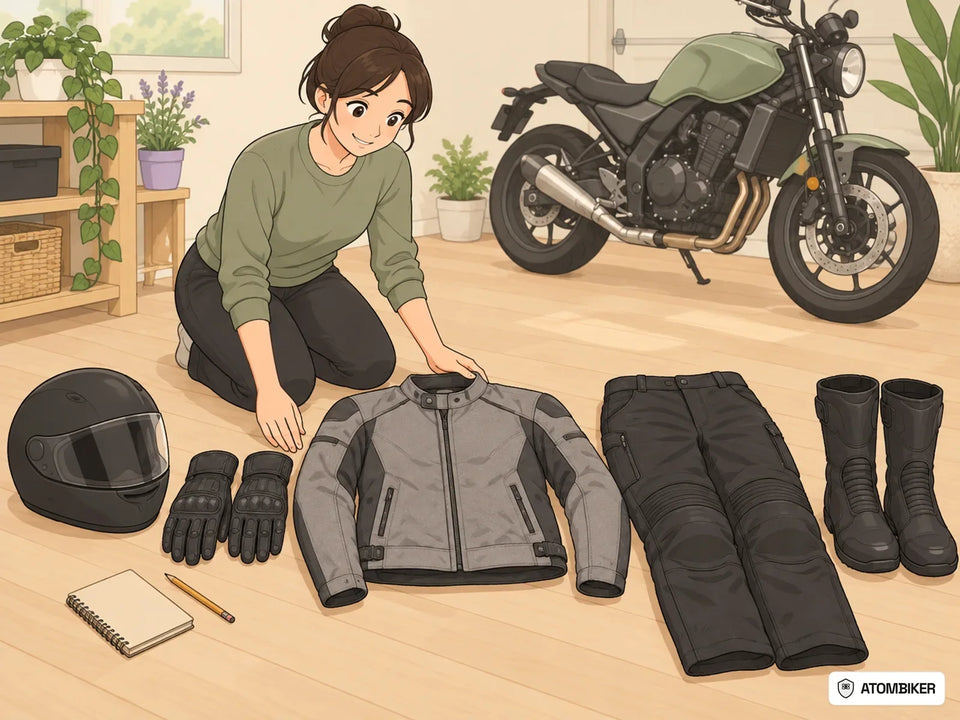
To budget for motorcycle gear, fund a certified helmet that fits first, gloves and boots next, and a jacket and pants with armor last, and buy a certified version of all five before your first ride. Spend extra on certification, fit and armor, and save on shell material, brand names, graphics and comfort extras.
The helmet leads because helmets are about 37% effective at preventing motorcyclist deaths, according to a National Highway Traffic Safety Administration (NHTSA) study cited by the Insurance Institute for Highway Safety (IIHS). A second helmet standard, Level 2 armor and a higher garment class are the best uses of extra money, while carbon shells, built-in Bluetooth and leather (where textile carries the same class) are the safest cuts. A helmet is the one piece never to buy used. The jacket usually takes the largest share and the gloves the smallest, and since arms and legs are hurt more often than the head in NHTSA trauma data, no piece of the base kit waits.
How should you budget for motorcycle gear?
Budget for motorcycle gear by funding it in three steps: the helmet first, gloves and boots second, and the jacket and pants third. The order decides where your best money goes, not which piece you skip, so you still buy a certified version of all five before the first ride.
Each step of the spend order has its own reason.
- A certified helmet takes the first money in a gear budget, because helmets save lives.
- They're about 37% effective at preventing motorcyclist deaths, according to a 2004 NHTSA study by Deutermann that IIHS cites in its 2024 fatality facts.
- Gloves and boots take the next money in a gear budget, because your hands and feet work the controls on every ride and take direct hits in a fall. A fall onto an outstretched hand is the usual way the scaphoid, a small wrist bone, breaks, and riding boots add ankle protection and crush resistance that street shoes lack.
- A jacket and pants take the last step in a gear budget and usually the largest share of it, because together they cover the most skin and carry the armor for your shoulders, elbows, knees and hips.
Money left over after the base kit goes back to the top of the order. A better-fitting helmet comes before a pricier jacket.
Where should you spend more on motorcycle gear?
Spend more on motorcycle gear where the extra money buys a tested upgrade or a better fit: a helmet with a second standard, Level 2 armor, a back protector, a higher garment class and gear matched to your climate. These five upgrades are listed from most to least important.
- A helmet with ECE 22.06 on top of the DOT label is the first riding gear upgrade worth paying for. ECE 22.06, the UN Economic Commission for Europe helmet regulation, adds an oblique impact test for rotational forces that FMVSS 218, the federal standard behind the DOT label, doesn't have, and fit to your head shape matters as much, as our guide to choosing a motorcycle helmet by riding style and head shape explains.
- Level 2 armor in riding gear lets less force through than Level 1 under EN 1621-1, the European standard for limb joint impact protectors, so the upgrade pays off at the shoulders, elbows, knees and hips.
- A back protector certified to EN 1621-2, the European standard for back protectors, is a riding gear upgrade some jackets leave to you, since they ship with an empty back pocket and sell the insert separately.
- A higher class under EN 17092, the European standard for protective motorcycle garments, buys more tested protection in riding jackets and pants. Class AAA is the highest, and both AA and AAA require elbow, shoulder, knee and hip protectors.
- Riding gear matched to your climate earns its price by getting worn. A jacket too hot for an Arizona July stays in the closet while you ride in a T-shirt.
Where can you safely save on motorcycle gear?
You can safely save on motorcycle gear wherever the money buys weight, looks or convenience instead of a tested result. Six savings cut the price of riding gear without cutting its tested protection.
- Helmet shell material is a safe saving, because polycarbonate, fiberglass composite and carbon fiber helmets face the same DOT and ECE tests, and carbon mainly buys lower weight.
- Helmet paint and graphics are a safe saving, since a solid-color version of a certified helmet model passes the same tests as its graphic versions.
- A big brand name on riding gear is a safe saving when a lower-priced item carries the same certification label and level.
- Leather riding gear is a safe saving when a textile or denim alternative carries the same EN 17092 class, because the class is the tested result, not the hide. Textile riding pants and riding jeans are rated on the same classes as leather, as our guide to motorcycle pants types shows.
- Comfort electronics in riding gear, such as built-in Bluetooth and heated gloves, are a safe saving until the base kit is paid for, because they add comfort, not protection.
- Riding gear for seasons you don't ride yet is a safe saving. Buy for the season you start in, and add a mesh jacket or winter gloves when the weather turns.
What should you never buy cheap or used?
Never buy a used motorcycle helmet, and never buy any helmet without a genuine DOT label, however low the price. Those are the two buys where saving money can cost protection you can't see.
A used helmet hides its history. The Snell Memorial Foundation says only a trained professional can reliably judge helmet damage and that a helmet involved in an impact while in use needs replacing. A used liner has also packed down to someone else's head.
Novelty helmets are the cheap trap. The US Department of Transportation's guide to unsafe helmets (DOT HS 807 880, revised 2004) says they're sold to get around FMVSS 218, often weigh 1 lb (0.45 kg) or less against about 3 lb (1.4 kg) for a compliant helmet, and sometimes carry counterfeit DOT stickers.
Age counts as much as history. Every replacement trigger, including crash damage and the five-year guideline, is covered in our guide on when to replace a motorcycle helmet.
How does a gear budget split by item?
A balanced gear budget gives the largest share to the jacket, large shares to the helmet and boots, a medium share to the pants and the smallest share to the gloves, even though the helmet is bought first. The table pairs each item's place in the spend order with its share and the label that share has to buy.
| Gear item | Spend order | Share of the budget | Label to check | What the share pays for |
|---|---|---|---|---|
| Helmet | 1st | Large | DOT FMVSS 218, ideally plus ECE 22.06 | Head protection in a shell that fits your head shape |
| Gloves | 2nd | Smallest | EN 13594 | Palm abrasion, knuckle protection and grip |
| Boots | 2nd | Large | EN 13634 | Ankle protection and a sole that resists crushing |
| Jacket | 3rd | Largest | EN 17092 class, EN 1621-1 armor | The most coverage, plus shoulder, elbow and back armor |
| Pants | 3rd | Medium | EN 17092 class, EN 1621-1 armor | Knee and hip armor and abrasion protection over the seat |
EN 13594 is the European standard for motorcycle gloves, and EN 13634 is the European standard for motorcycle boots. Your own split shifts with how you ride. A Seattle commuter moves money toward waterproof textile, and a track-day rider moves it toward the helmet, the gloves and a leather suit.
How do you build a full kit in stages?
Build a full kit in stages by buying a certified base version of all five pieces before your first ride, then adding second-season gear and upgrades one piece at a time. No piece of the base kit waits, because arms and legs get hurt more often than the head: among motorcyclists treated at US level I and II trauma centers, NHTSA's 2008 study found lower-extremity injuries in about 47% of patients, upper-extremity injuries in about 40% and head injuries in about 35%.
A staged kit grows in three steps.
- Stage one of a riding kit is the certified base: a DOT helmet, gloves, over-the-ankle boots, and a jacket and pants with armor, all bought before the first ride.
- Stage two of a riding kit adds second-season gear, such as a mesh jacket for summer or insulated gloves for winter, before that season starts.
- Stage three of a riding kit applies the upgrades listed above in spend order, helmet first, and leaves comfort extras such as a communicator for last.
The full first-kit list sits in our essential motorcycle gear checklist for new riders.
Is cheap motorcycle gear safe?
Yes, cheap motorcycle gear is safe when it carries the certification for its type, because a low-priced item with a given label passed the same test as an expensive item with that label. A DOT helmet at any price met FMVSS 218. Beyond helmets, the US has no federal standard for riding jackets, pants, gloves or boots, so the EN label is your only proof, and what a boot's EN 13634 rating covers is set out in our guide to motorcycle boot types. No gear prevents every injury.
When is the best time to buy gear?
The best time to buy motorcycle gear is a few weeks before you need it, which leaves time to wear it at home and send it back if the fit is wrong. AtomBiker's 30-day returns cover that window, so check the return conditions before you ride in anything new. Don't put off replacing a crashed helmet while you wait for a sale.
Where can you see best-selling motorcycle gear?
AtomBiker, a US online store for motorcycle helmets, jackets, gloves, boots and pants, groups its best-selling motorcycle gear in one collection. As of October 2026, its product pages price the Women's Protective Motorcycle Riding Jeans at $72.99-$74.99, the Horizon CE-Certified Riding Jacket at $87.45, the Sentinel Premium Cowhide Touring Gloves at $139.99, the Blacktread Men's Leather Motorcycle Boots at $269.95, the Carbon Fiber Full Face Racing Helmet at $349.99 and the Iron Warrior Leather Motorcycle Jacket at $449.95-$479.95.
Price follows material more than protection. The $87.45 Horizon lists CE-certified shoulder and elbow protectors on its page, so read each page's armor and certification lines before you compare prices.
Frequently asked questions
How much should a beginner spend on motorcycle gear?
A beginner should spend enough to buy a certified version of all five pieces before the first ride, with the best-fitting helmet the budget allows. Totals vary widely with materials and certification levels, so price each piece against its label instead of chasing a target number.
Should you spend more on a helmet or a jacket?
Spend more on the helmet first, until it fits your head shape and carries DOT plus ECE 22.06. After that, extra money does the most in the jacket's armor and class, and our guide to motorcycle jacket types compares what each style includes.
Are cheap motorcycle gloves worth buying?
Yes, cheap motorcycle gloves are worth buying when they carry an EN 13594 label and fit snugly. A glove without that label is a fashion or work glove, whatever it costs, and our guide to motorcycle glove types by riding style shows which features each riding style needs.
Is it OK to buy used motorcycle gear?
No, a used helmet is never a safe buy, and other used gear needs a close inspection first. Check a used jacket or pants for torn or restitched seams, worn-through panels and missing or cracked armor, and walk away from anything with crash damage.
Does expensive motorcycle gear protect better?
No, a higher price doesn't guarantee more protection, because protection is set by the test an item passed, not by what it costs. Extra money often buys lighter materials, more features or a brand name, so compare the certification label and level first and the price second.
Shop this guide
Start with the right questions.
Compare construction, fit and features. Open each product for its available sizes, current price and stated certifications.