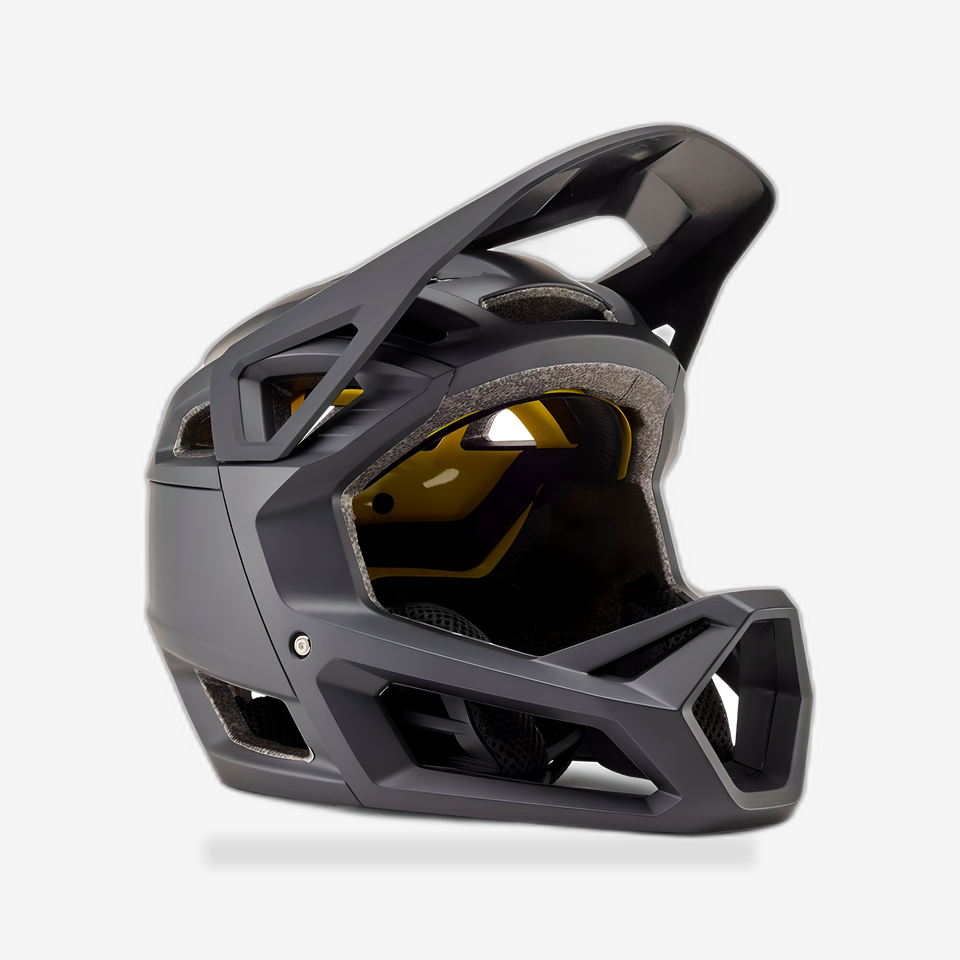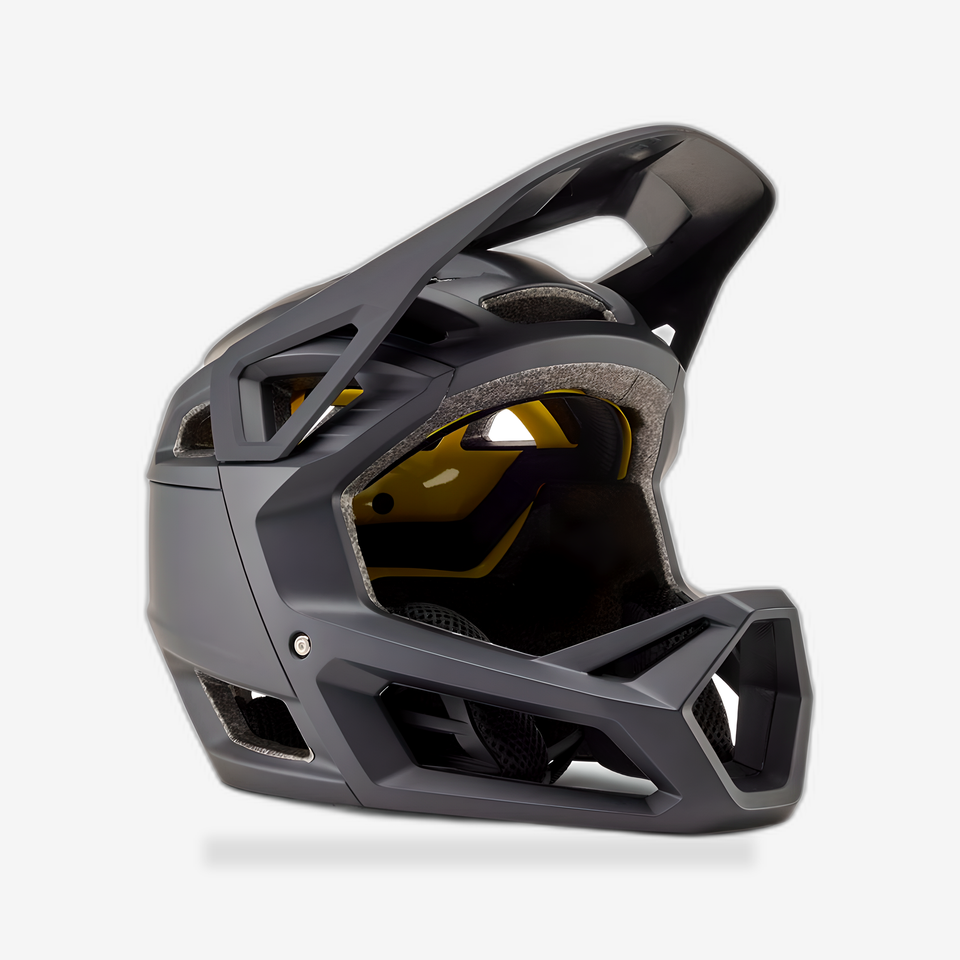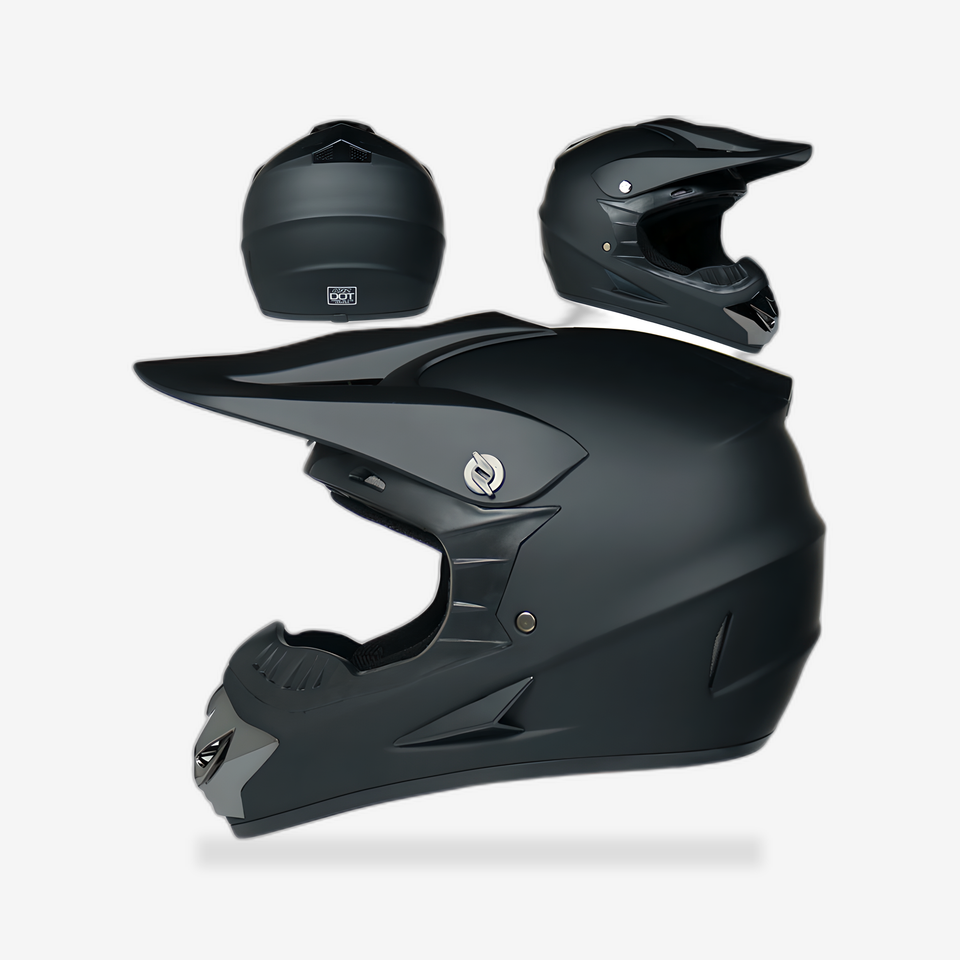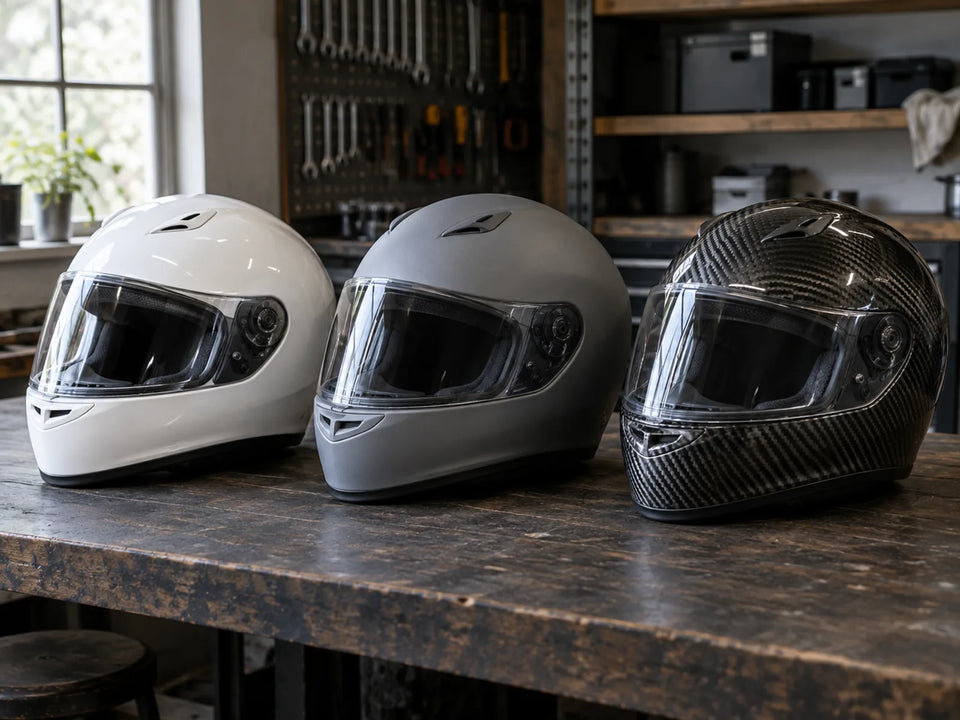

No helmet shell material is safest by itself: a DOT or ECE 22.06 certified helmet passed its impact tests whatever the shell is made of. Material changes weight, cost and feel. Polycarbonate and ABS shells are the cheapest and usually the heaviest, fiberglass composite sits in the middle, and carbon fiber is the lightest and most expensive.
Polycarbonate and ABS are molded thermoplastics, the usual shells on lower-priced helmets. Fiberglass composite shells are glass-fiber cloth set in resin, and carbon fiber shells swap in carbon to cut weight. In a 2002 impact modeling study, glass and carbon shells performed alike, so carbon earns its price through lower weight rather than extra protection.
Which helmet shell material is best?
The best helmet shell material is whichever one comes on a helmet that fits your head and carries the certification you want, because a certified helmet has passed its impact tests whatever the shell is made of. Choose in this order: certification, fit, then shell material for weight and budget.
The material question lives outside the test. The Snell Memorial Foundation says its standards don't consider weight, bulk, ventilation, noise, comfort, style or fit quality, and shell material mostly changes the first two.
That sets the priority. A polycarbonate helmet that fits well is a better buy than a carbon fiber helmet that doesn't, and a lighter shell only pays off once the helmet already sits right on your head.
What is a polycarbonate or ABS helmet shell?
A polycarbonate or ABS helmet shell is a one-piece outer shell molded from thermoplastic, a plastic that softens with heat and sets in a mold, and it's the usual shell on lower-priced helmets. Polycarbonate (PC) and acrylonitrile butadiene styrene (ABS) are the two common choices.
Price is the main draw. A 2021 Composites Part B paper by Gohel and colleagues lists both among the conventional helmet shell plastics and notes that composite shells cost more to make, which keeps PC and ABS helmets at the low end of the range.
Weight is the trade. The same paper notes that composites have significantly higher strength and stiffness for their weight than plain thermoplastic shells. A thermoplastic shell needs more material to do the same job, so a PC or ABS helmet usually weighs more than a composite helmet of the same size.
What is a fiberglass composite helmet shell?
A fiberglass composite helmet shell is a shell built from layers of glass-fiber cloth set in resin, often blended with aramid or carbon fibers, and it's the shell behind many premium helmets. Shoei's AIM+ shell, used across its range, combines high-performance fiberglass with lightweight organic fibers.
Composite shells handle a hard hit differently from plastic ones. Besides bending, a composite shell absorbs energy through delamination (layers separating), fiber breakage and resin cracking, according to the 2021 Gohel paper. Its higher stiffness for the weight also helps the shell spread a blow across more of the foam liner underneath.
Makers tune composites with reinforcement where it counts. Arai weaves a Peripheral Belt into its laminated shell to reinforce it without adding shell thickness or weight.
What is a carbon fiber helmet shell?
A carbon fiber helmet shell is a composite shell whose main reinforcing fiber is carbon, laid up in resin the same way as fiberglass, and it's the lightest and most expensive of the common shell materials. Weight is the reason to buy one.
Carbon doesn't make a stronger helmet by default. In a 2002 finite element study of composite motorcycle helmets in Composites Part B, Kostopoulos and colleagues found that glass and carbon fiber shells gave similar results, while Kevlar shells showed more delamination and resin cracking.
Store listings often name a carbon weave such as 3K or 12K. Those numbers describe the size of the carbon fiber bundles in the weave, roughly 3,000 or 12,000 filaments each, not a safety grade.
How do shell materials compare?
Shell materials differ most in weight, cost and how the shell absorbs a hit, and not at all in the certification tests a helmet has to pass.
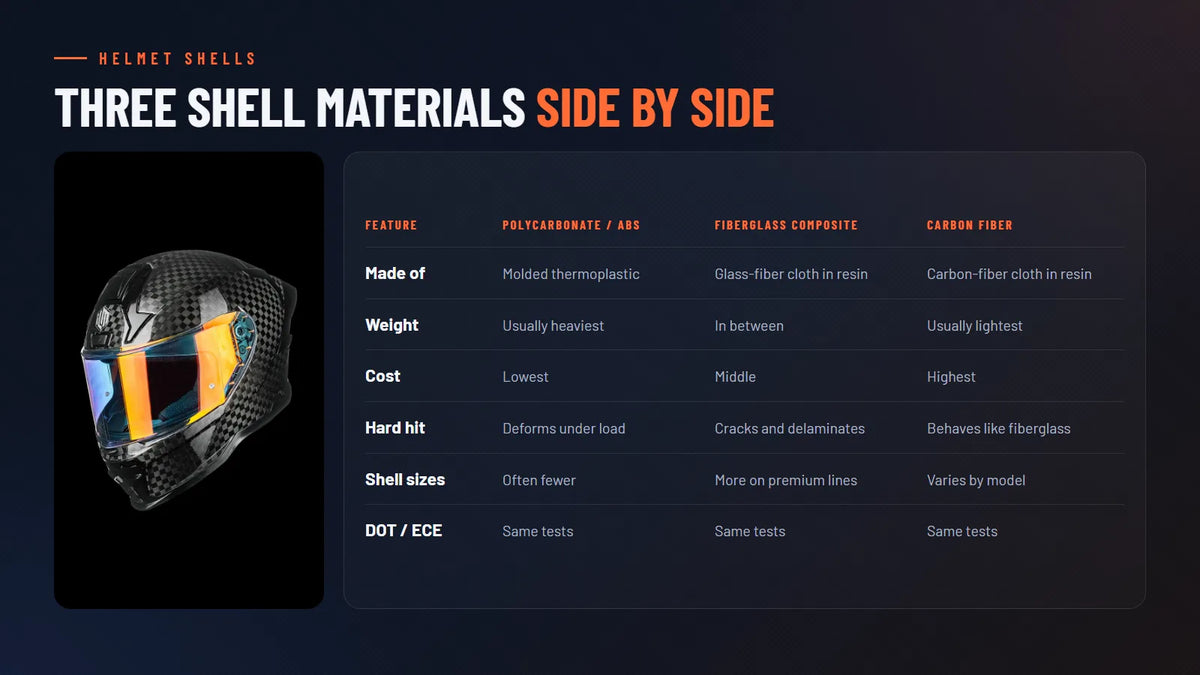
The three shell types compare as follows, with relative ratings instead of model weights, since weight also depends on size, vents and features.
| Feature | Polycarbonate or ABS | Fiberglass composite | Carbon fiber |
|---|---|---|---|
| How it's made | Molded thermoplastic, one piece | Glass-fiber cloth layered in resin, often with aramid or carbon | Carbon-fiber cloth layered in resin |
| Weight at a given size | Usually the heaviest | In between | Usually the lightest |
| Cost | Lowest | Middle | Highest |
| Impact behavior | Deforms under the load | Stiffer; cracks and delaminates in a hard hit | Behaved like fiberglass in a 2002 impact model |
| Durability in use | Tough, but sensitive to some solvents | Strong for its weight; crack damage is permanent | Strong for its weight; crack damage is permanent |
| Shell sizes offered | Often fewer on lower-priced helmets | More common on premium lines (Shoei's RF-1400 uses four) | Varies by model |
| Certification tests | Same DOT and ECE tests | Same DOT and ECE tests | Same DOT and ECE tests |
The shell is only half the system. The foam liner under it does most of the energy absorbing, and because it crushes to protect you once, a crash means a new helmet, as laid out in when to replace a motorcycle helmet.
Is a carbon fiber helmet worth the extra cost?
Yes, a carbon fiber helmet is worth the extra cost for riders who feel helmet weight, such as touring riders on 400-mile days and track riders holding a tuck, and no for riders paying for protection alone. Carbon buys lower weight, not a higher test score.
The Snell Memorial Foundation is blunt on price: "Helmet price is not an indication of protective capacity." Snell says higher prices often pay for graphics, more shell and liner combinations across head sizes, and fit improvements.
Shell sizes are the overlooked part of that list. A helmet line with more shells keeps each shell closer to the head inside it, and Shoei's RF-1400 spreads XS-XXL across four shell sizes. A small-headed rider in a line with only one or two shells wears a shell built for bigger heads. Settle certification and fit before material. Shell material is one of the later questions in how to choose a motorcycle helmet by riding style and head shape, after type, head shape and certification.
Does shell material change how a helmet passes DOT or ECE?
No, shell material doesn't change the tests a helmet has to pass, because FMVSS 218 sets the same impact, penetration and retention requirements for every helmet and doesn't specify a shell material. Material changes how the maker meets those requirements, through shell thickness, liner design and the number of shell sizes.
The penetration test is where the shell works hardest on its own. FMVSS 218 drops a striker from about 9.8 ft (3 m) onto the helmet, and the striker mustn't touch the headform inside. What the DOT, ECE 22.06 and other gear labels each cover is set out in our motorcycle gear certifications guide.
Do shell materials age differently?
Yes, slightly: polycarbonate reacts badly with some chemicals, including acetone and ammonia, so a thermoplastic shell is the more sensitive one to solvents. Neither Snell nor the makers cited here give a separate lifespan for each shell material, so give every shell the same care.
The Snell Memorial Foundation says never to repaint a helmet with paint the maker hasn't authorized. A crack or deep gouge in any shell calls for a professional inspection or a new helmet, whatever its age.
Where can you see a carbon fiber full-face helmet?
You can see a carbon fiber full-face helmet on maker and store pages that name carbon as the shell material.
AtomBiker, a US online store for motorcycle helmets, jackets, gloves, boots and pants, lists a Carbon Fiber Full Face Racing Helmet whose product page names carbon fiber construction. Check the DOT label inside when it arrives, and read the 30-day return conditions before your first ride.
Frequently asked questions
Is a polycarbonate helmet safe?
Yes, a polycarbonate helmet with a genuine DOT label passed the same FMVSS 218 tests as a carbon fiber helmet with the same label. Polycarbonate costs you weight and bulk, not certification.
How do you know what a helmet's shell is made of?
Check the label inside the helmet, because FMVSS 218 requires every DOT helmet to state "Shell and liner constructed of" followed by the materials. A carbon-look finish on the outside isn't proof of a carbon shell, so trust the label over the paint.
What does tri-composite or multi-composite mean?
A tri-composite or multi-composite shell mixes several reinforcing fibers, such as fiberglass, aramid and carbon, in one resin layup instead of relying on a single fiber. Aramid is the fiber type best known by DuPont's Kevlar brand name.
Is ABS worse than polycarbonate for a helmet shell?
No, not on the certification label: an ABS helmet and a polycarbonate helmet with the same certification passed the same tests. Both are molded thermoplastics at the lower end of the price range, so compare weight, fit and features between them instead.
Does helmet type matter more than shell material?
Yes, helmet type matters more, because a full-face helmet's chin bar covers the jaw and face that an open-face helmet leaves bare, whatever either shell is made of. The coverage difference is laid out in full-face motorcycle helmets: what the chin bar protects.
Does a cracked carbon or fiberglass shell mean the helmet failed?
No, a composite shell that cracks or delaminates in a hard hit is absorbing energy the way composites do, through fiber breakage and layer separation. The helmet is still finished after that hit, so replace it.
Shop this guide
Start with the right questions.
Compare construction, fit and features. Open each product for its available sizes, current price and stated certifications.