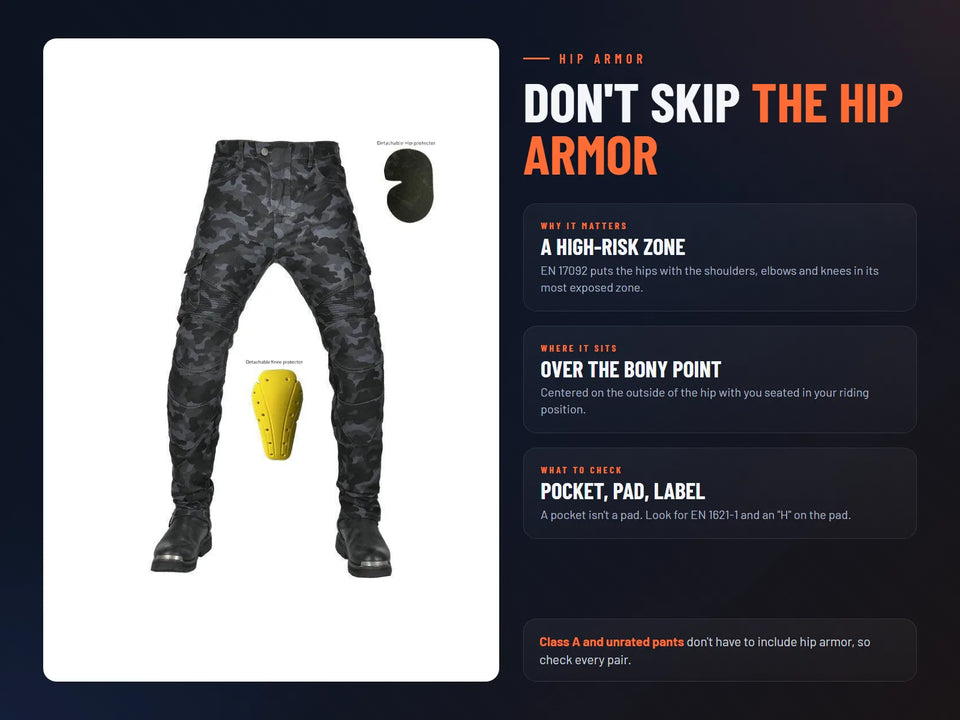

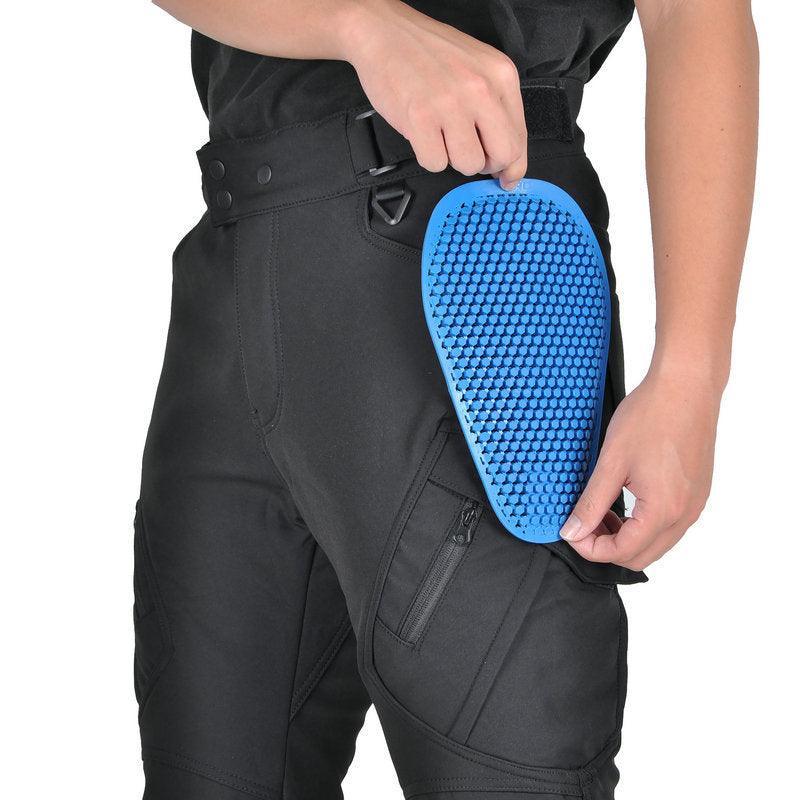
Motorcycle hip armor is an impact protector that sits in a pocket over the bony point on the outside of each hip, an area that EN 17092, the European motorcycle clothing standard, puts in its most exposed zone. Class AA and AAA pants must include it, but Class A and unrated pants don't, so check every pair.
Crash studies credit armor with fewer open wounds rather than fewer broken bones, so a hip pad's real job is limiting wounds and cutting the force that reaches the hip. Riders skip hip armor because a certified label doesn't always require it, because a hip pocket doesn't always come with a pad, and because a pad in the wrong spot digs in when seated. The pad belongs over the hip's bony point with you seated, and the options run from bare pockets and foam to Level 1 and Level 2 pads tested to EN 1621-1, the European standard for motorcyclists' limb joint impact protectors, plus armored shorts.
Why does hip armor matter on a motorcycle?
Hip armor matters because the hip is one of the most exposed points on a rider's body in a crash: EN 17092 groups the hips with the shoulders, elbows and knees in zone 1, its highest-risk zone, according to Dainese. An impact protector over the hip cuts the force that reaches the bone, which is what EN 1621-1 measures in its drop test.
Studies of crashed riders sort these injuries into open wounds (abrasions and cuts), bruises, fractures, dislocations and sprains. De Rome and colleagues' 2011 study of 212 crashed riders in Australia (Accident Analysis and Prevention) linked body armor with a significantly lower risk of open wounds. Wu and colleagues' 2019 study of 951 riders in France (Traffic Injury Prevention) found that protective clothing reduced abrasions and lacerations more than bruises.
Both findings cover armor and riding clothes in general, the hip included. No armor prevents every injury.
Why do riders skip hip armor?
Riders skip hip armor because certified pants can leave it out, hip pockets don't always come with pads, and a badly placed pad digs in on the bike. The three reasons are listed from most to least important.
- Hip armor isn't required in every certified pair of pants, so a class label alone doesn't promise hip pads.
- Hip armor pockets and hip armor pads aren't the same thing, and D3O, which makes armor inserts, tells riders to look for pockets that take impact protection at the knees and hips.
- Hip armor adds bulk at the side of the hips, and a hip pad in the wrong spot presses on the hip bone when you're seated.
Pants that include hip armor sometimes fit a lower level at the hip than at the knee. REV'IT's Sand 4 H2O pants, for example, pair CE Level 2 knee protectors with a CE Level 1 hip protector, according to a retailer listing.
Where should hip armor sit?
Hip armor sits centered over the bony point on the outside of your hip, the greater trochanter at the top of the thigh bone, with you seated in your riding position. D3O says hip protection should fully cover the joint without slipping down or riding up while you're on the bike.
Find the spot seated. Press along the outside of your upper thigh where it meets the hip, and the hard knob under your fingers is the target, so the pad needs to cover it with your knees bent, not only when you stand.
Pocket height comes from the cut of the pants, so the waist and rise decide where a hip pad lands. A waistband that sags drags the hip pads below the bone, which the seated waist and rise check in how motorcycle pants should fit in the seated position catches.
How do you check if your pants have hip armor pockets?
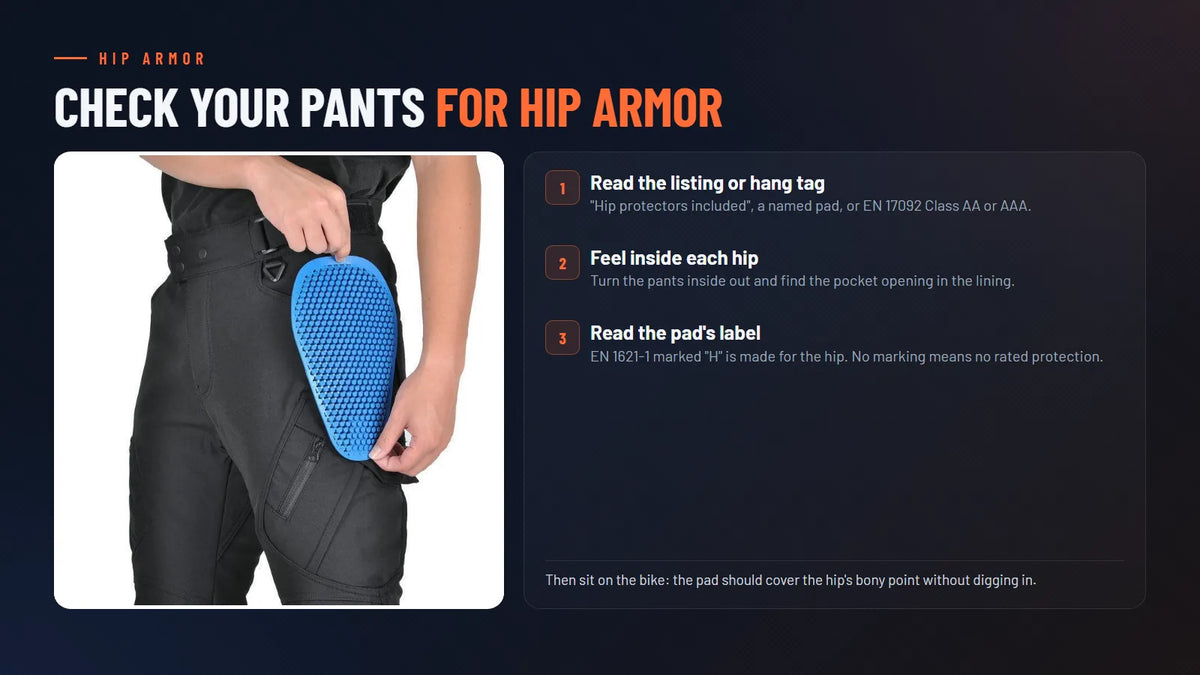
Check for hip armor pockets by reading the listing, opening the lining at each hip and reading the label on any pad you find. Work through the check in this order.
- Read the pants listing or hang tag for "hip protectors included", a named hip protector, or an EN 17092 class of AA or AAA.
- Turn the pants inside out and feel along the side of each hip for a hip pocket opening in the lining.
- Pull out any hip pad and read its label: an EN 1621-1 protector marked "H" is made for the hip, and a pad with no EN 1621-1 marking has no impact rating you can check.
What Level 1 and Level 2 on that label mean is explained in motorcycle gear certifications.
How do hip armor options compare?
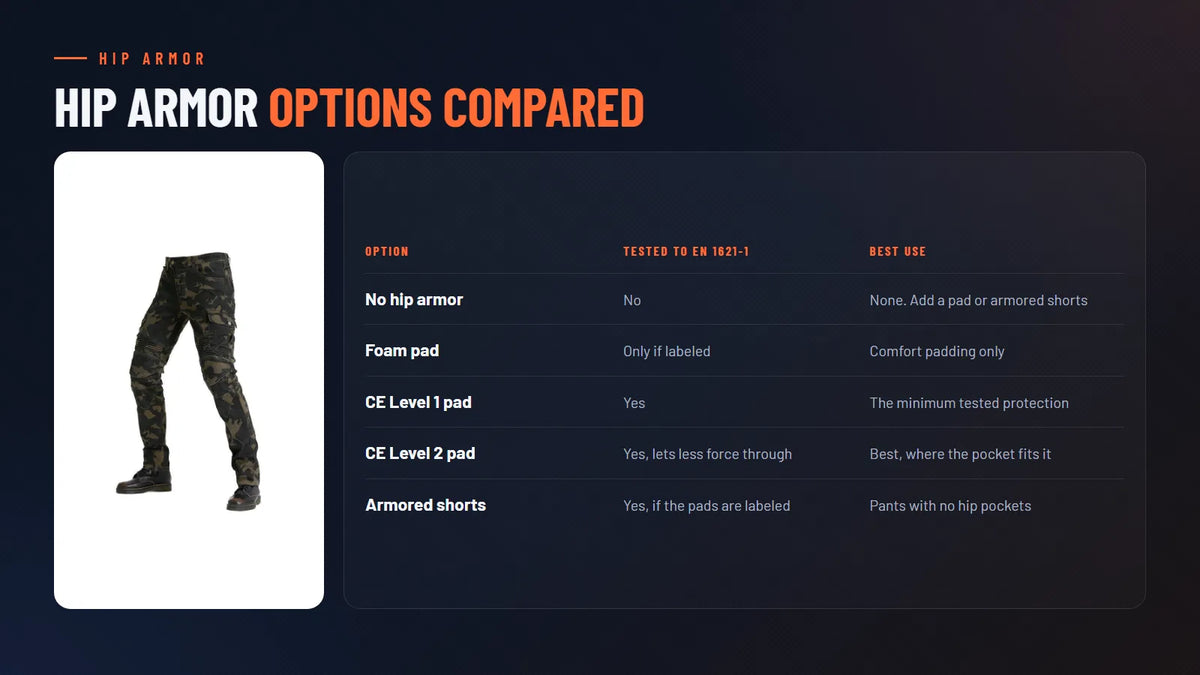
A tested EN 1621-1 Level 2 hip pad is the best hip armor option, followed by Level 1, while foam pads and empty pockets give no rated protection. The table compares the five options.
| Option | Impact-tested to EN 1621-1 | Force let through to the hip | Best use |
|---|---|---|---|
| No hip armor | No | No reduction from armor | None; add a pad or armored shorts |
| Foam pad | No, unless the pad carries an EN 1621-1 label | Not measured | Comfort padding only |
| CE Level 1 hip pad | Yes | More than a Level 2 pad | The minimum tested protection |
| CE Level 2 hip pad | Yes | Less than a Level 1 pad | The best protection where the pocket fits it |
| Armored shorts (base layer) | Yes, when the pads carry an EN 1621-1 label | Depends on the pad level | Pants with no hip pockets |
Albanese and colleagues argued in 2017 (Traffic Injury Prevention) that the force EN 1621-1 allows through may be too high to reliably prevent impact injury, which is one more reason to choose Level 2 where it fits.
What if your pants have no hip pockets?
Pants with no hip pockets get hip protection from armored shorts worn underneath, or from a different pair next time. Armored shorts are a base layer with hip pads built in or held in pockets, and EN 17092 has a class for this kind of garment: Class C, which covers impact protector holders worn with other clothing, according to SATRA Technology.
For the next pair, look for a listing that says the hip protectors come included and names their EN 1621-1 level. Casual-looking options such as armored cargo pants need the same pocket check as any other riding pants.
Does hip armor make pants uncomfortable?
No, hip armor in the right spot feels snug rather than sore, and ViaTerra, a riding gear maker, describes correct hip armor as snug but not poking. A pad that digs in when you sit points to a pad in the wrong spot or the wrong size, so move it or recheck the seated fit before taking it out.
Is hip armor required for an EN 17092 class?
Yes, EN 17092 requires hip armor in Class AAA and AA garments, makes it optional in Class A, and includes no impact protectors in Class B, according to SATRA Technology. A Class A pair still ships with hip pads sometimes, so check the listing rather than assuming either way.
Where can you see riding pants with hip and knee pads?
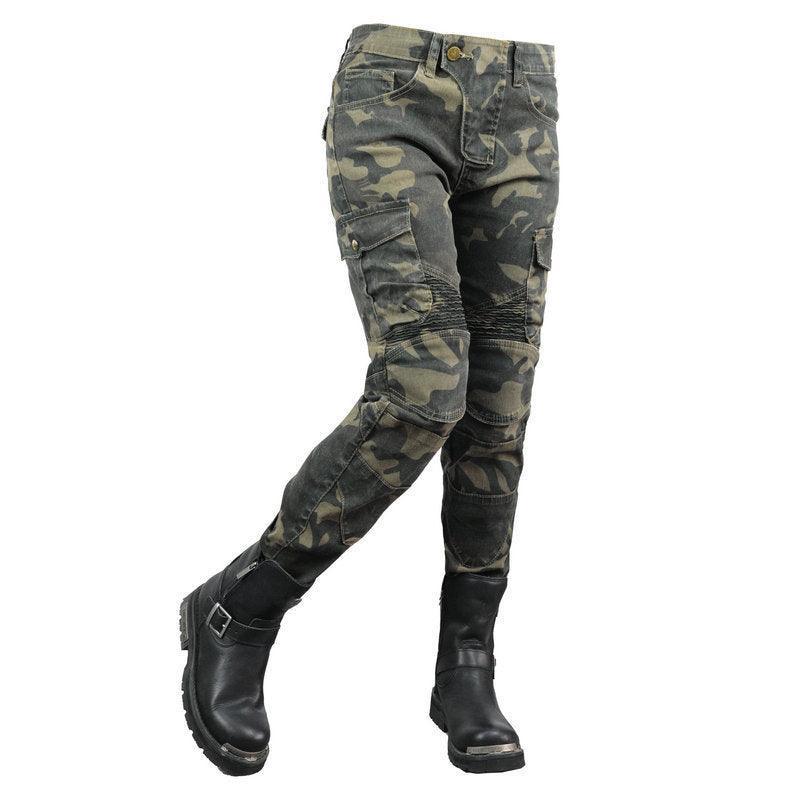
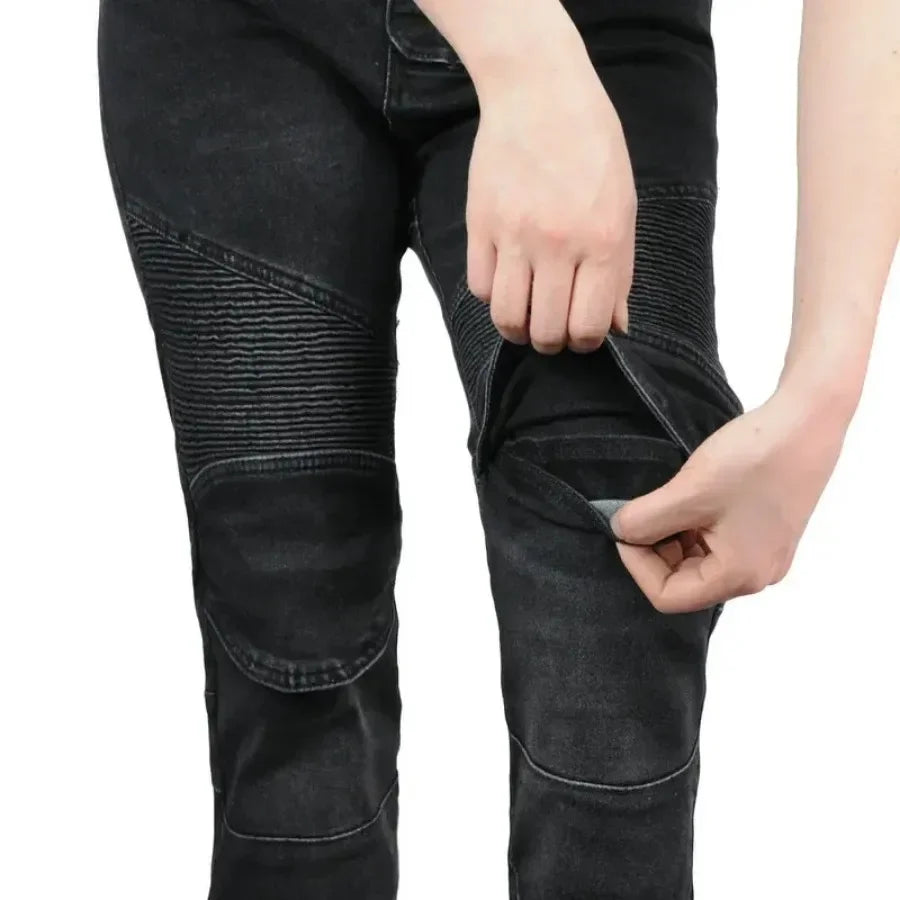
AtomBiker, a US online store for motorcycle helmets, jackets, gloves, boots and pants, lists hip and knee protection pads and Kevlar-reinforced construction on its camo riding pants with hip and knee pads, the Camouflage Motorcycle Pants for men. The product page doesn't name an EN 1621-1 level or an EN 17092 class, so read the label on each pad when the pants arrive.
Frequently asked questions
Does hip armor prevent a broken hip?
No, hip armor isn't proven to prevent fractures. De Rome's 2011 study found no evidence that body armor reduced fracture risk for any part of the body, and Wu's 2019 study found that protective clothing didn't reduce fractures, dislocations or sprains.
Is Level 1 hip armor enough?
Yes, Level 1 hip armor passes EN 1621-1 and beats an empty pocket. Level 2 lets less force through, though, so pick a Level 2 hip pad when one fits your pants' pocket.
Can you wear hip armor under regular jeans?
Yes, armored shorts fit under regular jeans, but the jeans add no abrasion protection, since ordinary denim carries no EN 17092 class. Riding jeans look much the same and add abrasion-resistant fiber and armor pockets, as motorcycle pants types explains.
Which hip pad fits your pants pocket?
The hip pad your pants maker lists for that pocket fits best, because it's made for that pocket's shape. EN 1621-1 also sizes protectors as Type A and the larger Type B, so match the type as well as the "H" marking when you buy a pad separately.
Do armored shorts count toward an EN 17092 class?
No, an EN 17092 class covers the garment that was tested, so armored shorts worn under Class A pants don't make the pants Class AA. The shorts carry their own rating, if any, which is why the pad label matters.
Do mesh motorcycle pants have hip armor?
No, not always. Mesh and summer pants certified to Class A, the class SATRA Technology describes as aimed at riders in warm environments, don't need hip protectors, so check the listing and the pockets before you assume the pads are there. Hot-weather riders who want hip coverage add pads to empty pockets or wear armored shorts underneath.
Shop this guide
Start with the right questions.
Compare construction, fit and features. Open each product for its available sizes, current price and stated certifications.
Motorcycle Pants