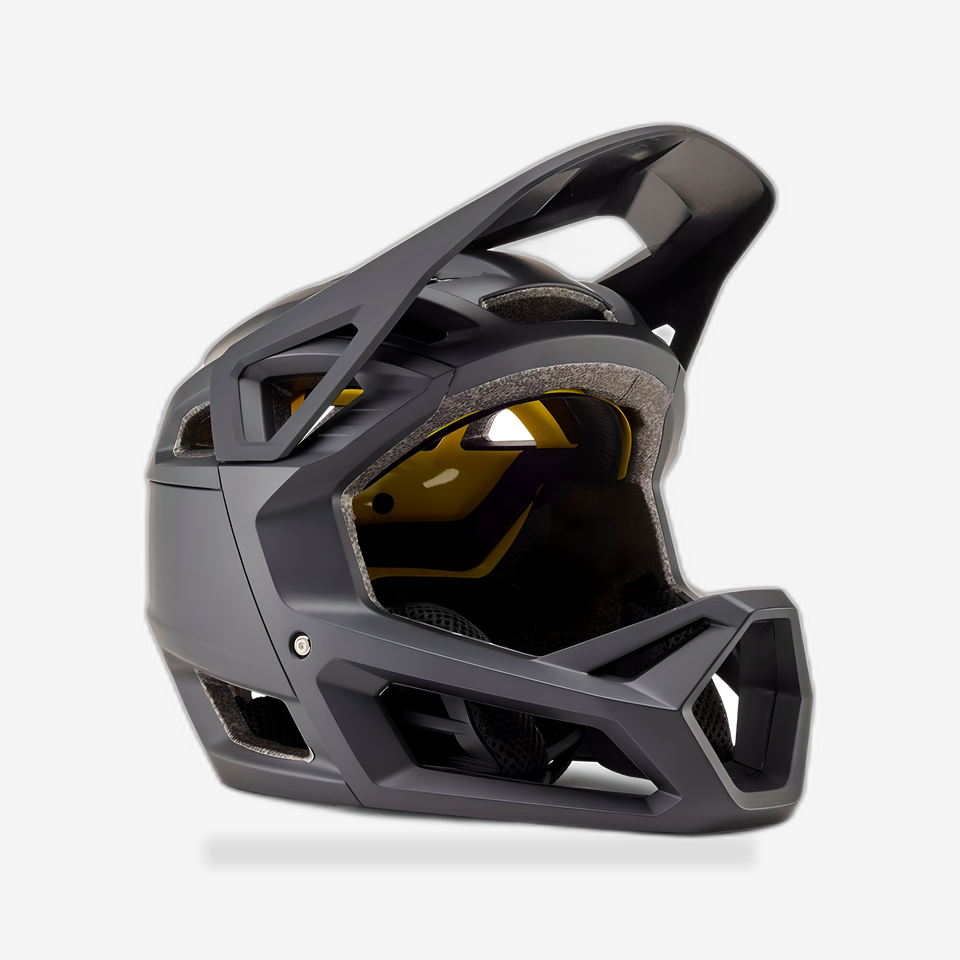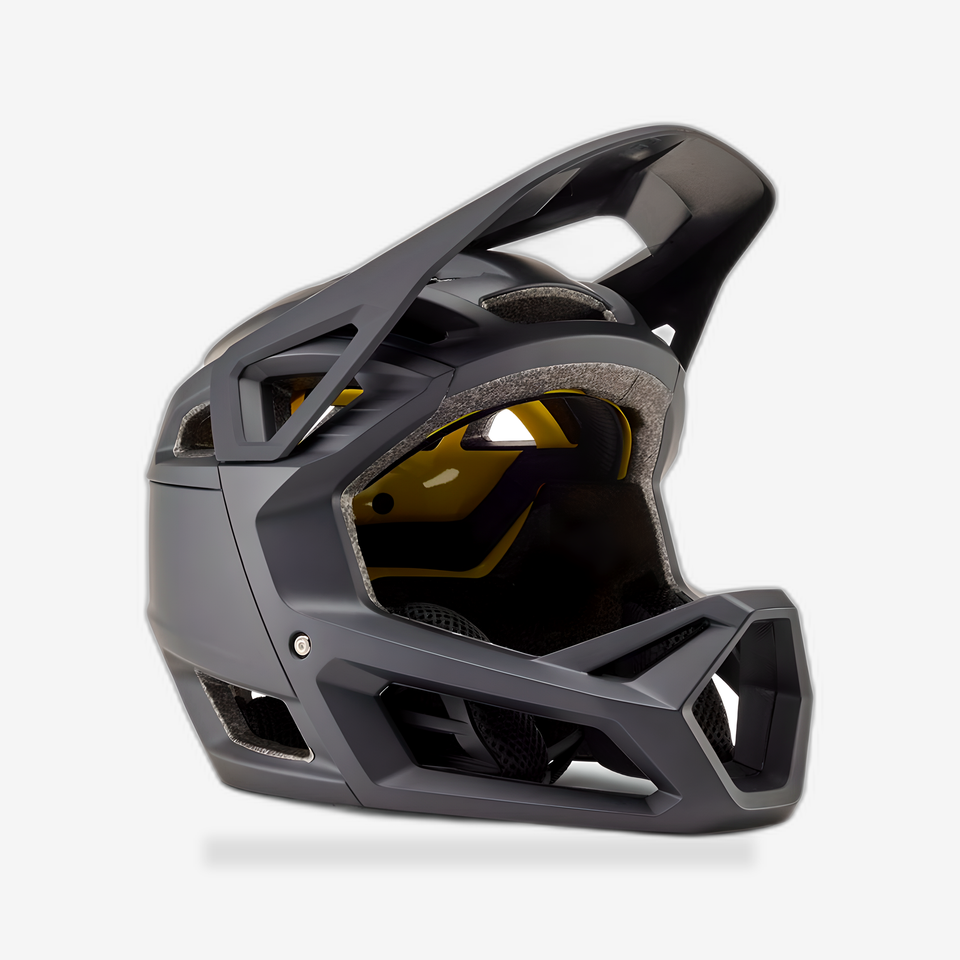
To choose a motorcycle helmet, start with how you ride, pick the helmet type built for that riding, confirm a DOT FMVSS 218 label (ideally with ECE 22.06 too), match the interior to your head shape, then buy the size your tape measure gives and confirm it with a fit test.
Full-face helmets suit sport and commuting riders, modular helmets suit touring, and dirt riders need a peaked motocross helmet with goggles. Heads come in three shapes (round oval, intermediate oval and long oval), and a photo taken from above shows yours. DOT is the legal US baseline, while ECE 22.06 adds a rotational impact test. The Snell Memorial Foundation's guidance is to replace a helmet after five years of normal use or after any crash impact.
What are the steps to choose a motorcycle helmet?
Choosing a motorcycle helmet takes six steps, done in this order because each step narrows the next one.
- Name your riding style, because the riding style decides which helmet type works.
- Pick the helmet type built for that riding style: full-face, modular, open-face 3/4, off-road or dual-sport.
- Check the helmet's certification label for DOT FMVSS 218, and look for ECE 22.06 as a second standard.
- Find your head shape so the helmet's interior matches it: round oval, intermediate oval or long oval.
- Measure your head circumference and match it to the helmet size chart.
- Run a fit test with the helmet on before you ride in it.
Skip step 4 and a helmet that "fits" on paper can still hurt after twenty minutes.
Which helmet type suits each riding style?
Each riding style has one helmet type that fits it best: full-face for sport and track, full-face or modular for commuting and touring, full-face, modular or open-face 3/4 for cruisers, a motocross helmet for dirt, and a dual-sport helmet for adventure riding.
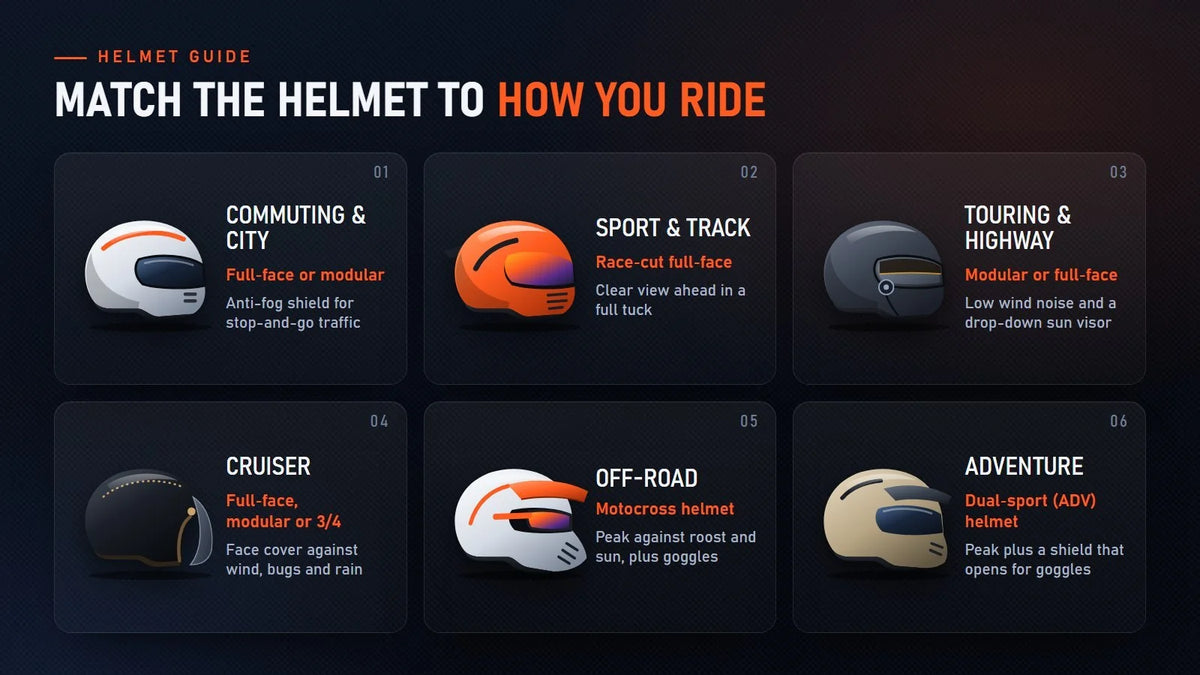
Each riding style below is matched to its helmet type, chin coverage, eye protection and the one feature worth paying for.
| Riding style | Best helmet type | Chin coverage | Eye protection | Feature that matters most |
|---|---|---|---|---|
| Commuting and city | Full-face or modular | Fixed or flip-up chin bar | Face shield | Anti-fog shield for stop-and-go traffic |
| Sport and track | Race-cut full-face | Fixed chin bar | Face shield with a raised eye port | Clear view ahead in a full tuck |
| Touring and highway | Modular or full-face | Flip-up or fixed chin bar | Face shield plus drop-down sun visor | Low wind noise over long days |
| Cruiser | Full-face, modular or open-face 3/4 | Full chin bar, or none on a 3/4 | Face shield or goggles | Face cover against wind, bugs and rain |
| Off-road | Motocross helmet | Long, vented chin bar | Goggles | Peak against roost and sun |
| Adventure and dual-sport | Dual-sport (ADV) helmet | Fixed chin bar | Face shield that opens for goggles | Peak plus shield in one helmet |
What helmet suits commuting and city riding?
A full-face helmet is the best commuting helmet, and a modular helmet is the better pick for riders who stop a lot. City riding means fuel stops, toll booths and the odd conversation at a light, and a modular's chin bar flips up for all of them without the helmet coming off.
Commute through Seattle drizzle or cold Chicago mornings and the shield fogs fast. Pick a face shield that accepts an anti-fog insert.
What helmet suits sport and track riding?
A race-cut full-face helmet is the right helmet for sport bikes and track days. Its eye port sits higher than a touring helmet's, so you still see the road ahead with your chin down near the tank.
Track-day organizers set their own helmet rules, so check before you book. Riders in FIM-sanctioned racing need a helmet homologated to FIM FRHPhe-02, the Fédération Internationale de Motocyclisme racing helmet program, which also requires ECE 22.06 approval.
What helmet suits touring and highway riding?
A modular or full-face helmet with a drop-down sun visor suits touring and long highway days. Wind noise piles up over a 400-mile day at 70 mph, so a snug neck roll and a quiet shell shape matter more here than anywhere else.
A modular adds convenience at every fuel stop and diner, in exchange for a heavier shell, which is why the modular flip-up helmet pros and cons deserve a look before a touring purchase.
What helmet suits cruiser riding?
A full-face or modular helmet protects a cruiser rider best, and an open-face 3/4 helmet is the least coverage worth wearing on an upright bike. Most cruisers have no fairing, so your face takes the wind, the bugs and the gravel kicked up by trucks.
An open-face 3/4 helmet covers the top, back and sides of the head but leaves the chin and face open. Pair it with a full face shield or goggles. Half helmets cover even less.
What helmet suits off-road riding?
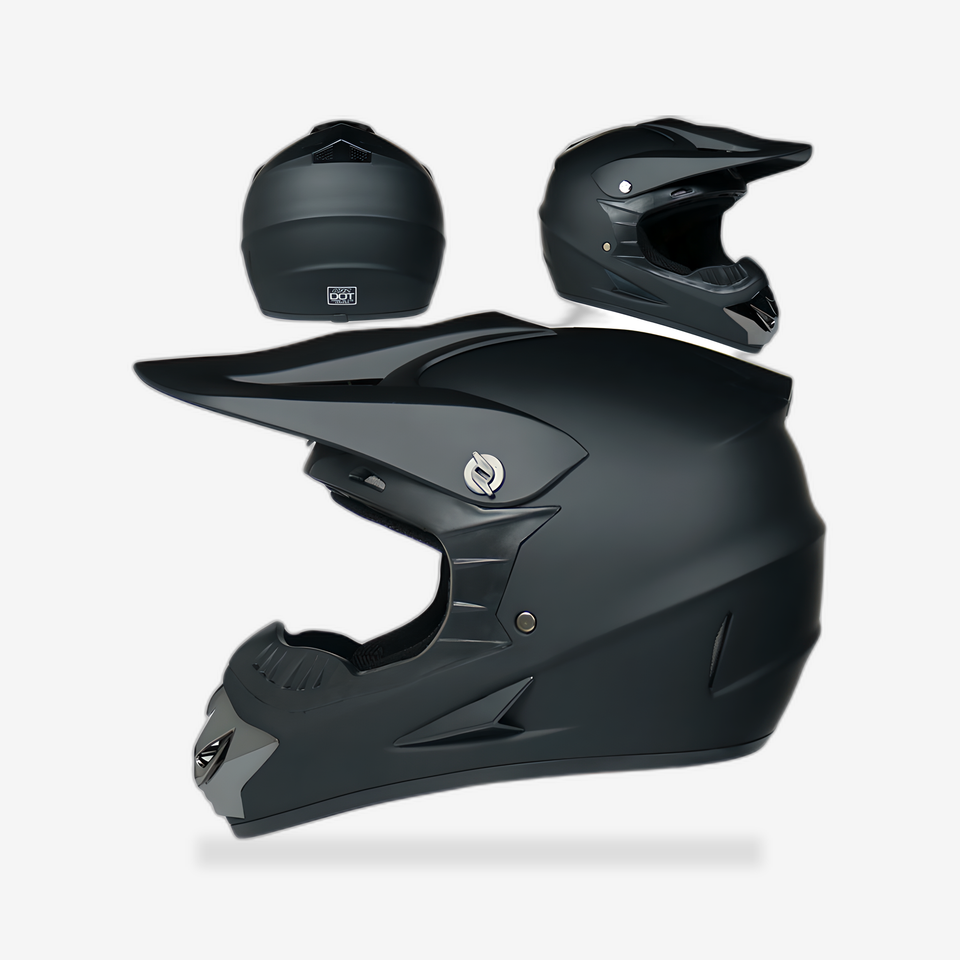
A motocross helmet with goggles is the right helmet for dirt riding. Its long chin bar and big vents move air while you work the bike standing up, the peak blocks roost and sun, and goggles seal out dust.
That same peak catches wind at highway speed. A motocross helmet is a poor choice for a ride with long paved stretches.
What helmet suits adventure and dual-sport riding?
A dual-sport helmet, also called an ADV helmet, suits riders who split their time between pavement and dirt. It combines a short peak with a face shield, and the shield opens wide enough to wear goggles on dusty trails.
Test the peak at freeway speed before a long trip. Some peak shapes pull at your neck in a crosswind.
What are the three motorcycle helmet head shapes?
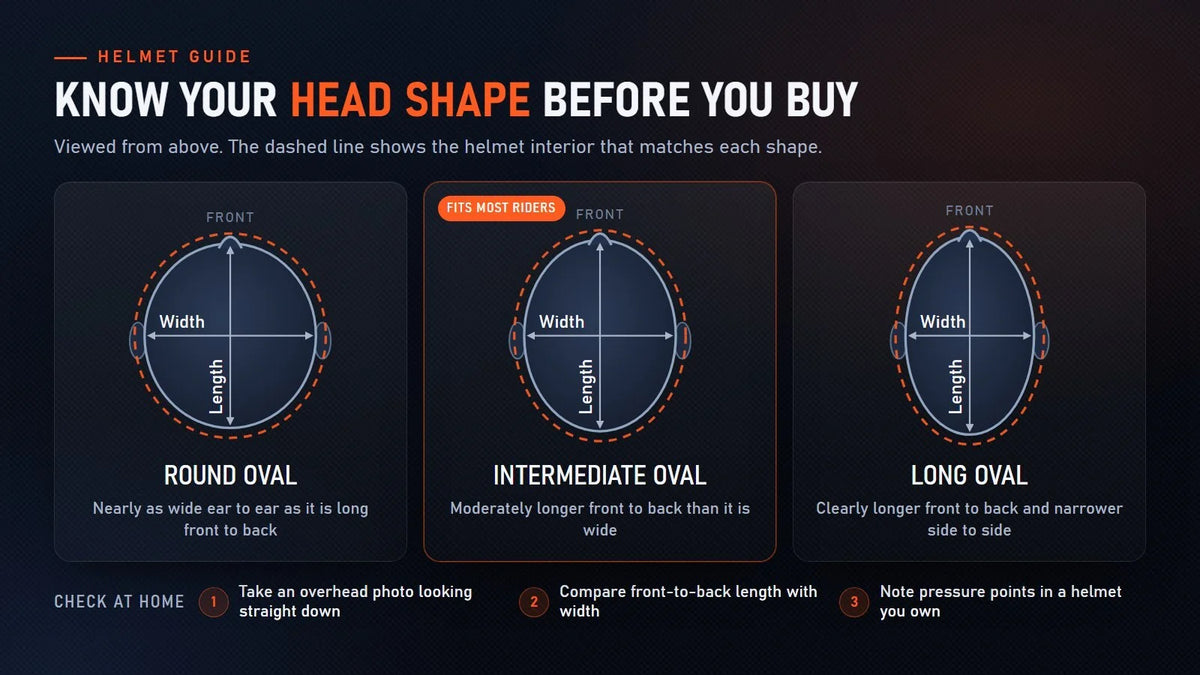
The three motorcycle helmet head shapes are round oval, intermediate oval and long oval, named by how a head's front-to-back length compares with its side-to-side width when seen from above. Arai, which builds helmets in all three shapes, describes intermediate oval as the shape that fits most riders out of the box.
What is a round oval head?
A round oval head is nearly as wide (ear to ear) as it is long (forehead to back). Riders with this shape tend to feel pressure at the temples in a standard helmet.
What is an intermediate oval head?
An intermediate oval head is moderately longer front to back than it is wide. Arai builds most of its models around this shape.
What is a long oval head?
A long oval head is clearly longer front to back and narrower side to side. A long oval head inside an intermediate oval helmet usually presses on the forehead, which is the hotspot Arai's long oval Signet-X model is designed to remove.
How do you find your head shape at home?
A photo taken straight down from above your head shows your head shape at home. Flatten your hair with a swim cap or by wetting it, have someone hold a phone directly overhead, and compare your length (forehead to back) with your width (ear to ear).
A near-circle reads as round oval. A clear egg shape is intermediate oval, and a long, narrow egg is long oval.
A helmet you already own gives a second clue. Forehead pressure points to a head longer than the helmet, and pressure at the temples points to a rounder one.
Shape tells you which interior suits you, and size is a separate number, so the next step is to measure your head for a motorcycle helmet.
Which safety certification should a motorcycle helmet have?
A motorcycle helmet for US street riding should carry the DOT label, which certifies it to NHTSA's Federal Motor Vehicle Safety Standard 218 (FMVSS 218), and the better choice carries ECE 22.06 as well. FMVSS 218 sets impact attenuation, penetration and chin strap retention tests.
A genuine DOT label has shown the maker's name, the model and the words "DOT", "FMVSS No. 218" and "CERTIFIED" since May 2013, under NHTSA's final rule published in the Federal Register on May 13, 2011.
ECE 22.06, the UN Economic Commission for Europe helmet regulation, replaced ECE 22.05 for helmet sales in countries that follow it from January 2024. It adds an oblique impact test for rotational forces and tests the visor too. Snell M2025, the Snell Memorial Foundation's voluntary standard, took effect on August 1, 2024.
For street riding, DOT plus ECE 22.06 is the pairing to look for. The test-by-test differences are compared in Motorcycle Helmet Safety Standards: DOT vs ECE vs SNELL.
What else matters once type, shape and certification are set?
Size and fit matter next, followed by shell material, the helmet's history and its age. A tape measure gives you a starting size, and the pressure-point and roll-off tests in how a motorcycle helmet should fit confirm it before your first ride.
Three more questions come up once the shortlist is down to two or three helmets.
Does shell material change helmet protection?
No, shell material mainly changes weight and price, because a helmet faces the same DOT and ECE tests whether its shell is polycarbonate, fiberglass composite or carbon fiber.
Polycarbonate is an injection-molded thermoplastic and the usual shell on lower-priced helmets. Fiberglass composite shells are layers of fiberglass and resin, and they usually weigh less at the same size. Carbon fiber shells are the lightest and the most expensive, and a lighter helmet tires your neck less on long days.
Should you buy a used motorcycle helmet?
No, a used motorcycle helmet is a bad buy, because damage to the foam liner often doesn't show on the outside. The Snell Memorial Foundation says only a trained professional can reliably judge helmet damage, and that a helmet involved in an impact while in use needs replacing.
A used liner has also packed down to someone else's head. The fit you feel in a seller's driveway isn't the fit you'd get from a new helmet.
How often should you replace a motorcycle helmet?
Replace a motorcycle helmet after five years of normal use and right away after any crash impact, according to the Snell Memorial Foundation. Snell also notes that an unused helmet stored in good condition doesn't automatically expire at five years, and some manufacturers publish their own interval, so check the maker's guidance as well.
A helmet dropped from a seat or handlebar doesn't automatically need replacing, since the damaging impacts are the ones with a head inside.
AtomBiker, a US online store for motorcycle helmets, jackets, gloves, boots and pants, carries full-face, modular, open-face 3/4, off-road and dual-sport helmets in its motorcycle helmets collection.
Frequently asked questions
What is the safest type of motorcycle helmet?
A full-face helmet is the safest type of motorcycle helmet, because its fixed chin bar covers the jaw and face. A modular helmet comes close when its chin bar is locked down. The coverage gap is laid out in full-face motorcycle helmets: what the chin bar protects.
Is a DOT helmet good enough for street riding?
Yes, a DOT-certified helmet meets the legal requirement for street riding in every US state with a helmet law. Helmet laws vary by state, and the Insurance Institute for Highway Safety (IIHS) keeps a current state-by-state list. For more tested protection, choose a helmet that carries both DOT and ECE 22.06.
What helmet should a beginner buy?
A beginner should buy a DOT-certified full-face helmet that matches their head shape and fits snugly, because full-face coverage protects the most of any helmet type. A helmet is the first item on the essential motorcycle gear for new riders checklist.
Do motorcycle helmets expire if they're never worn?
No, an unused helmet stored in good condition doesn't automatically expire after five years, according to the Snell Memorial Foundation. Store it away from heat, direct sunlight and solvents, and check the liner and chin strap before the first ride.
How tight should a new motorcycle helmet feel?
A new motorcycle helmet should feel snug all around with no pressure points, and it shouldn't rotate when you shake your head. Err on the snug side, because the liner compresses as it breaks in. AtomBiker's 30-day returns give you time to wear a new helmet indoors first, so check the return conditions before you ride in it.
Can you wear a half helmet on the highway?
Yes, a DOT-certified half helmet is legal on US highways, but it covers the least of any street helmet. A half helmet leaves the face, jaw, ears and base of the skull exposed, and at highway speed it gives no protection from wind or debris.
Shop this guide
Start with the right questions.
Compare construction, fit and features. Open each product for its available sizes, current price and stated certifications.