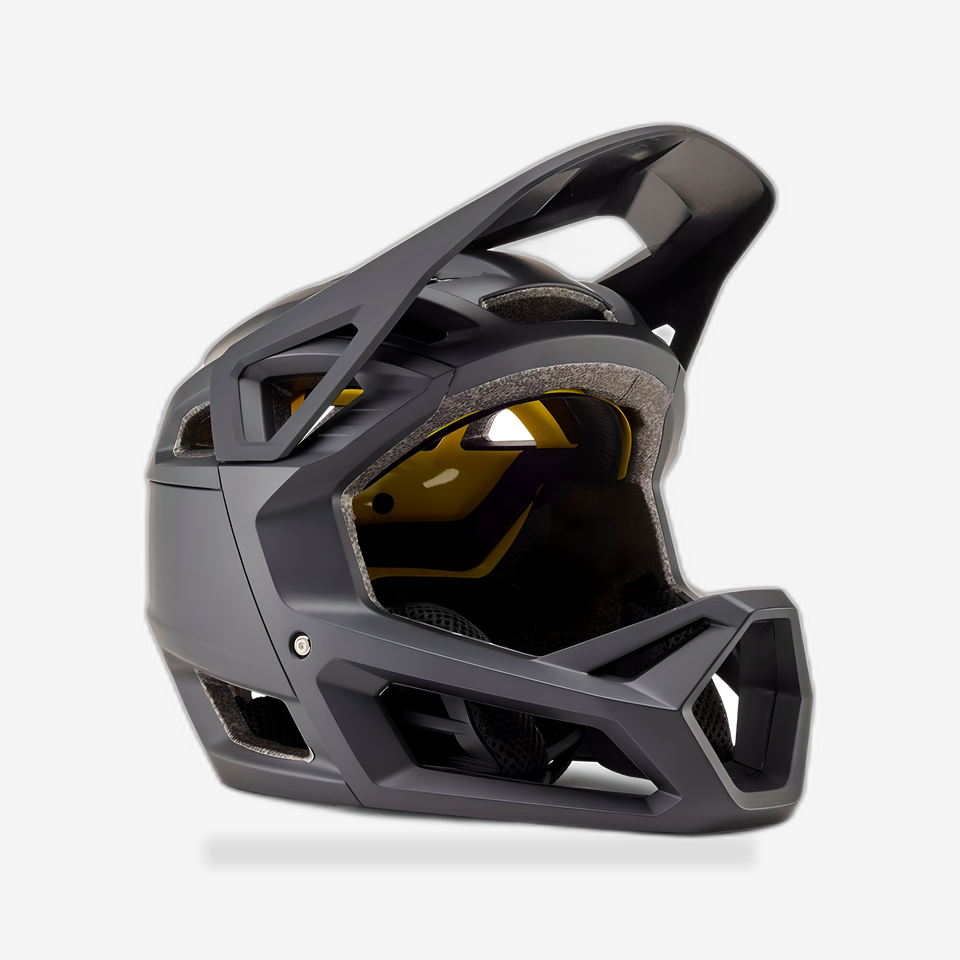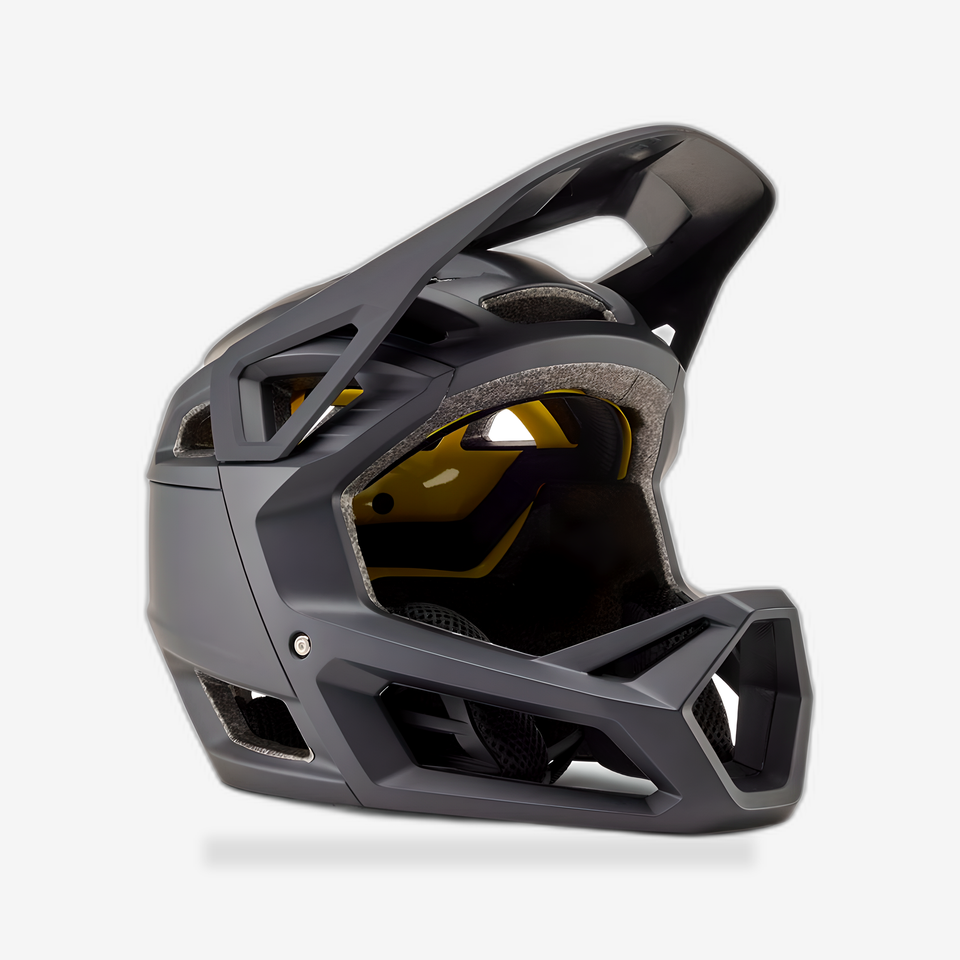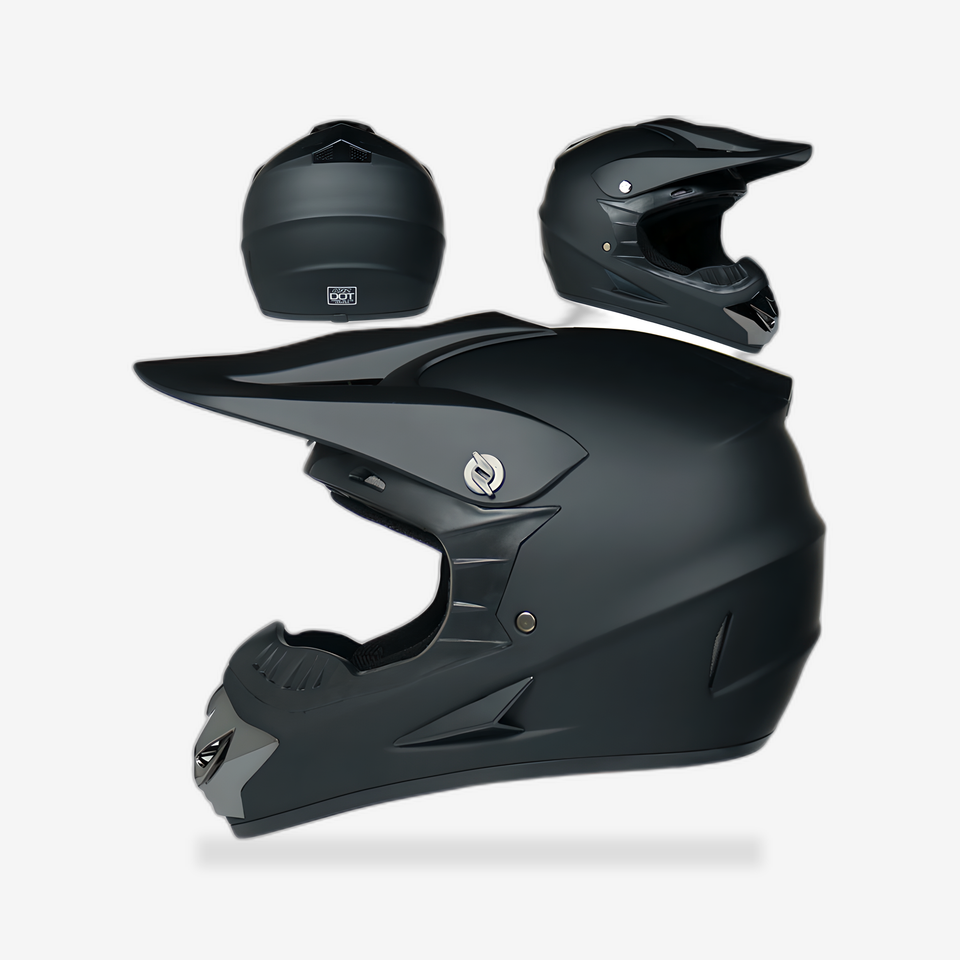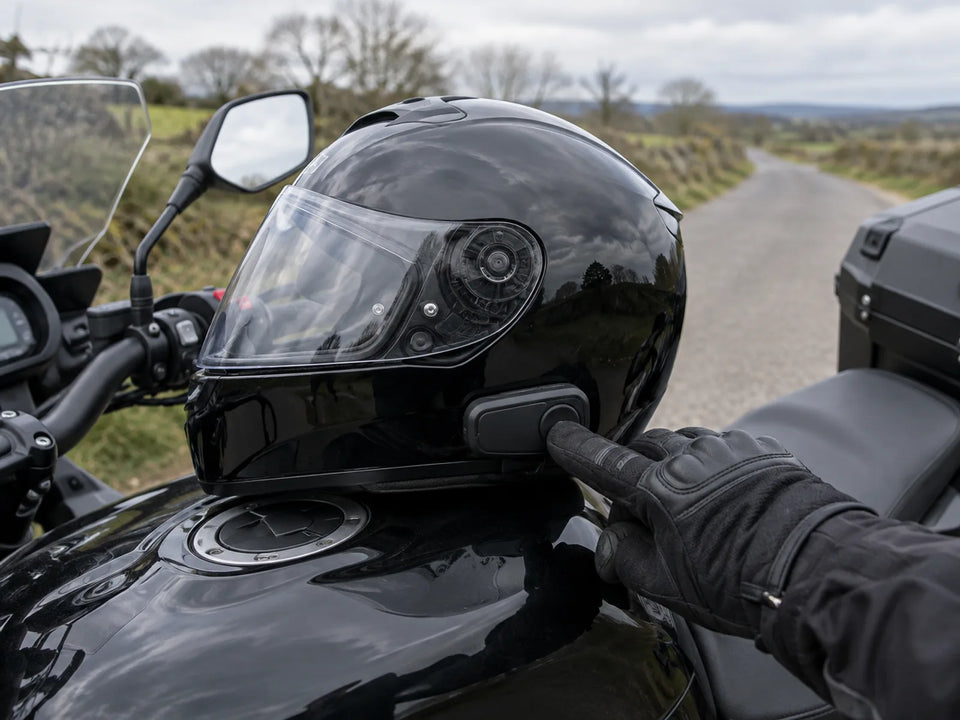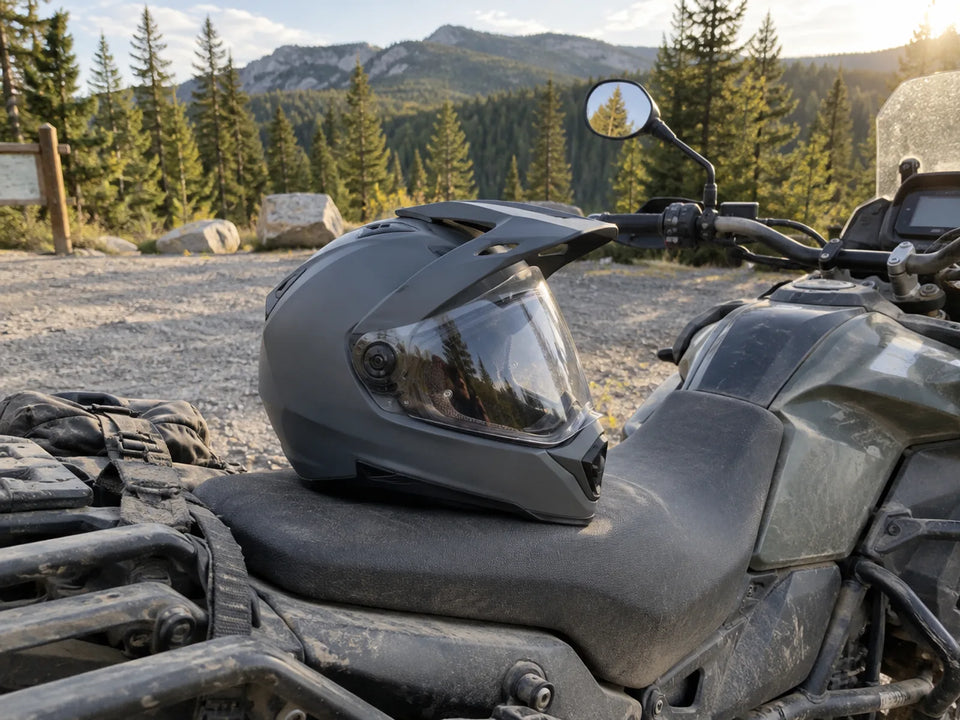
A motorcycle helmet should fit snugly all the way around your head with even pressure and no hot spots. It shouldn't roll off when pushed forward or back, it should move the skin on your brow instead of sliding over it, the cheek pads should press firmly, and the chin strap should sit snug under your jaw.
The Snell Memorial Foundation advises wearing a new helmet for at least five to ten minutes so pressure points have time to show. SHARP, the UK government's Safety Helmet Assessment and Rating Programme, puts the roll-off test bluntly: a helmet you can roll off in the showroom will come off in a crash. Bell Helmets wants cheek pads tight against the cheek without making you bite them, and a strap snug enough that opening your mouth feels uncomfortable. FMVSS 218, NHTSA's Federal Motor Vehicle Safety Standard for motorcycle helmets, requires at least 105 degrees of side vision each way. Comfort pads pack down with wear, and Snell says worn-out pads leave a helmet at least one to two sizes larger than new.
How should a properly fitted motorcycle helmet feel?
A properly fitted motorcycle helmet feels snug on every part of your head, with firm, even contact from the crown pad, cheek pads and brow and no single spot that aches. Snug isn't the same as painful. The Snell Memorial Foundation says a new helmet should fit very snugly and notes that most people buy a new helmet one size too big.
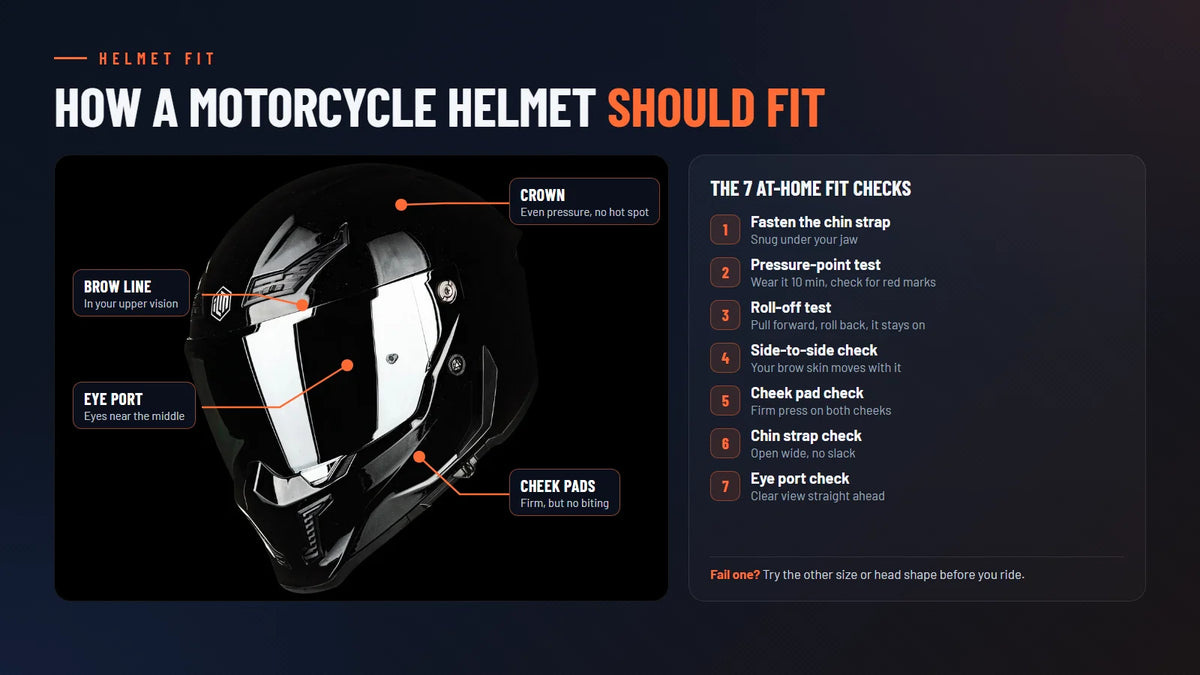
Run the seven fit checks at home in this order, because each check depends on the one before it.
- Put the helmet on by spreading the chin straps apart, then fasten the chin strap snug under your jaw.
- Wear the helmet indoors for at least 10 minutes, then take it off and look for red marks on your forehead and cheeks (pressure-point test).
- Pull the helmet forward from the base at the back, then roll it backward from the brow, and check that the helmet stays on (roll-off test).
- Twist the helmet left and right with your head held still, and check that the skin on your brow moves with the helmet (side-to-side check).
- Feel whether the cheek pads press your cheeks firmly without making you bite them (cheek pad check).
- Open your mouth wide and check that the chin strap pulls the helmet down without slack (chin strap check).
- Look straight ahead and check that your eyes sit near the middle of the eye port with the brow edge in your upper vision (eye port check).
How do you do the pressure-point test?
The pressure-point test means wearing the fastened helmet indoors for at least 10 minutes, taking it off, and checking your forehead, temples and cheeks for red marks or a sore spot. A hot spot, the rider's term for one point that presses harder than the rest, often takes several minutes to show up.
Snell's guidance is to keep a new helmet on for at least five to ten minutes to make sure it isn't too small. Bell Racing's fitting guide adds a second step: when you find a red area, put the helmet back on for a few more minutes and watch that exact spot.
Pass: even pressure everywhere and no marks after 10 minutes. Arai's UK size guide says you should feel some pressure at all the contact points, so firm all-round contact is a good sign.
Fail: a red line across the forehead, an ache at the temples or a spot that gets worse the longer you wear the helmet. A forehead hot spot usually means the helmet is shaped rounder than your head. Pressure at the temples points the other way.
Watch TV, answer emails, walk around the house. Ten minutes on a showroom stool feels shorter than ten minutes at 65 mph.
How do you do the roll-off test?
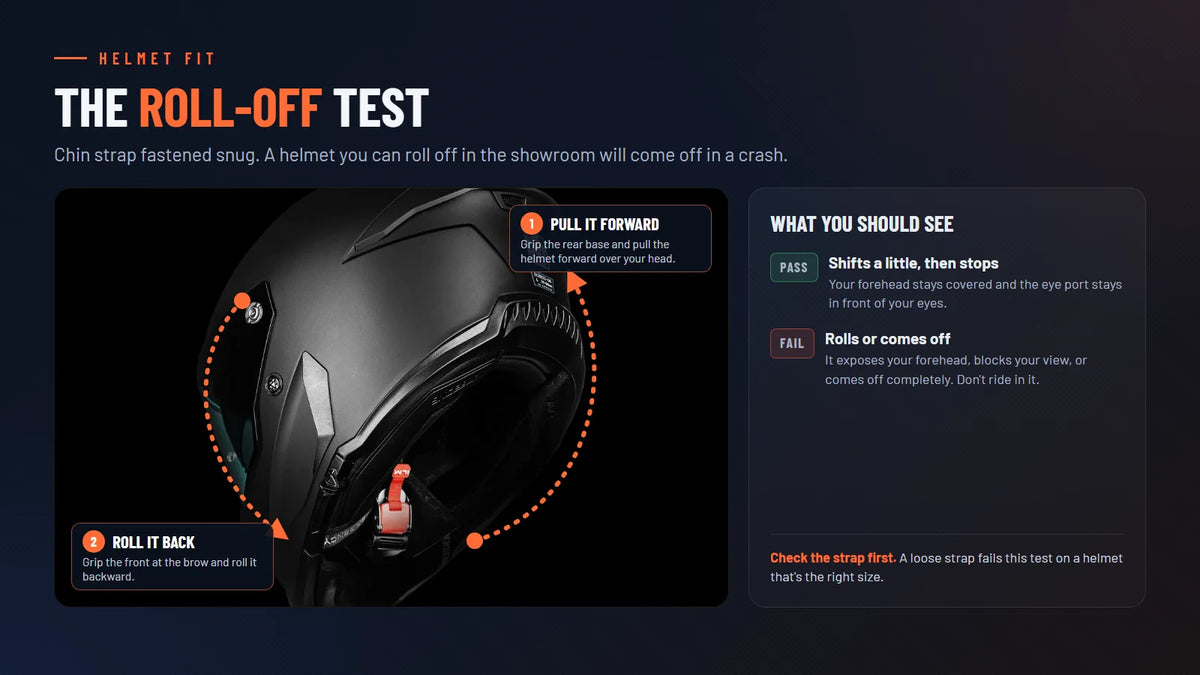
The roll-off test checks that a fastened helmet stays on your head when someone tries to pull it off forward or backward. Bell Helmets' instruction manual describes the method in two moves with the chin strap snug.
First, grab the helmet at the base of the back and pull it forward over your head. Then grab the front and roll it backward. SHARP suggests a helper push up on the rear base while you tilt your head forward.
Pass: the helmet shifts a little with your scalp and stops. Your forehead stays covered and the eye port stays in front of your eyes.
Fail: the helmet rolls far enough to expose your forehead or block your vision, or comes off completely. Bell's manual says a helmet that comes off either way doesn't fit and shouldn't be worn. SHARP's guidance is plainer still: a helmet you can roll off in the showroom will come off in a crash.
Check the strap before blaming the size. A loose strap fails this test on a helmet that's the right size.
How do you check for side-to-side movement?
Side-to-side movement is checked by holding your head still, gripping the helmet with both hands and twisting it left and right: the skin on your brow and cheeks moves with the liner when the size is right.
Bell's manual is direct about it: a helmet doesn't fit if your skin doesn't move with the liner. HJC's i11 owner's manual puts the same rule from the other side, and padding you can feel sliding over your head means the helmet is too big.
Pass: your eyebrows and cheeks travel with the helmet instead of the liner sliding over them.
Fail: the liner slides across your skin, the helmet rotates freely, or the shell turns when you shake your head.
Side play and roll-off are separate checks, and a helmet has to pass both. Loose cheek pads tend to show up here first, while a slack strap shows up in the roll-off test.
How should the cheek pads fit?
Cheek pads should press firmly against your cheeks, firm enough to push the skin up a little but not so tight that you bite the inside of your mouth. Bell Helmets puts the limit in one line: tight against the cheek, but not so tight that you're biting your cheeks.
SHARP adds a movement check. When you move the helmet, your cheeks should follow it while staying in firm, comfortable contact with the pads.
Pass: your face feels held, you can talk, and the helmet doesn't wobble at the jaw.
Fail, too tight: you bite your cheeks, your teeth clamp, or the pressure turns into a jaw ache after 10 minutes. Fail, too loose: there's no contact, or the helmet rocks at the chin bar when you nod.
Tight cheek pads alone aren't a reason to size up. Arai's UK size guide warns riders not to reach for a bigger size just because the helmet won't pass the cheeks and jaw, because cheek pads come in different thicknesses. Fit the crown first and fix the cheeks second.
How tight should the chin strap be?
A chin strap should be tight enough that opening your mouth wide pulls the helmet down and feels uncomfortable, with no more than two fingers fitting underneath. Bell's manual says to pull the strap snug, almost uncomfortable, and well back against your throat, under the jaw rather than on the point of the chin.
Sources differ slightly on the exact tension. Snell allows up to two fingers under the strap, SHARP only asks that you can still open and close your mouth, and Bell's website suggests one finger width as a starting point. FMVSS 218 requires every DOT helmet label to say "Fasten helmet securely."
The two common chin strap closures are the double D-ring and the quick-release ratchet buckle, and they set tension differently.
| Feature | Double D-ring | Quick-release ratchet buckle |
|---|---|---|
| How it closes | Strap end threads through two metal rings, then back through the inner ring | Grooved tongue clicks into a receiver one tooth at a time |
| How tension is set | You pull the strap end tight each time you fasten | Strap length is set once at the buckle; the teeth fine-tune it |
| How it opens | Pull the red tab to loosen, then thread the strap back out | Pull the red tab on the receiver to free the tongue |
| What holds the strap end | A snap that only stops the tail flapping (HJC), not a fastener | The locked ratchet |
| Fit habit to watch | Tension changes with how hard you pull each time | The preset length needs checking now and then, as Schuberth advises |
Set a quick-release strap with the helmet on, not on the shelf. SHARP's advice for these buckles is to take your time adjusting the strap.
Where should the eye port and brow line sit?
The brow line should sit low on your forehead, with the top edge of the eye port visible in the upper part of your vision and your eyes close to the middle of the opening. Bell's instruction manual says to place the helmet low on the forehead so you can see the edge of the helmet in your upper field of vision.
HJC's manual adds that there should be no gap around your brow under the liner. A helmet that sits high on your forehead, like a hat pushed back, leaves the brow exposed and usually fails the roll-off test too.
Side vision has a legal floor. FMVSS 218 requires every DOT helmet to give at least 105 degrees of peripheral vision to each side of center, and it requires each maker to publish a helmet positioning index, the distance from the brow opening to a reference line on the test headform, to anyone who asks.
Pass: you see the road and both mirrors without moving your head, and the brow edge sits just in view.
Fail: the helmet drops over your eyes when you nod, or you look out under the brow in a tuck.
Sport riders should check this in a riding crouch, since a race-cut eye port sits higher.
What changes a helmet's fit after you buy it?
Wear changes a helmet's fit after you buy it, mainly as the comfort padding and cheek pads pack down. The Snell Memorial Foundation says that simply putting a helmet on and taking it off wears the comfort pads and the energy-absorbing foam liner over time. HJC's manual notes that the protective foam adjusts to the shape of the wearer's head.
Changes on your side matter too. A haircut, a thicker balaclava or a communicator speaker under the liner all change the fit, so rerun the roll-off and cheek pad checks after any of them.
Does a motorcycle helmet loosen over time?
Yes, a motorcycle helmet loosens over time as its padding compresses. Snell goes further and says helmets with worn-out pads are at least one to two sizes larger than they were new. That's why the Sizing Guide says to err on the snug side, because the liner compresses.
Replacement timing is a separate question, and the sources differ: Snell recommends replacing a helmet after five years of normal use, while HJC's i11 manual says every three to five years depending on use.
Can new cheek pads fix a loose helmet?
Yes, new cheek pads can fix a helmet that's loose at the cheeks and jaw, as long as the crown already fits. Arai says all its cheek pads can be swapped for a size that suits your face, Bell offers optional pad sizes on many models, and Shoei's Personal Fitting System adjusts head and cheek pads through dealers.
Thicker cheek pads don't fix a shell that's too big. A helmet that rolls off at the back or rotates on the crown needs a smaller size, so measure your head for a motorcycle helmet again before buying.
Is a helmet too small if it gives you a headache?
Yes, a helmet that gives you a headache is usually too small or the wrong shape for your head. A headache that starts at one spot, most often the forehead or temples, is a pressure point that the 10-minute test should have caught.
Forehead pressure in a helmet that feels roomy at the sides points to a shape mismatch, which the guide to choosing a motorcycle helmet by riding style and head shape explains.
Headaches with no pressure point have other causes, so see a doctor if they keep coming back.
Should you return a helmet that fails the fit tests?
Yes, return a helmet that fails the fit tests, since padding and strap changes rarely rescue a shell that's the wrong size or shape. Run every test indoors before the helmet goes near a bike.
AtomBiker, a US online store for motorcycle helmets, jackets, gloves, boots and pants, offers 30-day returns on its motorcycle helmets. Try the helmet on indoors only, keep the tags and packaging, and check the return conditions before you ride in it.
Frequently asked questions
Should a motorcycle helmet touch the top of your head?
Yes, the crown pad should press firmly on the top of your head. HJC's manual lists a top pad pressing firmly on your head as one of the signs of correct fit. A gap at the crown lets the helmet rock forward and back.
Is it better for a helmet to be too tight or too loose?
A slightly tight helmet is better than a loose one, because the padding compresses and the fit loosens with wear. A helmet that causes pain or a pressure point after 10 minutes is too tight, though, and a helmet that rolls off is too loose to protect you.
What does a helmet that's too big feel like?
A helmet that's too big slides over your skin instead of moving it, rotates when you shake your head, and rolls forward over your eyes when pulled from the back. You might also feel gaps at the brow or cheeks.
Does a modular helmet fit differently from a full-face helmet?
No, a modular helmet goes through the same fit tests as a full-face helmet, run with the chin bar closed and latched. Check that the chin bar closes without pressing on your chin. The trade-offs of the design are covered in modular flip-up motorcycle helmets: pros, cons and who they suit.
Should you fit-test a helmet with your Bluetooth headset installed?
Yes, fit-test with the speakers in place, because speakers in the ear pockets add pressure over your ears. Speakers that press hard on your ears become a pressure point on a long ride.
Should you wear your glasses during a helmet fit test?
Yes, wear the glasses you ride in, because the temple arms add pressure inside the helmet. The arms should slide in along your temples without pressing against your head or pushing the glasses out of place.
Shop this guide
Start with the right questions.
Compare construction, fit and features. Open each product for its available sizes, current price and stated certifications.