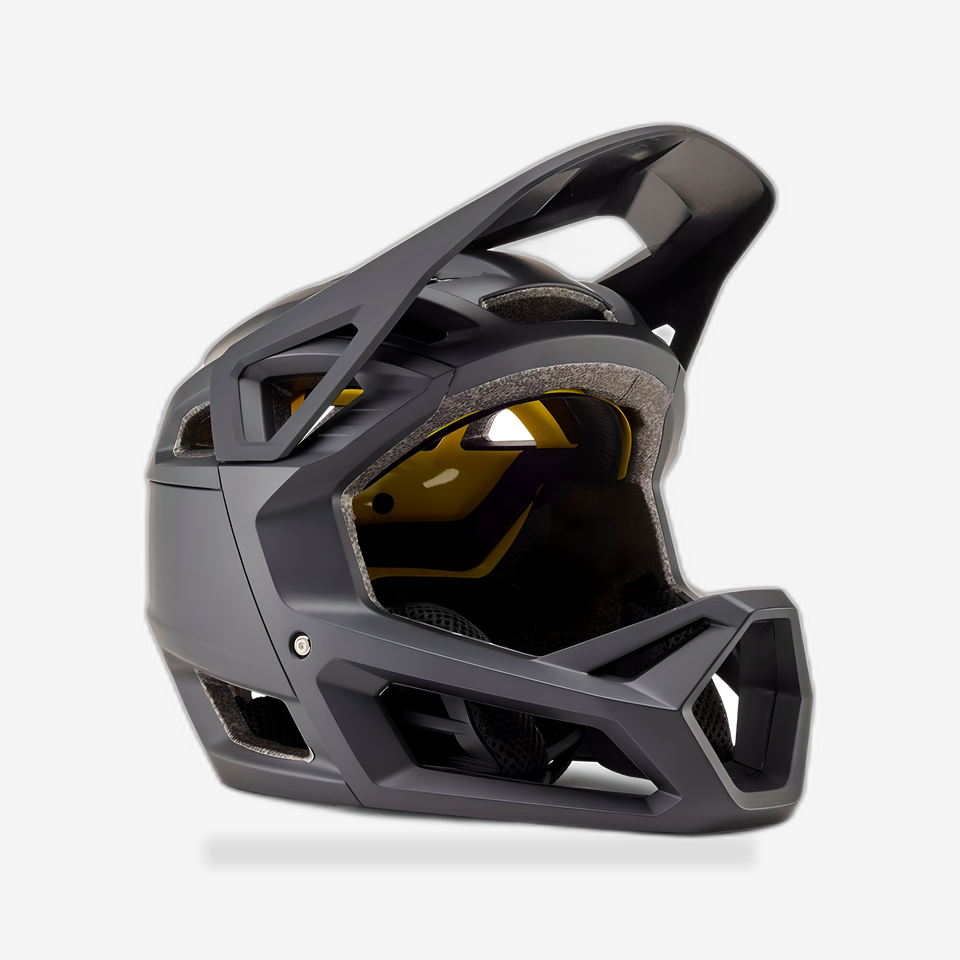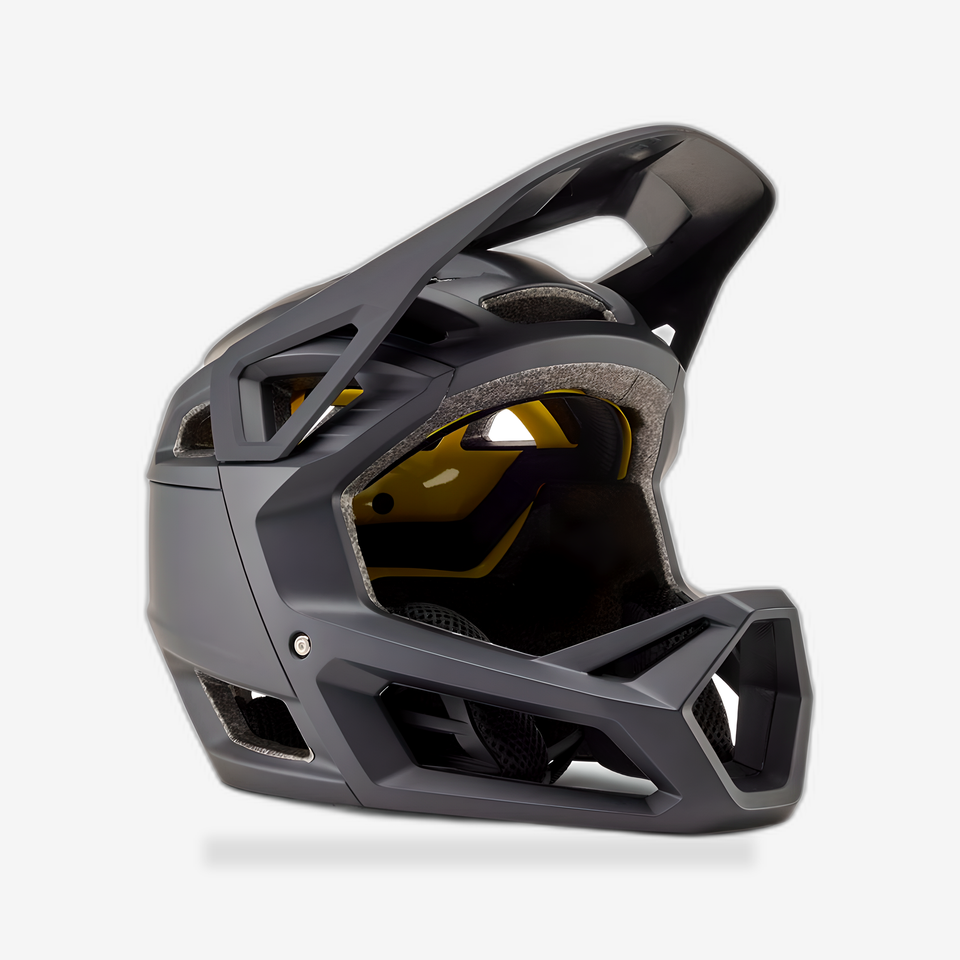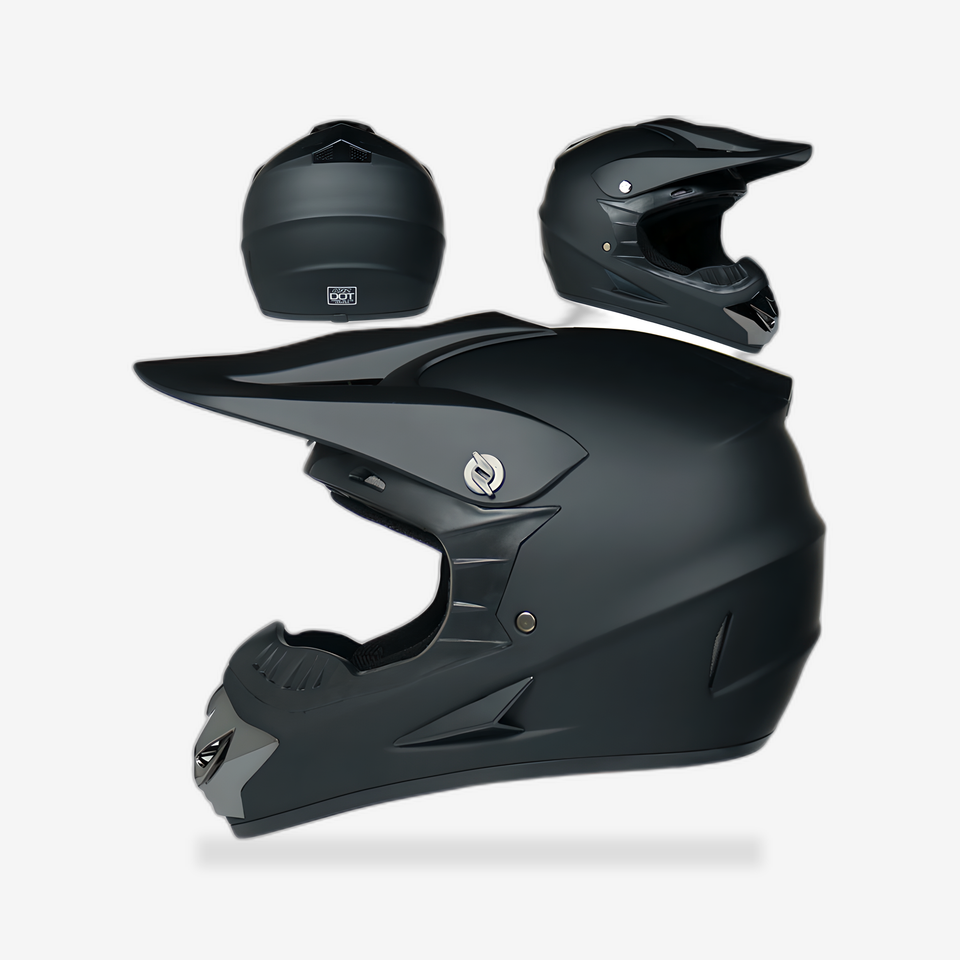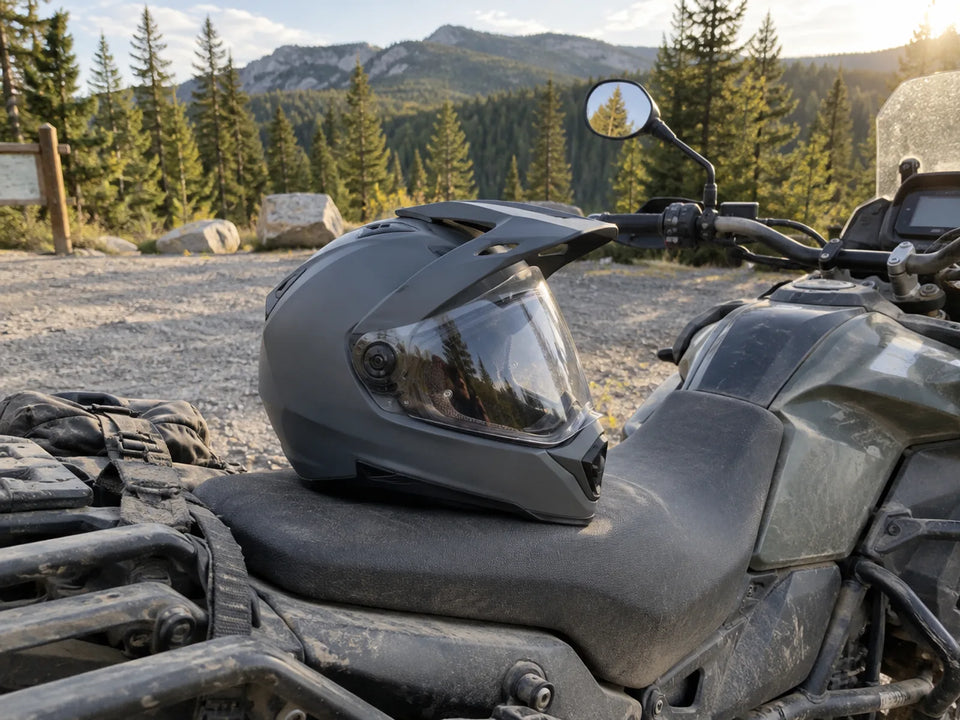

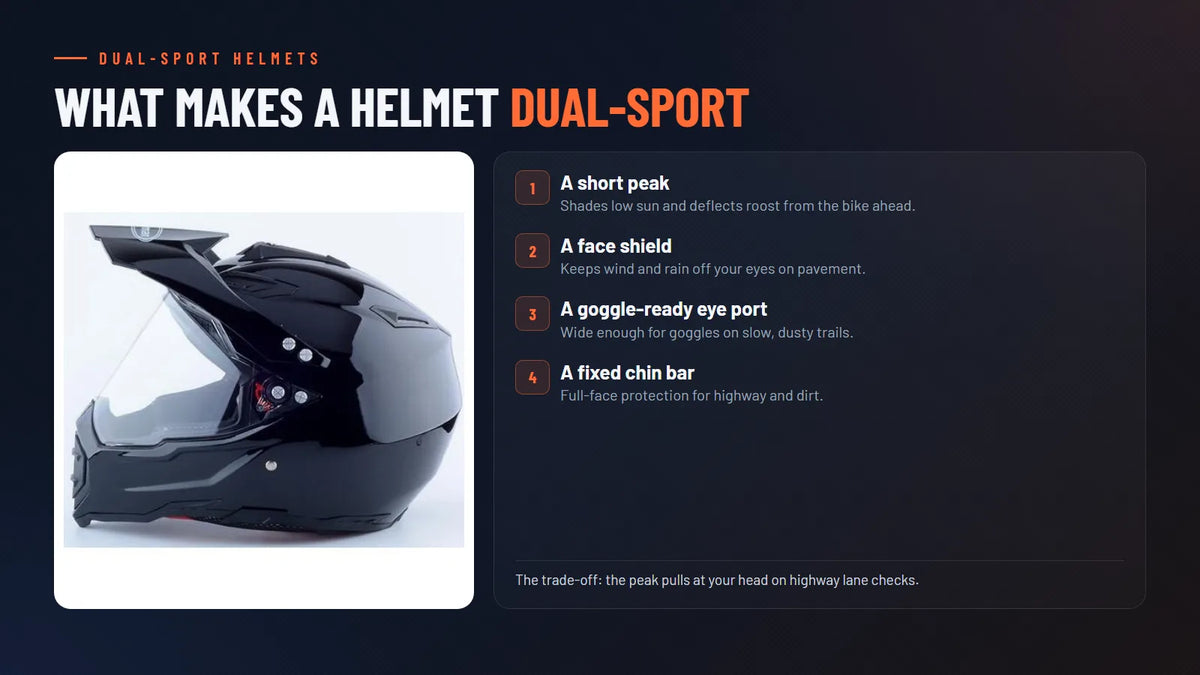
A dual-sport helmet, also called an adventure or ADV helmet, is a full-face helmet that adds a short peak above the face shield and an eye port wide enough for goggles. It lets one helmet cover highway miles and dirt trails, at the cost of some extra wind pull on the peak at speed.
The peak shades low sun and deflects roost, and makers such as Arai and Shoei shape it in wind tunnels to cut drag and buffeting. Air load rises with the square of speed, so the peak tugs hardest on lane checks at highway pace. On slow trails, riders open or remove the shield and wear goggles, and the dual-sport helmet sits between a motocross helmet and a street full-face on airflow and highway comfort.
What is a dual-sport helmet?
A dual-sport helmet is a full-face motorcycle helmet built for rides that mix pavement and dirt, pairing a street helmet's face shield with a motocross helmet's peak and room for goggles. Dual-sport, adventure and ADV are three names for the same helmet type.
Some dual-sport helmets convert between setups. Arai describes three for its Tour-X5: the full adventure setup with peak and shield, the peak with goggles and no shield for off-road riding, and the shield without the peak for road riding, with no extra parts needed to switch.
Makers don't share names for the parts. Shoei calls the peak on its Hornet ADV a "visor" (the V-460 visor), while Arai calls the clear face cover the visor. Here, peak means the shade on top and shield means the clear cover over your eyes.
What does the peak on an adventure helmet do?
The peak on an adventure helmet shades your eyes from low sun and deflects roost, the dirt and stones thrown up by the rear tire of the bike ahead. John Milbank's 2023 Bennetts BikeSocial review of the Arai Tour-X5 calls its peak "absolutely brilliant in low-sun conditions."
A peak also sits in the wind, so makers shape it to slice air instead of catching it. Arai and Shoei both describe wind tunnel work on their peaks.
- Arai says it refined the Tour-X5 peak in wind tunnel testing, with a large cut-out on the rear edge for better flow-through at high speed and less buffeting, the rapid shaking of a helmet in turbulent air.
- Shoei says the wedge-shaped V-460 peak on its Hornet ADV came from repeated wind tunnel experiments, with vent louvers that pass air rearward through the peak.
Shoei puts numbers on it: drag and lift improved by 10% and 4% against its earlier Hornet DS. Those are maker figures for one model, not a rule for every peak.
How does a dual-sport helmet handle highway speed?
A dual-sport helmet handles highway speed well while you look straight ahead, and the peak pulls at your head when you turn it into the wind for a lane check. That pull grows fast. Drag depends on the square of speed, according to NASA Glenn Research Center's drag equation, so the same peak at 70 mph takes about four times the air load it takes at 35 mph.
Two published reviews describe the same pull. Bennetts BikeSocial's John Milbank found the drag "can be significant" at motorway speeds and above when he looked left, right or up, and with his bike's windscreen at its lowest setting he felt pressure pushing down on the front of the peak. Ed Wildman's 2015 Common Tread buying guide said the peak "will catch wind and act as a sail during lane checks at highway speeds."
Three adjustments help on the interstate. Raise or lower the windscreen so the peak sits in cleaner air, keep your chin slightly tucked, and on long highway days ride with the peak off if your helmet allows it.
Can you wear goggles with an adventure helmet?
Yes, adventure helmets are built to take goggles. Shoei says goggles fit its Hornet ADV even with the shield fully open, and Arai lists a peak-and-goggles setup with the shield removed for off-road riding on the Tour-X5, with a redesigned nose deflector to make goggles easier to wear.
Goggles earn their place at trail pace. At walking speed a closed shield traps heat and breath, and an open shield lets dust straight into your eyes. Goggles seal against your face with foam and still let air move through the chin bar and eye port.
Small details make the switch easier. The Bennetts BikeSocial review notes that the Tour-X5's rear spoiler holds the goggle strap in place, and there's room under the peak to stash goggles when you're back on pavement.
A shield that fogs at walking pace has its own fixes, covered in our guide to stopping helmet visor fog.
How do dual-sport, motocross and street full-face helmets compare?
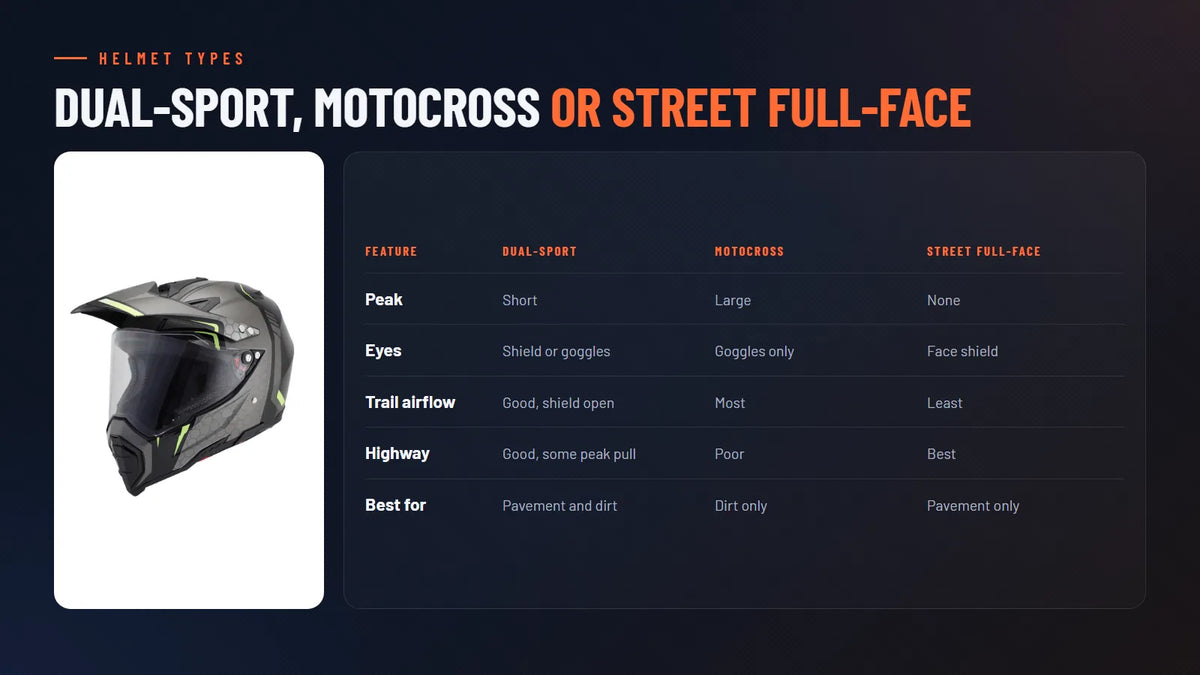
A dual-sport helmet sits between a motocross helmet and a street full-face: it moves less air than the first and catches more wind than the second, and it's the only one of the three that handles trail and freeway in one helmet.
| Feature | Dual-sport (ADV) helmet | Motocross helmet | Street full-face helmet |
|---|---|---|---|
| Peak | Short, shaped in wind tunnels on some models, removable on some | Large, for roost and sun | None |
| Eye protection | Face shield, or goggles with the shield open or off | Goggles only | Face shield |
| Eye port | Wide enough for goggles | Shaped around goggles | Sized for a face shield |
| Airflow at trail pace | Good with the shield open or goggles on | Most, through large chin and brow vents | Least; the shield is the only eye cover |
| Highway comfort | Good, with peak pull on lane checks | Poor; the peak catches wind and there's no shield | Best; no peak to catch air |
| Best for | Mixed pavement and dirt | Dirt and off-road tracks | Pavement only |
All three are full-face designs with a fixed chin bar. What that chin bar adds over an open-face helmet is laid out in our full-face helmet chin bar guide.
Who should buy a dual-sport helmet?
A dual-sport helmet suits riders whose rides mix highway miles with gravel or dirt, such as adventure-bike and dual-sport riders who ride to the trail instead of trailering the bike. One helmet then covers the whole day.
Riders at either end of that range do better with a specialist helmet. Wildman's 2015 Common Tread guide recommends a street helmet for mostly street riding, a dirt helmet for serious off-road riding, and two helmets for riders who can manage it. A commuter who sees gravel twice a year gets a quieter freeway ride from a street full-face helmet, and AtomBiker's motorcycle helmets collection carries several.
Matching the helmet to how you ride is the first step in our guide to choosing a motorcycle helmet by riding style and head shape.
Can you remove the peak?
Yes, the peak comes off on some adventure helmets, including Arai's Tour-X5 and Shoei's Hornet ADV. The Arai peak is held by one screw on each side, and the Shoei peak comes off by turning its side screws 90 degrees, with no special tools. The 2023 Bennetts BikeSocial review's one complaint is that the Arai screws are easy to drop at the roadside.
Are dual-sport helmets louder?
Yes, a dual-sport helmet is often a little louder than a street full-face at highway speed, mostly because of the peak. Bennetts BikeSocial's 2023 review found the Arai Tour-X5 quiet for normal wind noise but noted its peak "can drum slightly," and a 2015 Common Tread guide said adventure helmets hadn't matched street helmets on noise. The Bennetts reviewer advises earplugs in any helmet above about 40 mph.
Frequently asked questions
Can you use a dual-sport helmet for everyday street riding?
Yes, a dual-sport helmet works for daily street riding, because it's a full-face helmet with a face shield. The trade-off is a little more pull from the peak on freeway lane checks than a street full-face gives you.
Is a dual-sport helmet heavier than a street full-face helmet?
No, not always, and published guides disagree. The 2015 Common Tread guide said a dual-sport helmet weighs more than a comparable street helmet even with the peak off, while AGV Sport's 2024 guide calls dual-sport helmets generally lighter. Compare the listed weights of the exact models you're considering.
Are dual-sport helmets DOT approved?
Yes, a dual-sport helmet sold for US road use has to meet FMVSS 218, the US federal motorcycle helmet standard, and carry the DOT label like any street helmet. Some also carry ECE 22.06, the UN Economic Commission for Europe helmet regulation, and Arai's Tour-X5 is approved to it. What each label tests is laid out in motorcycle gear certifications.
Can you use a Bluetooth communicator with a dual-sport helmet?
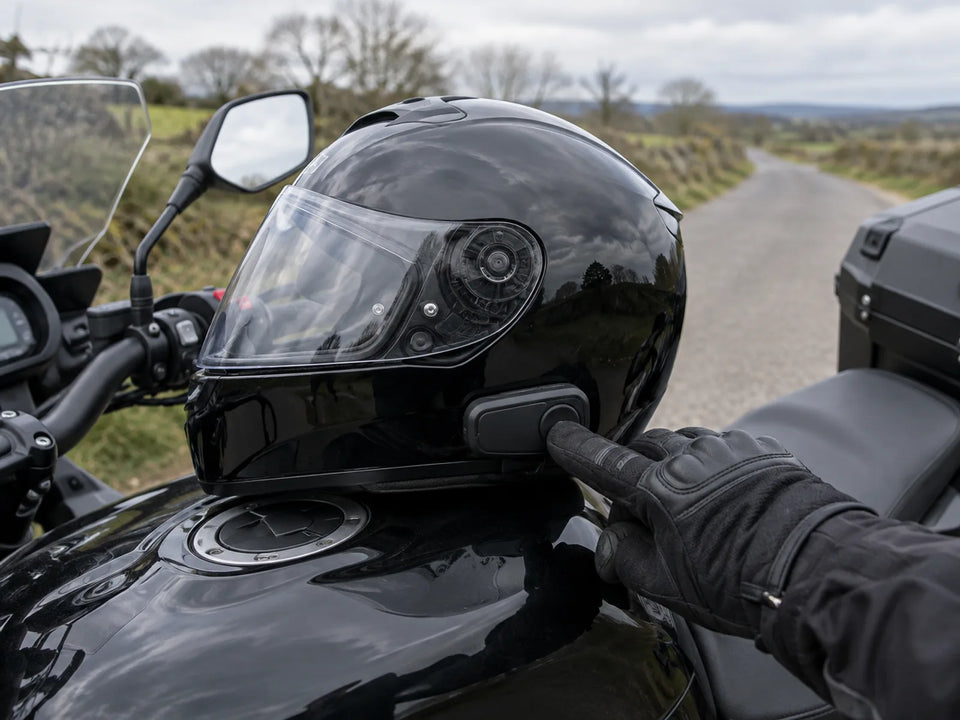
Yes, a clip-on communicator mounts on a dual-sport helmet the same way it mounts on any full-face. Sena pitches the dual helmet setup on its 60S at riders who wear a street helmet for the road and an adventure helmet for the trail. The setup choices are compared in our guide to built-in vs clip-on Bluetooth helmet communication.
Do dual-sport helmets have a drop-down sun visor?
No, not every dual-sport helmet has one, and Arai's Tour-X5 doesn't. The 2023 Bennetts BikeSocial review of that helmet leans on the peak for low sun and a dark-smoke shield for very bright days instead. Whether an internal visor is worth having is weighed in our guide to internal drop-down sun visor helmets.
Shop this guide
Start with the right questions.
Compare construction, fit and features. Open each product for its available sizes, current price and stated certifications.