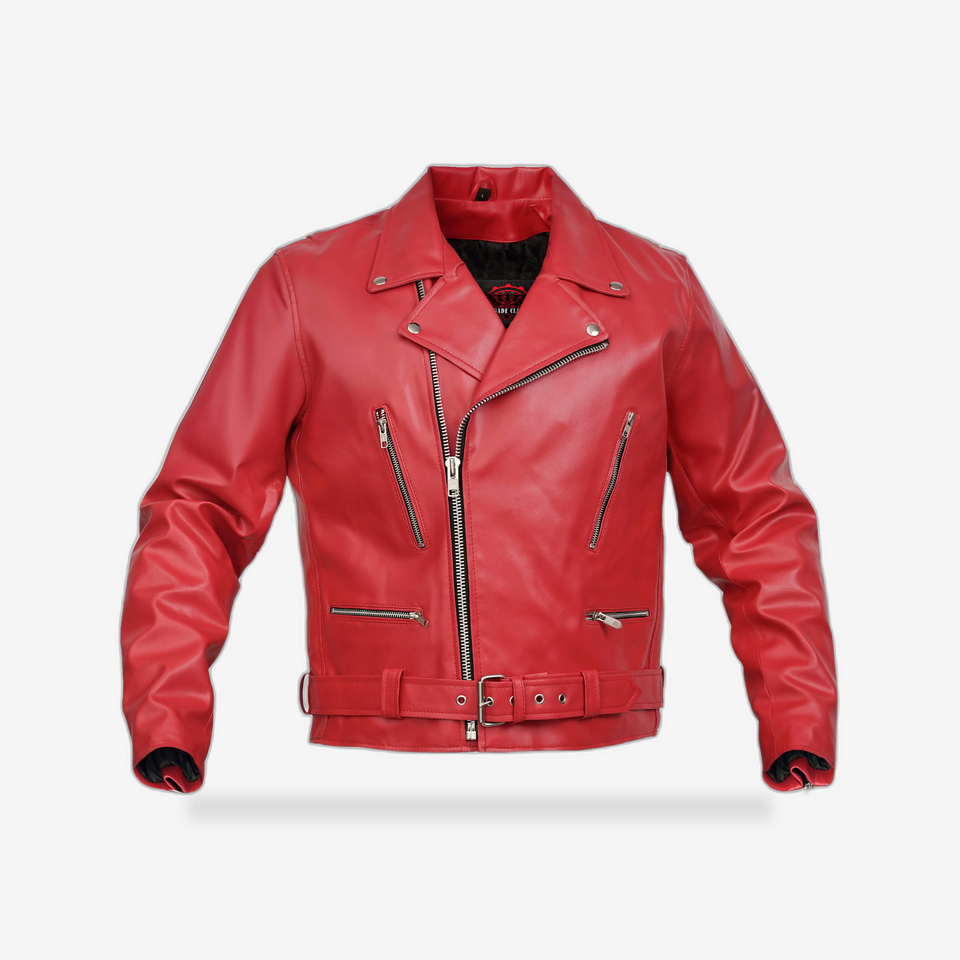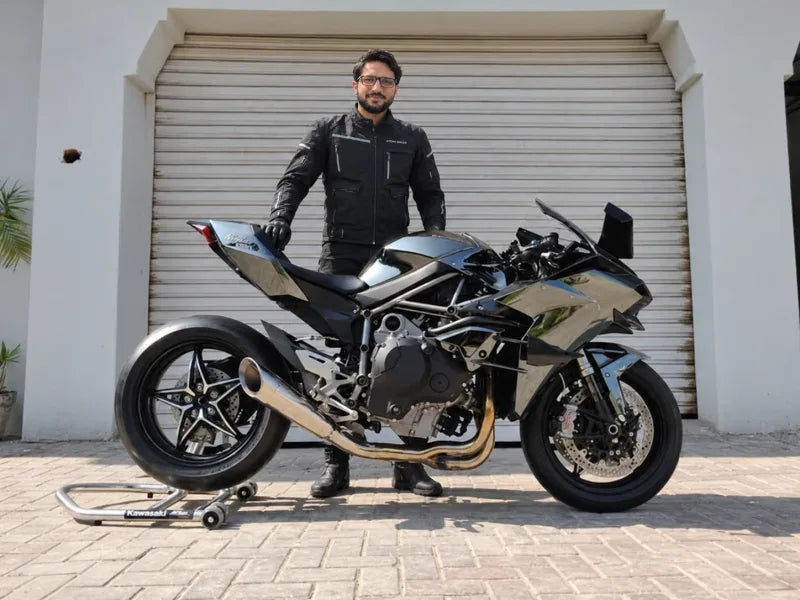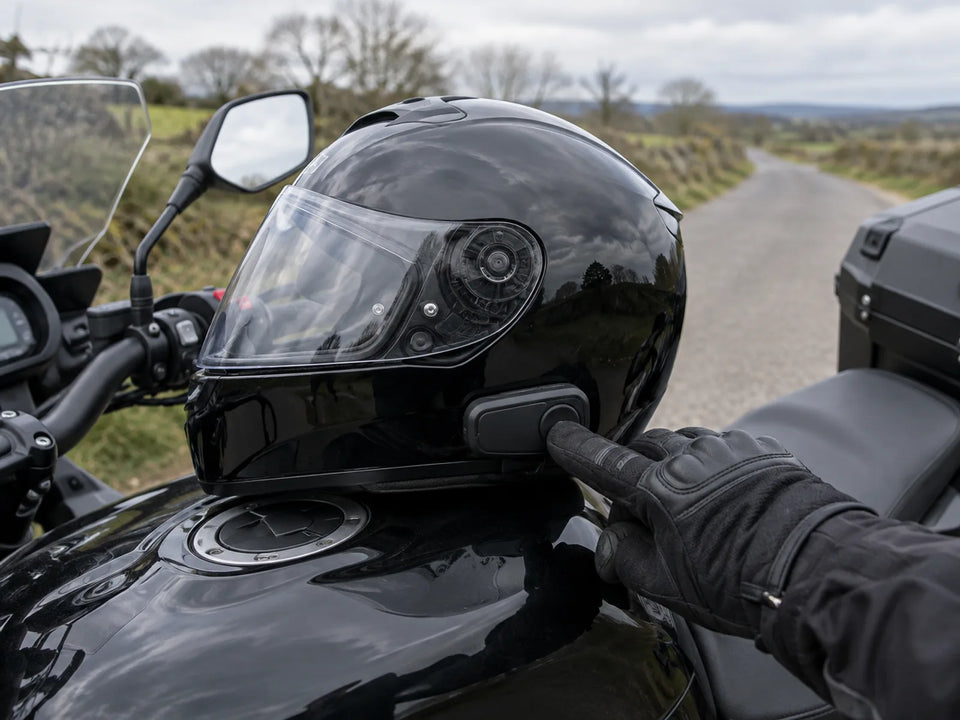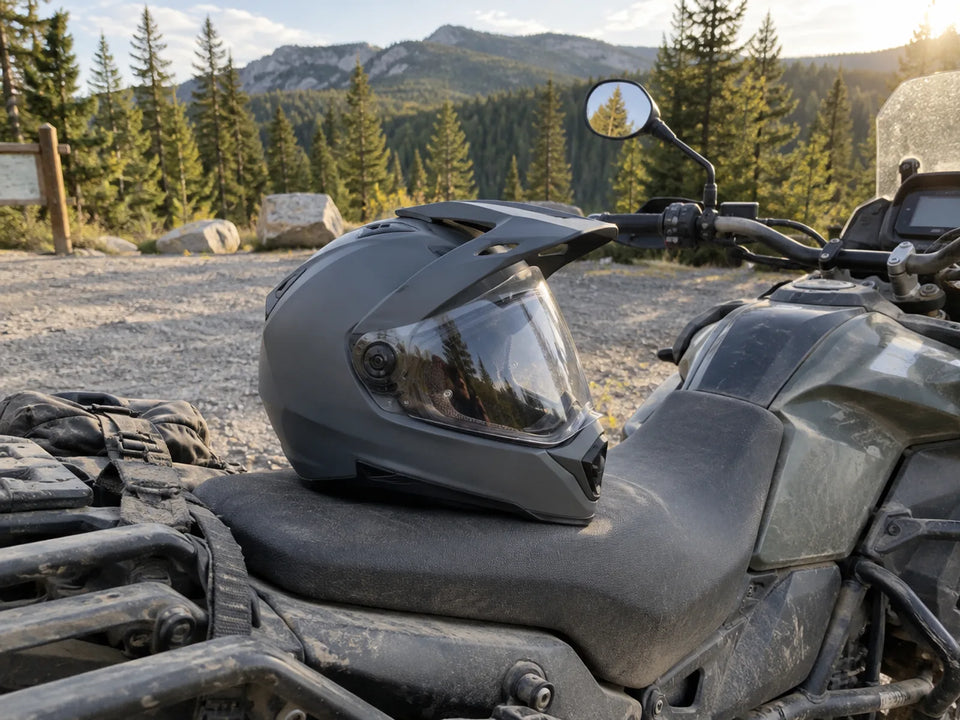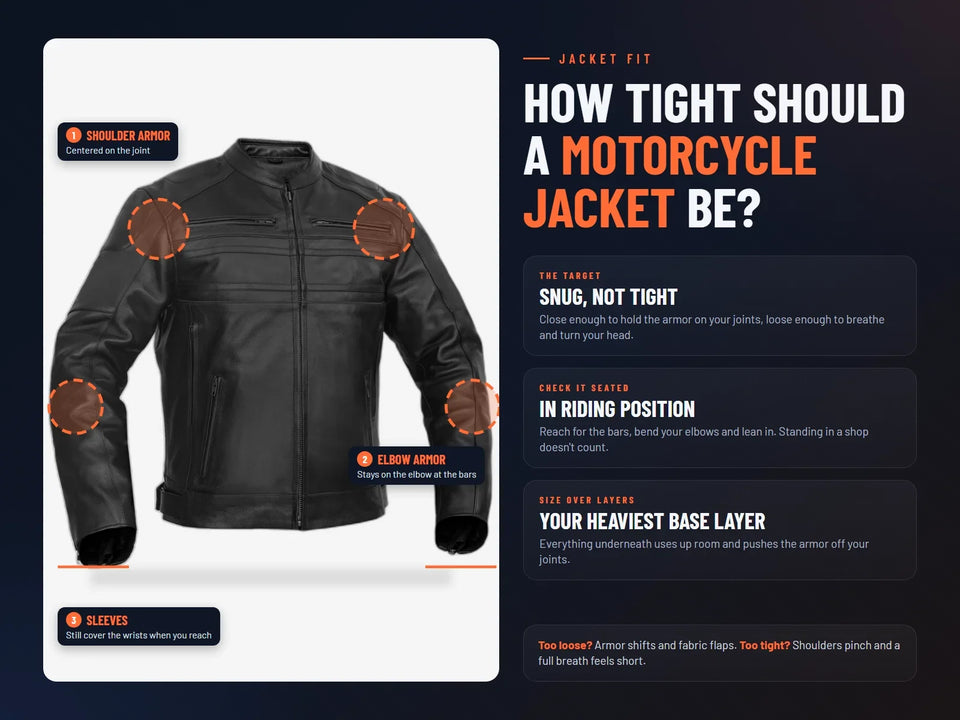
A motorcycle jacket should be snug, not tight: close enough that the shoulder and elbow armor stays on your joints when you reach for the bars, with room to breathe deeply and turn your head over a base layer. Check it seated in riding position, where the sleeves should cover your wrists and the hem your lower back.
Five seated checks cover your reach, elbows, shoulders, back and breathing. With your arms hanging at your sides, the sleeves end about halfway between wrist and knuckles, and the elbow armor's cup sits on or just below the point of the elbow. Shifting armor and flapping fabric mean too loose, while pinched shoulders and armor pressing into you mean too tight. Layers and riding style change the fit too, so try a jacket over your heaviest base layer.
How tight should a motorcycle jacket be?
A motorcycle jacket should be close-fitting enough to hold its armor on your joints and roomy enough to let you move, breathe and turn your head. D3O, the impact-protector maker, sums it up as "not too tight and not too loose": too tight and you can't flex and turn the way riding needs, too loose and the protectors won't sit in the right spot.
Alpinestars sets the same target for its race suits, which should feel close to the body in riding position with no excess fabric bunching.
Armor is the reason fit is a safety question and not just a comfort one. An elbow cup spreads an impact only while it's on the elbow, and a baggy sleeve lets it slide away.
How do you check jacket fit in a riding position?
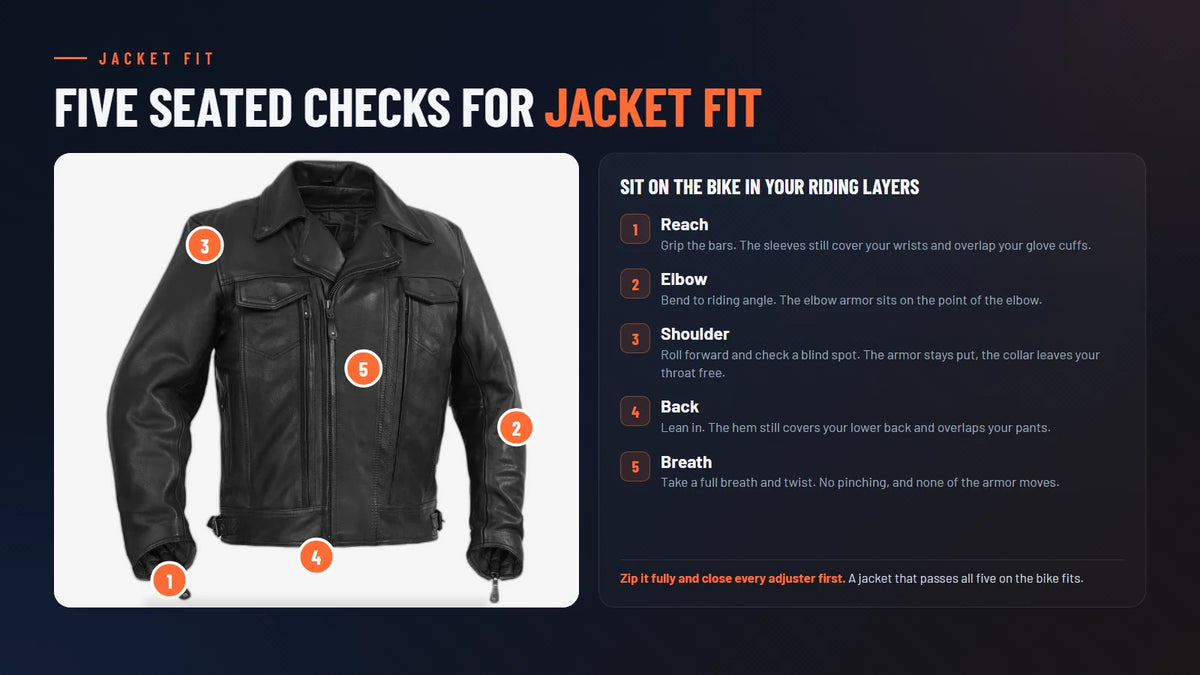
Check jacket fit in a riding position with five seated checks, on your own bike or on a chair with your arms out as if holding the grips. Wear the base layer and gloves you ride in, then zip the jacket fully and close every adjuster.
Run the five checks in this order.
- Reach check: grip the bars and look at your wrists, where the jacket's sleeves still cover them and overlap your glove cuffs.
- Elbow check: bend your arms to riding angle and press on each elbow, where the jacket's elbow armor sits on the point of the elbow.
- Shoulder check: roll your shoulders forward and turn your head as if checking a blind spot, while the jacket's shoulder armor stays on the shoulder and the collar leaves your throat free.
- Back check: lean into your riding position, where the jacket's hem still covers your lower back, overlaps your pants and rests on your thighs.
- Breath check: take a full breath and twist your torso, while the jacket's chest and waist stay free of pinching and none of the armor moves.
A jacket that passes all five on the bike fits, even if it feels odd standing in a shop.
How long should jacket sleeves be?
Jacket sleeves should be long enough to cover your wrists with your arms stretched to the bars, which makes them look slightly long when you stand. Aerostich, the US riding-suit maker, says a suit's sleeves are the right length when, standing with your arms hanging loosely, they end about midway between your knuckles and your wrist at the back of the hand. J.D. Power's 2019 fit guide puts the same mark at mid-palm.
On the bike, the cuff has to stay over your glove instead of riding up and exposing skin, the test Alpinestars applies to its race suits.
Race-fit jackets are the exception. AGVSPORT notes that some race-fit jackets use shorter sleeves made to pair with long gauntlet gloves.
Where should jacket armor sit?
Jacket armor should sit centered on the joint it protects: the shoulder pad over the point of the shoulder, the elbow cup on the elbow and the back protector flat along your spine. Alpinestars says shoulder armor belongs centered over the shoulder joint without sliding forward or back, and that elbow armor stays over the elbow with your arms extended. Aerostich puts the center of the elbow cup on, or very slightly below, the elbow.
A back protector works only when the jacket holds it against your back. In a loose jacket, it swings away from the spine as you lean forward.
Arm and waist adjusters pull the armor into place on jackets that have them. Pads that won't stay put point to a loose pocket or the wrong size, and what the EN 1621 label on each pad certifies is laid out in motorcycle gear certifications.
What are the signs a jacket is too tight or too loose?
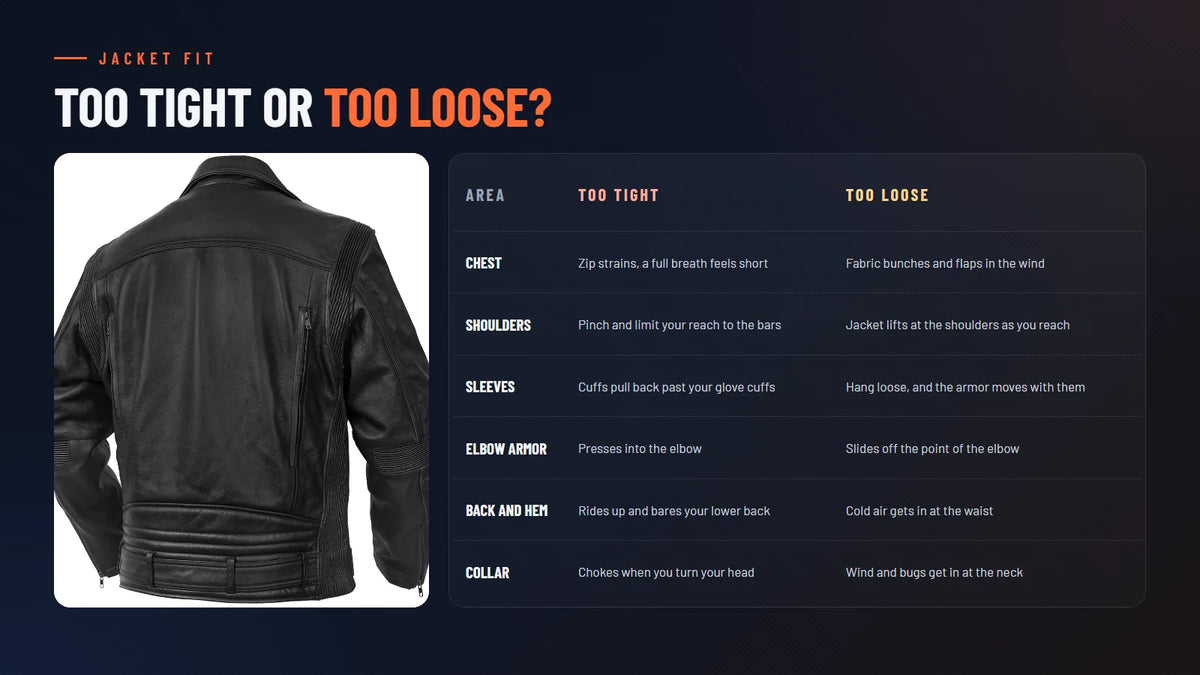
A jacket is too tight when it pins your shoulders, presses armor into your joints or cuts a breath short, and too loose when the armor shifts and the fabric bunches or flaps. The table lists the fail signs by body area, as they show up in the seated checks above.
| Area | Too tight | Too loose |
|---|---|---|
| Chest and torso | Zip strains and a full breath feels short | Fabric bunches and flaps in the wind |
| Shoulders | Shoulders pinch and limit your reach to the bars | Jacket lifts at the shoulders when you reach forward |
| Sleeves | Cuffs pull back past your glove cuffs when you reach | Sleeves hang loose and the armor inside moves with them |
| Elbow armor | Armor presses into the elbow | Armor slides off the point of the elbow |
| Back and hem | Hem rides up and bares your lower back when you lean | Cold air gets in at the waist |
| Collar | Collar chokes when you turn your head | Wind and bugs get in at the neck |
Signs from both columns at once, such as pinching shoulders with sliding elbow armor, point to the wrong cut for your build rather than the wrong size.
How does fit change with layers and riding style?
Fit changes with layers because everything under the jacket uses up room and pushes the armor off your joints, and it changes with riding style because a forward lean pulls a jacket differently from an upright seat.
Measure over your heaviest base layer when you size the jacket, and try any zip-out liner both in and out, as Eagle Leather advises. D3O's guidance is a thin base shirt or light thermals underneath, never several thick layers. Airbag vests need more room again, and D3O suggests sizing up for an airbag jacket.
Riding style moves the target. Eagle Leather notes that cruiser and touring riders often prefer a relaxed fit with a longer torso and room for layers, while sport and adventure riders lean toward a closer fit with pre-curved sleeves and stretch zones. Each cut is matched to its riding position in motorcycle jacket types.
Does a leather jacket stretch?
Yes, a leather jacket stretches a little and molds to your shape, but not enough to fix one that's too small. Alpinestars says its leather race suits stretch 3-5% over the first few track sessions. Buy leather snug with the armor already on your joints, not tight in the hope that it gives.
Should you size up for a back protector?
Yes, size up if you'll add a back protector, because the insert takes up room across your back that a chest measurement doesn't count. Take that chest measurement at its fullest part with your arms relaxed, over your heaviest base layer, using the tape method in how to take body measurements for motorcycle gear.
Where can you find jackets in true riding cuts?
Jackets in true riding cuts have sleeves and a back shaped for reaching the bars, so they feel slightly long when you stand. AtomBiker, a US online store for motorcycle helmets, jackets, gloves, boots and pants, sells motorcycle jackets in true riding cuts and notes that most are designed to fit in riding posture, with sleeves that feel long when your arms hang at your sides. Its 30-day return window covers unused, unworn items with the tags attached, so run the five seated checks on a chair at home before you ride in one.
Frequently asked questions
Should a motorcycle jacket be a size bigger than your normal jacket?
No, size a motorcycle jacket from your chest measurement and the maker's chart, not from your everyday jacket size. J.D. Power notes there's no universal size standard and that sizing varies between makers. AtomBiker's Sizing Guide runs XS (34-36 in, 86-91 cm) through 4XL (48-50 in, 122-127 cm).
Should you be able to wear a hoodie under a motorcycle jacket?
Yes, as long as the jacket still passes the seated armor checks with the hoodie on, though sources disagree on how much room to leave. J.D. Power suggests trying a jacket over a hoodie and checking that you can still hug yourself, while D3O says a thin base layer or light thermals is enough and there should never be room for several thick layers.
Why does a motorcycle jacket ride up on the bike?
A motorcycle jacket rides up when its back is too short for your torso or the jacket is big enough to slide as you lean. Eagle Leather's rule is that the hem should extend past your waist and overlap your pants, and a waist adjuster or a jacket-to-pants zip holds it there.
Should you try on a motorcycle jacket with your other gear?
Yes, try a jacket on with your helmet, gloves, riding pants and any backpack you ride with, as AGVSPORT advises. The collar, cuffs and hem all meet other gear on the bike, and a fit that works alone can clash once everything is on.
Can a motorcycle jacket be altered to fit better?
Yes, sleeve length can be altered, but torso length is close to fixed. Aerostich, which alters its own riding suits, says there's no simple or cost-effective way to change a garment's torso length once it's sewn, so get the body length right first and adjust the sleeves after.
Shop this guide
Start with the right questions.
Compare construction, fit and features. Open each product for its available sizes, current price and stated certifications.