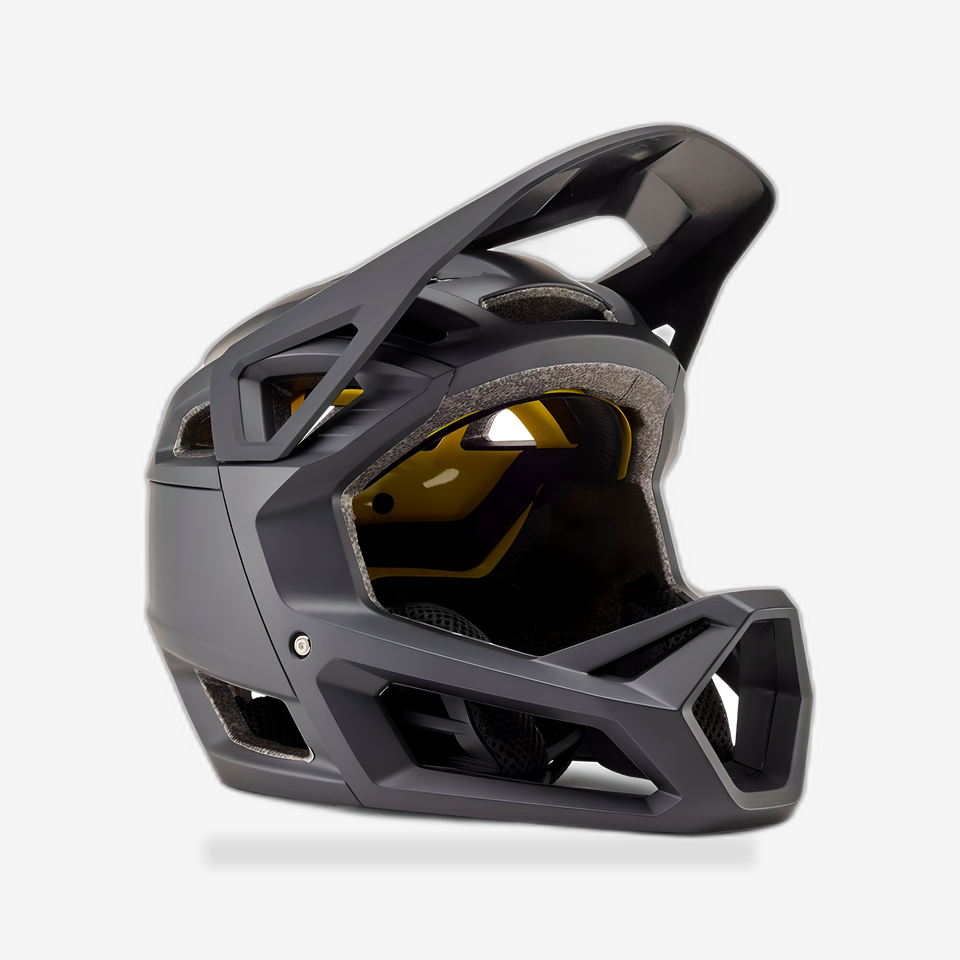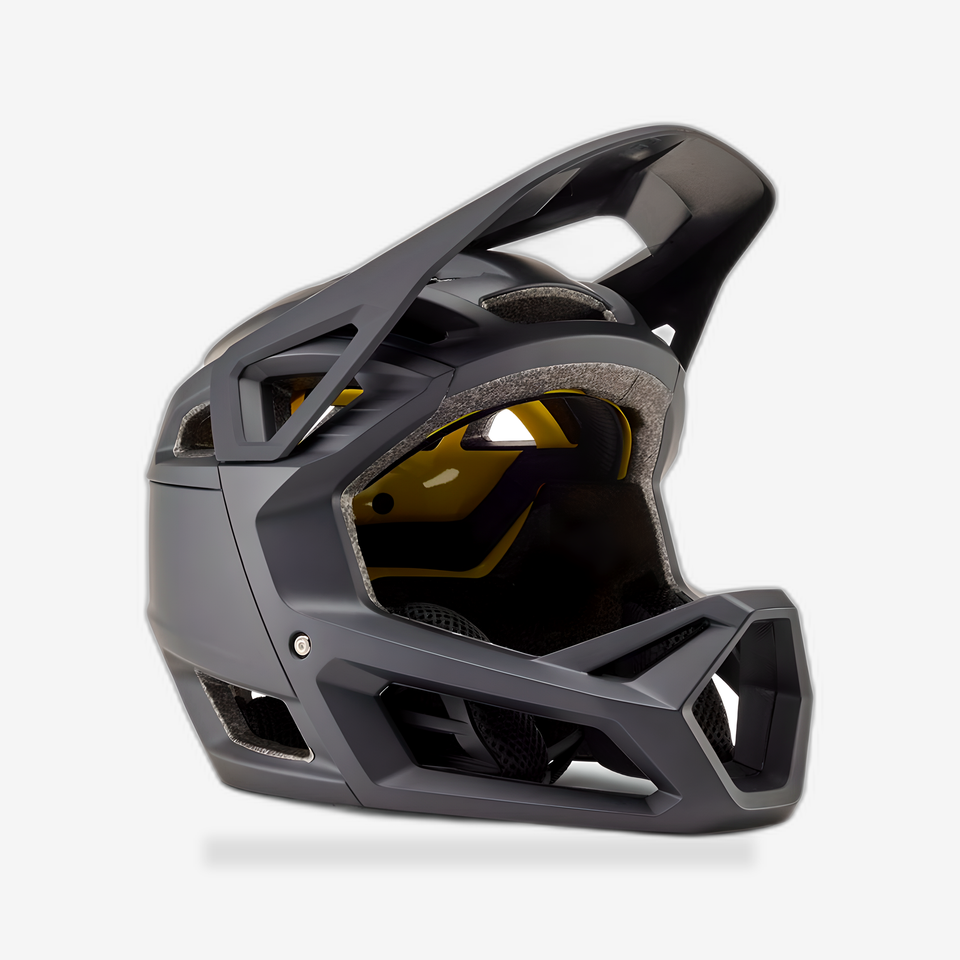

A helmet's EPS liner is the layer of expanded polystyrene foam inside the shell, and it protects your head by crushing in an impact so your head stops over a few milliseconds instead of all at once. The crush is permanent, so a liner that has absorbed one real hit has used up its protection at that spot.
The EPS sits between the hard outer shell and the comfort padding, with the chin strap anchored to the shell. The Snell Memorial Foundation says the foam's thickness and density give the brain 5 to 6 milliseconds to slow down. Multi-density liners pair firmer foam for hard hits with softer foam for lighter ones, while EPP, a rival foam, recovers its shape but rebounds more. Crushed EPS rarely shows from the outside.
What is an EPS liner?
An EPS liner is the energy-absorbing foam layer molded to fit inside a helmet's outer shell, and EPS stands for expanded polystyrene, a rigid, closed-cell foam that is mostly air. The Snell Memorial Foundation says a helmet's impact liner is usually EPS.
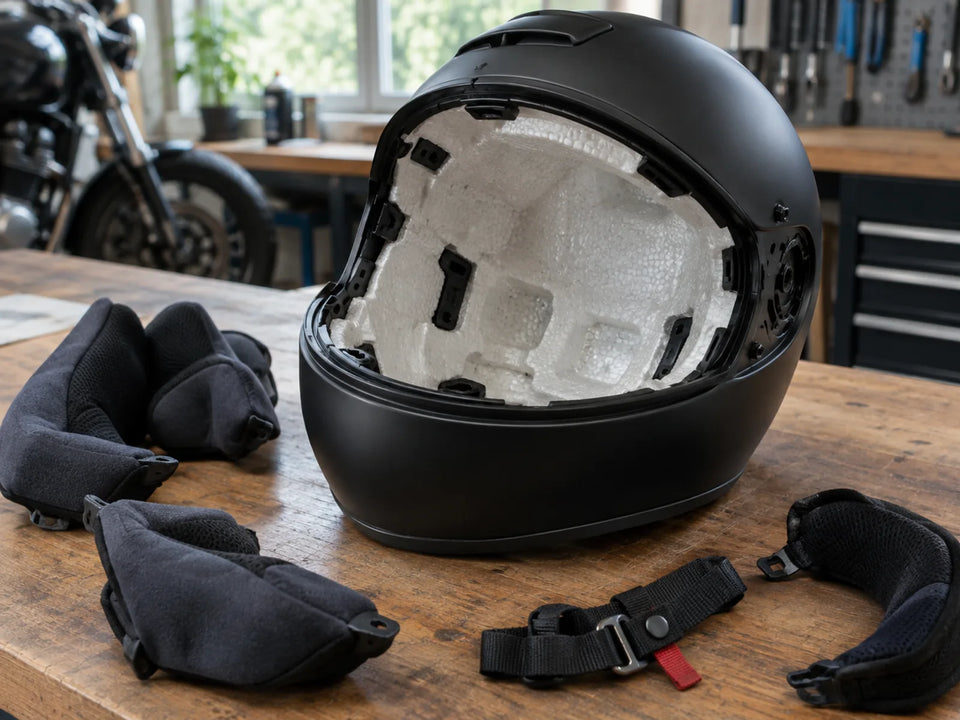
EPS starts as small polystyrene beads. Steam expands them and a mold fuses them into one shaped piece, which is how the liner takes the exact contour of its shell. Lift out the comfort padding and you'll see that bead pattern on the foam.
The liner is the part of the helmet that does most of the energy absorbing. It's also the part riders see least, which is why so many questions about crashes, drops and replacement come back to it.
What are the layers inside a motorcycle helmet?
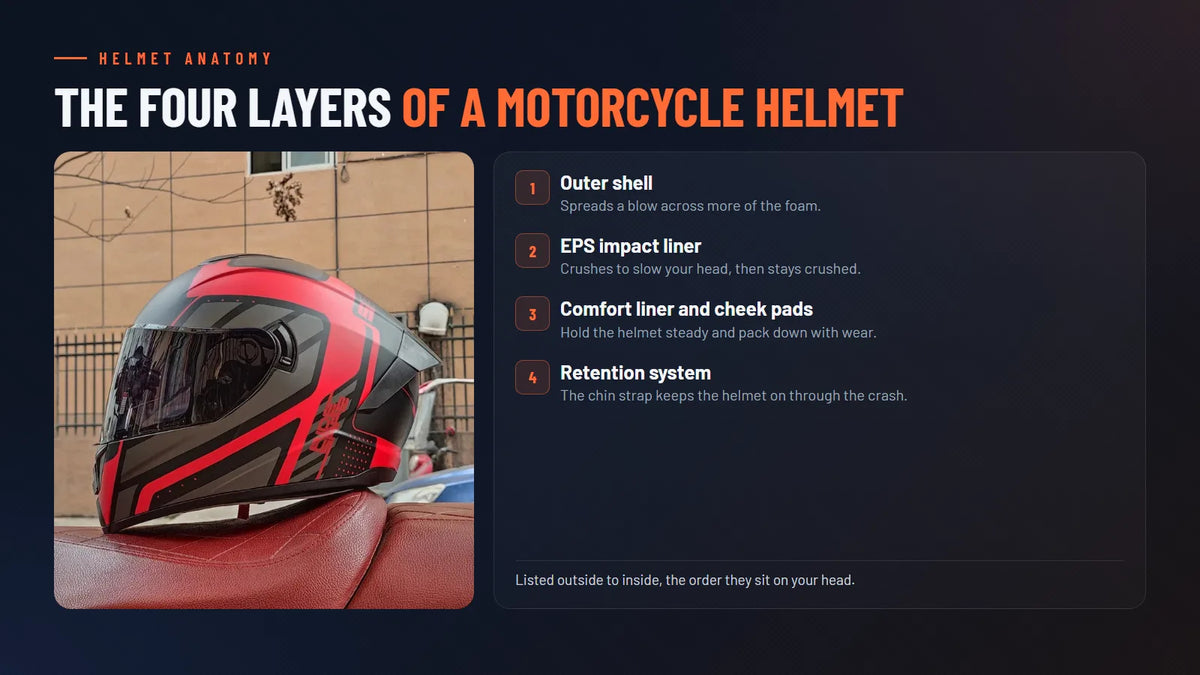
A motorcycle helmet has four main parts stacked outside to inside: the hard outer shell, the EPS impact liner, the comfort liner with its cheek pads, and the retention system that holds the helmet on. The EPS sits second from the outside, directly under the shell.
The four helmet parts below are listed in that order, each with its job.
- The helmet's outer shell spreads a blow across more of the foam and shields the foam from sharp objects and pavement.
- The helmet's EPS impact liner crushes to slow your head, and some makers mold it as one piece while others build it from several pieces or layers.
- The helmet's comfort liner and cheek pads hold the helmet steady on your head, and they're the parts that pack down with wear.
- The helmet's retention system, the chin strap with its D-rings or buckle, keeps the helmet on through the crash, and FMVSS 218 load-tests it.
The shell is the part riders compare most, and polycarbonate, fiberglass and carbon are weighed against each other in our helmet shell materials guide.
How does EPS absorb an impact?
EPS absorbs an impact by crushing: its cell walls collapse under the load, and that collapse soaks up the energy of the hit instead of passing it on to your head. The Snell Memorial Foundation sums up the reason in one line: "It's not the fall, it's the sudden stop that does the damage."
Crushing stretches out that stop. Snell says the foam's thickness and density give the brain 5 to 6 milliseconds to slow down, and the shell spreads the blow so more of the foam shares the work.
Crushed foam also stays down. The Bicycle Helmet Safety Institute (BHSI), writing about the same foam in bicycle helmets, notes that crushing foam doesn't bounce back at the bottom like a spring, so it adds no rebound to the hit.
The foam has a limit, though. Snell explains that a liner has to be hard enough to bring the head to a complete stop before the foam is fully crushed, because a helmet that runs out of crush room lets the head stop abruptly anyway. Softer foam crushes further in the same hit. Liner firmness is a balance, not a "softer is safer" rule.
Why does an EPS liner only work once?
An EPS liner works only once because the crush is permanent: the cell walls that absorbed the first hit are already broken, so that part of the liner has little left for a second one. The Snell Memorial Foundation calls helmets "one-use items" and says the liner absorbs impact shock by collapsing itself.
BHSI puts the damage plainly. Crushing the cell walls destroys the impact protection of most stiff foams.
A lab pass doesn't change that rule. FMVSS 218, the federal standard behind the DOT label, strikes each of four test sites twice in a row, yet the label it requires tells owners to return a helmet to the maker for inspection, or destroy and replace it, after a severe blow. How the DOT, ECE and Snell impact tests differ is compared in our guide to DOT, ECE and Snell helmet standards.
What is multi-density EPS?
Multi-density EPS is a helmet liner made from two or more foam densities, so firmer foam handles hard hits and softer foam handles lighter ones. BHSI explains the trade: denser foam resists very hard impacts better before it crushes to its limit, and softer foam crushes more easily in smaller impacts.
Makers place the densities by zone or by layer. Arai describes its one-piece, multi-density EPS liner as tuned to manage impact energy in each area of the helmet. Shoei's RF-1400 launched in 2020 with a dual-layer, multi-density EPS liner, as Rider Magazine reported at the time.
A single density is tuned for one impact level, and real crashes vary: a parking-lot tip-over and a highway get-off load the foam very differently. Density figures rarely appear on product pages, so a "multi-density" claim is one you take on the maker's word.
How do EPS and EPP liners compare?
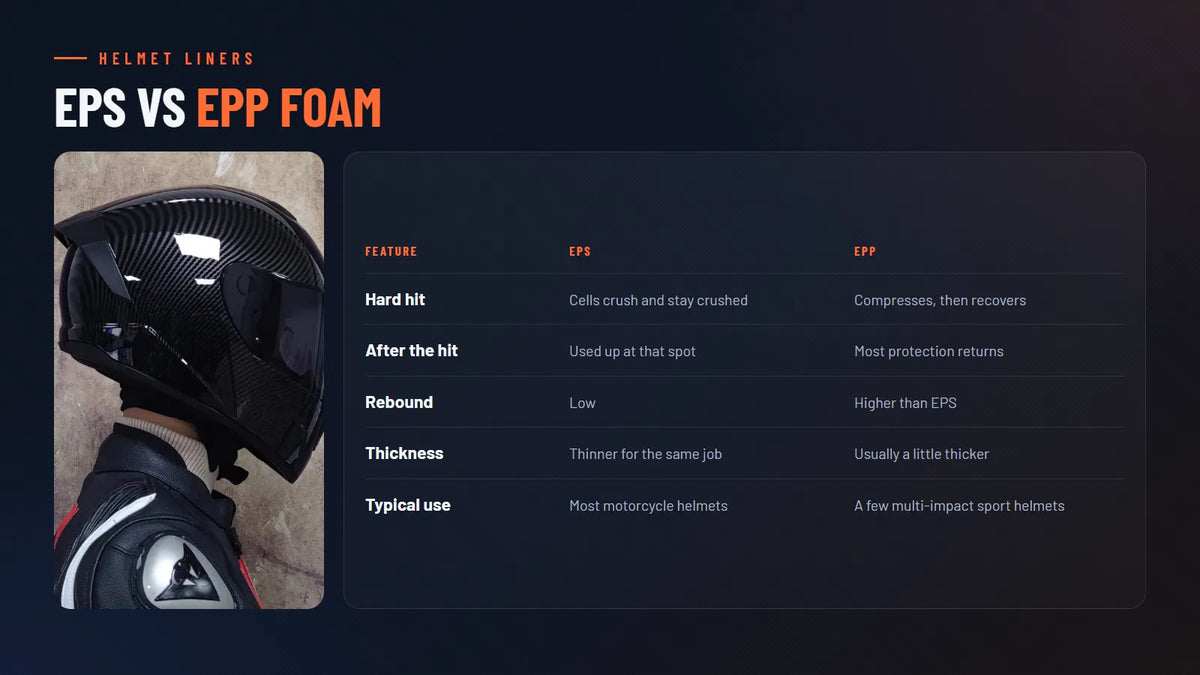
EPS crushes once and stays crushed, while EPP (expanded polypropylene) compresses, rebounds more and slowly recovers its shape, which makes EPP a multi-impact foam. EPS is still the usual motorcycle helmet liner.
The two liner foams compare as follows, using BHSI's foam guidance for both columns.
| Feature | EPS (expanded polystyrene) | EPP (expanded polypropylene) |
|---|---|---|
| Response to a hard hit | Cells crush and stay crushed | Foam compresses, then slowly recovers its shape |
| Protection after the hit | Used up at the crushed spot | Most of it returns over time |
| Rebound | Low, because crushed foam doesn't spring back | Higher than EPS |
| Liner thickness | Thinner for the same job | Usually a little thicker than EPS |
| Cost and molding | Cheap and easy to mold | Trickier to mold and costs a little more |
| Appearance | Fused foam beads | Looks identical to EPS, so only the label tells them apart |
| Typical use | Most motorcycle and bicycle helmets | A few multi-impact sport helmets, mostly for skateboarding |
Multi-impact foam sounds like an upgrade, but motorcycle helmets are built around the severe hit, not a string of small knocks. Snell draws the same line, contrasting crash helmets with sport helmets designed to take multiple low impacts, and its advice is to replace any helmet involved in an impact while in use, whatever the foam.
How do you check an EPS liner for damage?
You check an EPS liner for damage by taking out the comfort liner and looking over the foam in good light for cracks, dents, flattened patches and gaps where it meets the shell. Any one of those retires the helmet.
The visual check takes four steps.
- Remove the comfort liner and cheek pads the way the owner's manual describes, so the whole EPS liner is visible.
- Turn the helmet under a bright light and look over the EPS liner for cracks, split bead lines, dents and flattened patches.
- Run along the edge where the EPS liner meets the shell and look for gaps or loose sections.
- Check the shell over any suspect spot on the liner for cracks or deep gouges, since a blow that marked the shell also loaded the foam behind it.
A clean result doesn't clear a helmet that took a real hit. Snell recommends replacing a helmet you suspect is compromised, and it notes that some manufacturers offer an inspection service. Age and drops raise separate questions, answered in when to replace a motorcycle helmet.
Can you see EPS damage from the outside?
No, you often can't see EPS damage from the outside, because the foam sits hidden behind the shell and the comfort liner. Even a direct look at the foam misses some damage: BHSI notes that crushed foam can regain some of its thickness over a period of hours without regaining its ability to manage an impact.
That's why the Snell Memorial Foundation says only a trained professional can reliably judge helmet damage.
Does heat or solvent damage EPS?
Yes, high heat and many solvents damage EPS. Polystyrene, the plastic EPS is made from, softens at about 194-212°F (90-100°C) and dissolves quickly in acetone, and the Snell Memorial Foundation warns that a hot muffler could melt the foam liner.
Everyday summer heat is a smaller worry. FMVSS 218 conditions test helmets at 113-131°F (45-55°C) for 4 to 24 hours before impact testing, so a DOT helmet has to pass after a heat soak in that range.
Chemicals are the quieter risk. FMVSS 218 requires every DOT helmet's label to warn that common substances can seriously damage it without visible damage, and Snell says to clean the inside pads with mild soap and water only, never with chemical cleaners. Each required helmet label is explained in our motorcycle gear certifications guide.
Where can you find EPS-lined motorcycle helmets?
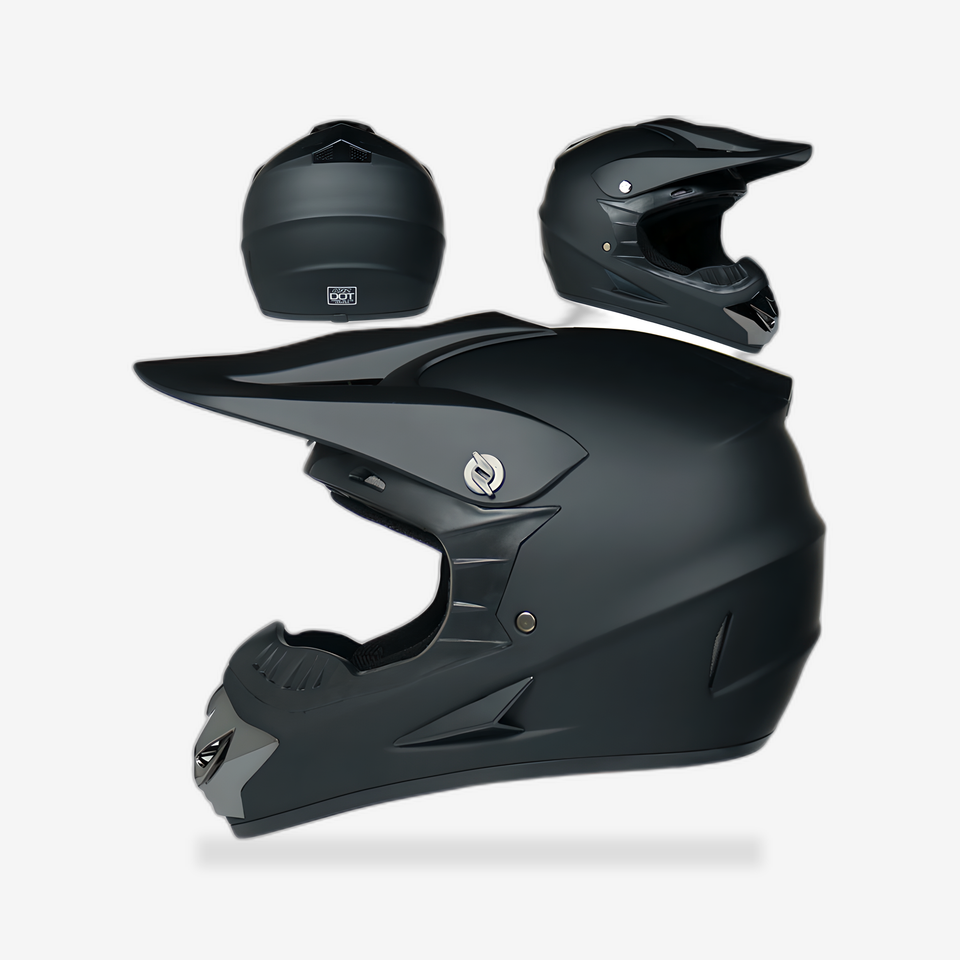
You'll find EPS-lined motorcycle helmets in nearly every helmet store and collection, because EPS is the usual impact liner foam across full-face, modular, open-face and off-road designs.
AtomBiker, a US online store for motorcycle helmets, jackets, gloves, boots and pants, carries full-face, modular and open-face 3/4 helmets in its motorcycle helmets collection. Ask for the liner material before you buy, since a DOT helmet states it on a label inside the shell, and check the 30-day return conditions before you ride in a new helmet.
Frequently asked questions
Can you replace the EPS liner in a motorcycle helmet?
No, the EPS liner isn't a part you replace at home; the comfort liner and cheek pads are the swappable parts. The foam is molded to fit its shell, and FMVSS 218 requires every DOT helmet to carry the instruction "Make no modifications."
Is helmet EPS the same foam as a picnic cooler?
No, helmet EPS is a higher grade of expanded polystyrene than cooler foam, according to BHSI. Both are made from the same plastic, which is why the names match, but a cooler's foam is made to insulate, not to manage a crash.
Is a thicker EPS liner always safer?
No, a thicker liner gives your head more distance to stop in a very hard impact, but BHSI describes the ideal liner as just thick enough for the impact and just firm enough not to bottom out. Extra thickness also means a bigger, heavier helmet.
Does EPS wear out if you never crash?
Yes, EPS wears slowly even without a crash. The Snell Memorial Foundation says the simple act of putting a helmet on and taking it off damages the comfort pads and the energy-absorbing foam liner over time, which is one reason behind its five-year replacement advice.
Do all motorcycle helmets use an EPS liner?
No, but most do, since EPS is the usual impact liner foam and multi-impact foams such as EPP show up mainly in sports like skateboarding. Liner foam is one detail; the type, certification and fit steps in our guide to choosing a motorcycle helmet by riding style and head shape decide more.
Shop this guide
Start with the right questions.
Compare construction, fit and features. Open each product for its available sizes, current price and stated certifications.