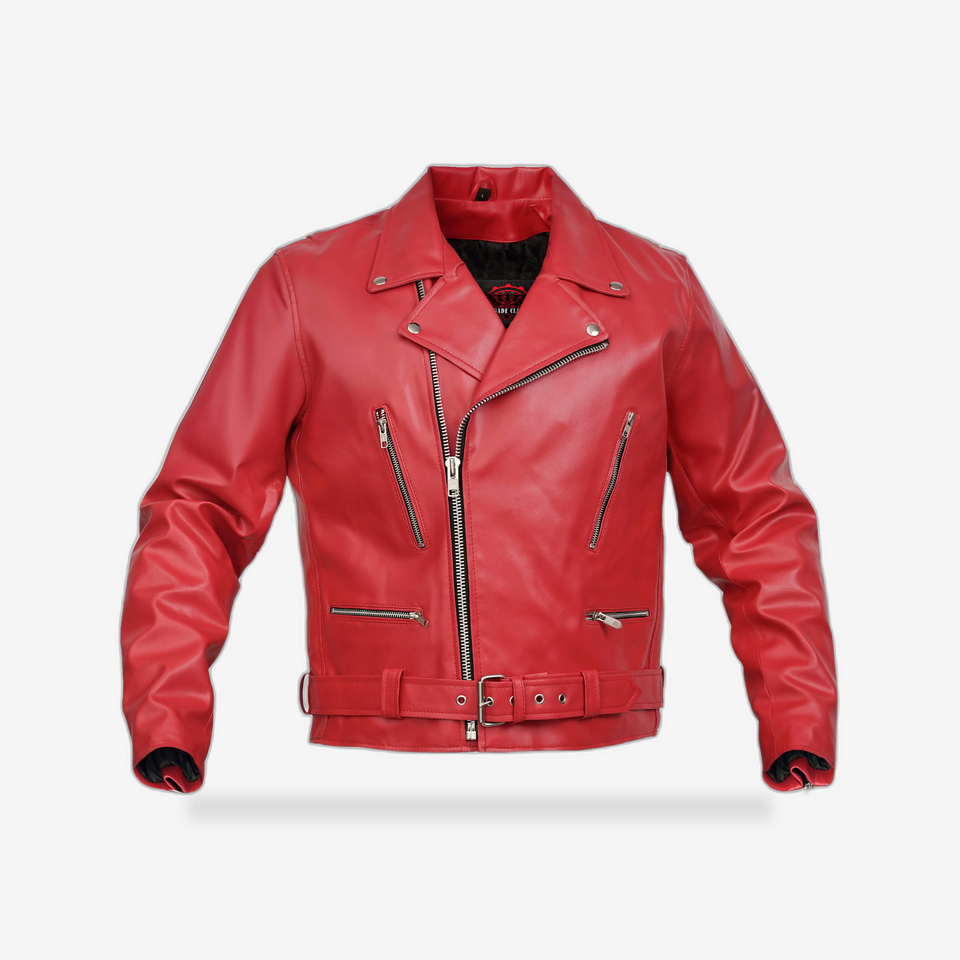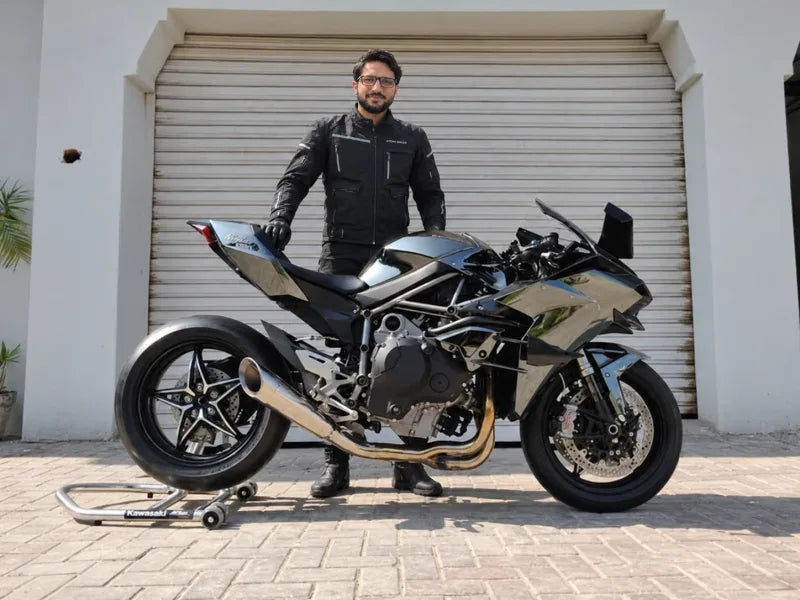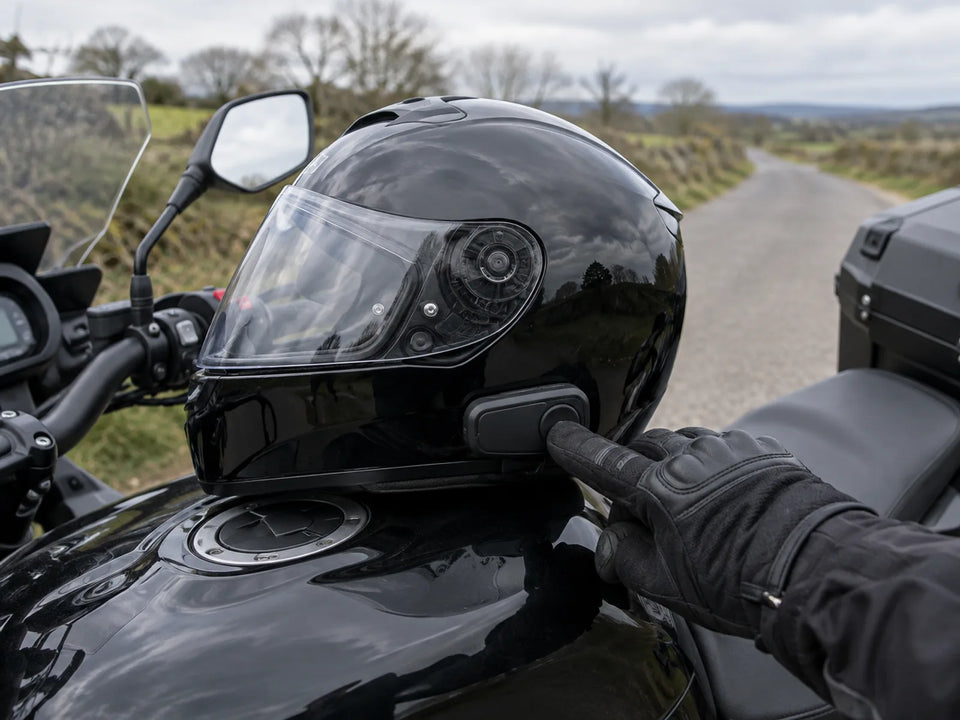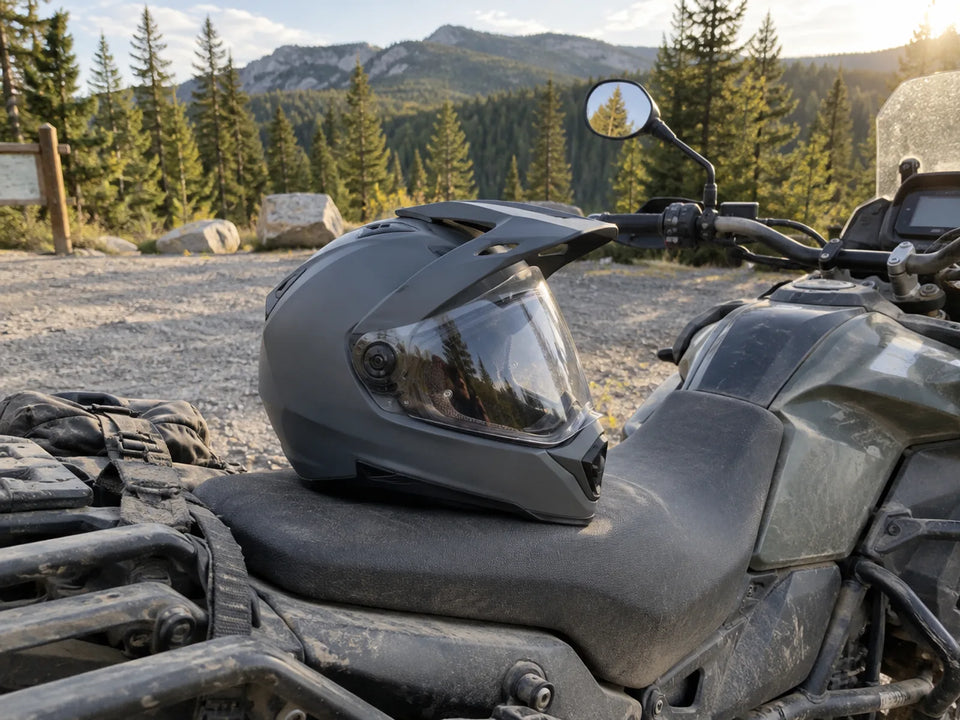
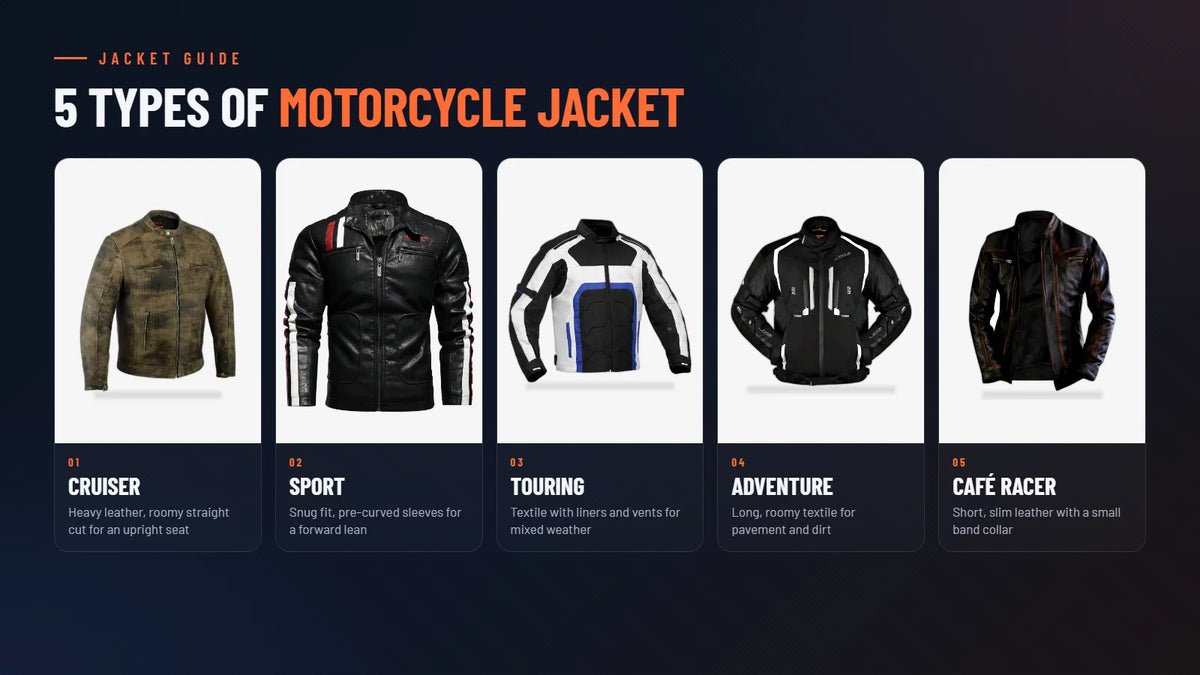
The five main types of motorcycle jackets are cruiser, sport, touring, adventure (ADV) and café racer. Each type is cut for a riding position: cruiser jackets are roomy for an upright seat, sport jackets are pre-curved for a forward lean, touring and adventure jackets carry liners and vents for changing weather, and café racer jackets are short and slim.
Cruiser and café racer jackets are usually cowhide leather, sport jackets come in leather or textile, and touring and adventure jackets are usually nylon textile with a waterproof layer and zip vents. Whatever the type, a riding jacket needs shoulder and elbow armor tested to EN 1621-1, room for a back protector, and ideally an EN 17092 class of AAA, AA or A. Mesh is a build rather than a type, and a fashion leather jacket isn't riding gear.
What are the main types of motorcycle jackets?
The main motorcycle jacket types are cruiser, sport, touring, adventure and café racer, one for each common riding position on US roads. Brands sometimes blend two of them into something like a sport-touring jacket. Each jacket type below is defined by its cut and the seat it suits.
- A cruiser jacket is a heavy leather jacket with a roomy, straight cut for an upright seat.
- A sport jacket is a snug leather or textile jacket with pre-curved sleeves for a forward lean.
- A touring jacket is a textile jacket with a waterproof layer, liners and vents for long days in mixed weather.
- An adventure (ADV) jacket is a long, roomy textile jacket built for mixed pavement and dirt, standing or seated.
- A café racer jacket is a short, slim leather jacket with a small band collar and minimal hardware.
What is a cruiser motorcycle jacket?
A cruiser motorcycle jacket is a heavy leather riding jacket with a straight, roomy cut made for the upright seat of a cruiser, where your arms reach out only a little. The classic version is the asymmetric-zip "Brando" style, which traces back to the Perfecto that Irving Schott introduced in 1928 and that Marlon Brando made famous in The Wild One (1953).
Cruiser jackets block wind well, and that matters on a bike with no fairing doing 70 mph on the interstate. They run hot in an Arizona summer, though, and leather isn't waterproof.
Check two things before buying. First, look for real armor or armor pockets at the shoulders, elbows and back, since many cruiser jackets ship with pockets only. Second, check the hide: riding jackets from major makers list cowhide about 0.05 in (1.2-1.3 mm) thick. BMW Motorrad lists about 1.2 mm for its Westend jacket, and Alpinestars lists 1.3 mm for its GP Plus R v3.
What is a sport motorcycle jacket?
A sport motorcycle jacket is a close-fitting leather or textile jacket with pre-curved sleeves, stretch panels and a short front, cut for the forward lean of a sport bike. Standing up, a sport jacket feels tight across the back and the sleeves look too bent. On the bike, that same jacket sits flat and keeps the armor on your joints.
Armor is where sport jackets lead. The Alpinestars GP Plus R v3, for example, comes with Level 1 shoulder and elbow protectors to EN 1621-1:2012, and its Level 2 back protector to EN 1621-2:2014 is a separate purchase. Many sport jackets also have a zip at the waist that connects to matching riding pants, so the jacket can't ride up in a slide.
Perforated leather or mesh panels help on hot days. Few sport jackets are waterproof.
What is a touring motorcycle jacket?
A touring motorcycle jacket is a textile jacket built for long days in mixed weather, with a waterproof membrane or liner, a removable thermal liner and zip vents. The shell is usually nylon such as 500D or 600D Cordura, with heavier panels at the shoulders and elbows.
The cut is relaxed and longer in the back, so your lower back stays covered in an upright or slightly forward seat. Adjusters at the waist and arms keep the armor in place over a sweater on a cold morning or a T-shirt by afternoon.
That flexibility is the point of a touring jacket. A rider leaving Seattle in steady rain and crossing into eastern Washington heat changes layers, not jackets. Touring jackets also tend to carry more pockets and reflective panels than sport jackets.
What is an adventure (ADV) motorcycle jacket?
An adventure (ADV) motorcycle jacket is a long, roomy textile jacket built for riding that mixes pavement and dirt, often while standing on the pegs. The extra room lets you layer underneath and move freely when you stand up and steer the bike with your legs.
Venting is bigger than on a touring jacket, because slow riding on a hot dirt road moves little air and makes you work hard. Many ADV jackets use large zip-open panels or mesh sections, then add a separate waterproof layer for rain. Heavier textile panels at the shoulders, elbows and forearms take the hits from falls on loose ground.
The line between touring and adventure jackets is blurry, and some brands use both words for the same jacket. A jacket built mainly for highway comfort is a touring jacket. A jacket built for heat, effort and the odd tip-over on a forest road is an adventure jacket.
What is a café racer jacket?
A café racer jacket is a short, slim leather jacket with a small band or snap-tab collar, a straight front zip and very little hardware. The name comes from café racer motorcycles, the stripped-down bikes linked to London's rocker scene of the early 1960s and its runs between spots such as the Ace Cafe.
The short waist and clean front suit a slightly forward seat on a café racer or naked bike. The slim cut also keeps the jacket from flapping at speed.
Protection varies more in this type than in any other, since many café racer jackets are styled for the street rather than the road. Check for shoulder, elbow and back armor or pockets before you treat one as riding gear.
How do motorcycle jacket types compare?
Motorcycle jacket types differ most in cut and riding position, and those two decide the material, armor, venting and weather protection each type offers. The table compares the five types on the six points that separate them on the road.
| Jacket type | Cut | Riding position | Usual material | Armor as sold | Venting | Weather |
|---|---|---|---|---|---|---|
| Cruiser | Straight and roomy through chest and shoulders | Upright | Heavy cowhide or buffalo leather | Often armor pockets only | Zip vents or side laces, if any | Strong wind block, hot in summer, not waterproof |
| Sport | Snug, pre-curved sleeves, stretch panels, short front | Leaning forward, hands low | Cowhide leather or reinforced textile | Shoulder and elbow armor; back protector often extra | Perforated leather or mesh panels on some models | Warm-weather focus, rarely waterproof |
| Touring | Relaxed, longer back, waist and arm adjusters | Upright to slightly forward | Nylon textile with waterproof membrane or liner | Shoulder and elbow armor, back pocket | Zip vents at chest, arms and back | All-season with liners |
| Adventure (ADV) | Longest and roomiest, made for layering | Standing and seated, road and dirt | Heavy textile with reinforced panels | Shoulder and elbow armor, back pocket | Large zip panels or mesh sections | Hot dirt roads to rain, with a separate waterproof layer |
| Café racer | Short and slim, band or snap collar | Slightly forward | Leather | Often minimal | Little or none | Cool-weather jacket, not waterproof |
Read the table row by row against your bike. A rider on a Honda Gold Wing and a rider on a Yamaha R7 need different jackets even when both commute the same 20 miles.
What should every motorcycle jacket have, whatever the type?
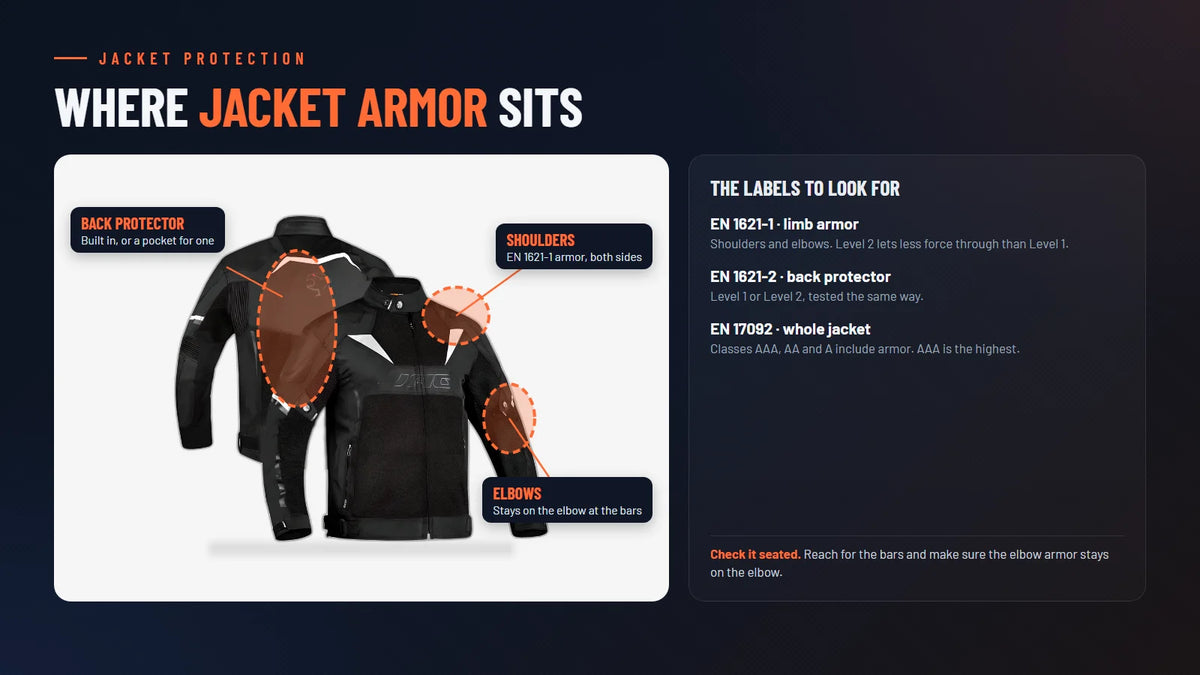
Every motorcycle jacket needs impact armor at the shoulders and elbows, a back protector or a pocket for one, an abrasion-resistant shell, and a fit that keeps that armor on your joints in your riding position. A tested garment class is the best proof of the shell.
Limb armor is tested under EN 1621-1:2012, the European standard for limb impact protectors. In a 50 J impact (about 37 ft-lb), Level 1 armor passes on an average force of no more than about 7,870 lbf (35 kN), and Level 2 no more than about 4,500 lbf (20 kN). Back protectors fall under EN 1621-2:2014, with averages of about 4,050 lbf (18 kN) for Level 1 and about 2,020 lbf (9 kN) for Level 2. Level 2 transmits less force, so it protects more.
The whole jacket is rated under EN 17092:2020, the European standard for motorcycle protective garments. Classes AAA, AA and A combine abrasion resistance with built-in impact protectors, AAA being the highest. Class B matches Class A's abrasion resistance without protectors, and Class C only holds protectors in place. The abrasion test slides samples on a concrete surface, and a pass means no hole of 0.2 in (5 mm) or more in the layer closest to the body. Work on revising several EN 17092 parts began in 2026, and the 2020 edition is still the current one as of October 2026.
The US has no federal safety standard for riding jackets (NHTSA's FMVSS 218 covers helmets), so these labels are voluntary here. A "CE armor" tag covers the pads, not the jacket, as motorcycle gear certifications explains.
Fit comes last and matters as much. Sit on your bike, reach for the bars, and check that the elbow armor stays on the elbow and the sleeves still cover your wrists.
Is a mesh jacket a separate type?
No, a mesh jacket is a ventilation build rather than a separate type, and sport, touring and adventure jackets all come in mesh versions. Mesh panels move the most air for an Arizona or Texas summer, but open mesh holds up worse in a slide than solid textile or leather. Pick a mesh jacket with solid reinforcement at the shoulders and elbows, and see leather vs textile motorcycle jackets for the climate trade-offs.
Is a fashion leather jacket safe for riding?
No, a fashion leather jacket isn't riding gear, because it usually has no armor and carries no test result for abrasion. It looks like a cruiser or café racer jacket but isn't built for a slide. Check for armor, a stated hide thickness and an EN 17092 class before you ride in any leather jacket.
Do women's motorcycle jackets differ from men's?
Yes, women's motorcycle jackets use a different cut, shaped through the waist and hips, with protectors shaped to sit on a woman's shoulders and elbows. Size from the brand's chart and check the armor position in the riding seat. AtomBiker, a US online store for motorcycle helmets, jackets, gloves, boots and pants, carries women's cuts in its motorcycle jackets collection.
Frequently asked questions
What is the safest type of motorcycle jacket?
The safest motorcycle jacket is one certified to EN 17092 class AAA or AA, with Level 2 shoulder, elbow and back armor, in a cut that fits your riding position. That can be a sport, touring or adventure jacket, because the class and armor level matter more than the style.
Are motorcycle jackets waterproof?
No, most leather and mesh motorcycle jackets aren't waterproof. Touring and adventure textile jackets usually are, through a waterproof membrane in the shell or a zip-in liner. Check the product page for a waterproof claim before a rainy ride.
Do you need a back protector in a motorcycle jacket?
Yes, add a back protector, because many riding jackets ship with shoulder and elbow armor only and a pocket for back armor. Alpinestars, for example, sells the Level 2 back protector for its GP Plus R v3 leather jacket separately.
What size motorcycle jacket do I need?
Your motorcycle jacket size comes from your chest measurement, taken around the fullest part of your chest with your arms relaxed and over your heaviest base layer. Size up if you'll add a back protector. The full method is in how to take body measurements for motorcycle gear, and AtomBiker's 30-day returns give you time to check the fit indoors first.
Which motorcycle jacket should a beginner buy?
A beginner should buy the jacket type that matches their bike's riding position, with shoulder and elbow armor included and a back protector added. A touring or sport textile jacket with an EN 17092 class suits most first bikes. The buying steps are in How to Choose a Motorcycle Jacket.
Do leather motorcycle jackets need conditioning?
Yes, a leather motorcycle jacket needs regular cleaning and conditioning to stay supple and resist cracking. Clean off road grime and bugs first, then condition the leather, and let a wet jacket dry away from direct heat. The full routine is in How to Care for Leather Motorcycle Gear.
Shop this guide
Start with the right questions.
Compare construction, fit and features. Open each product for its available sizes, current price and stated certifications.