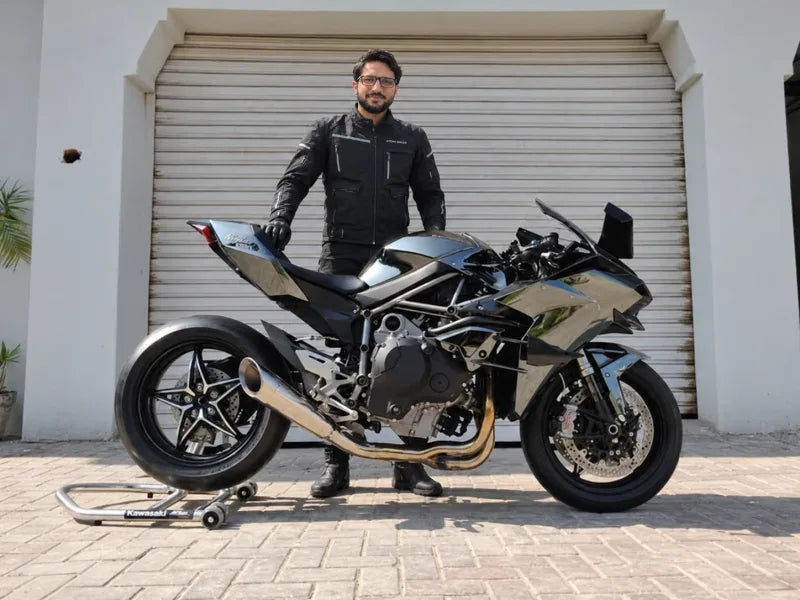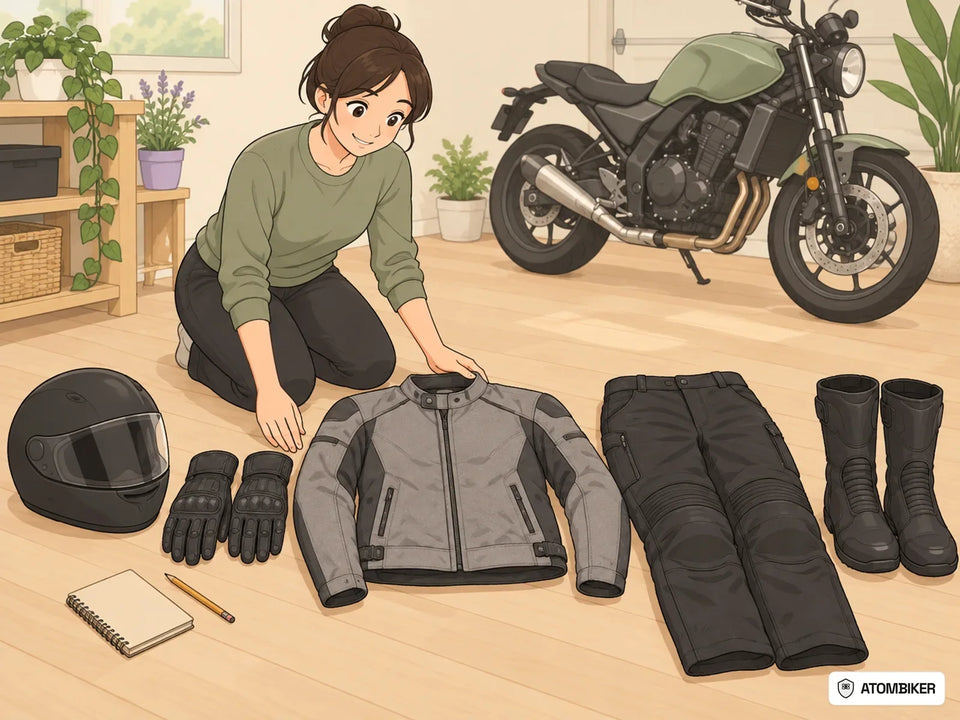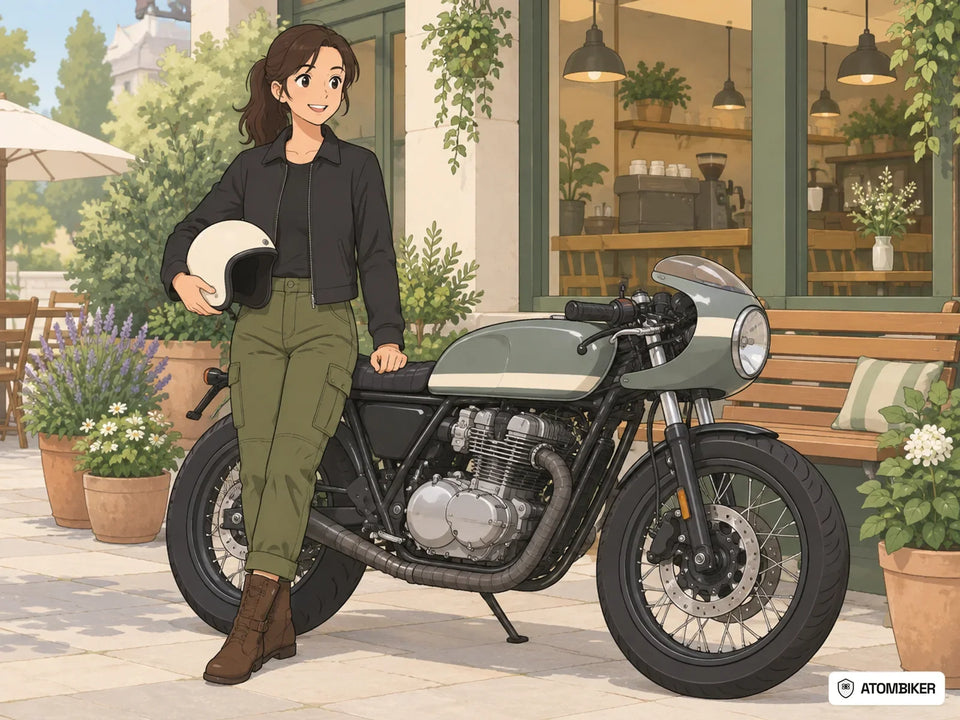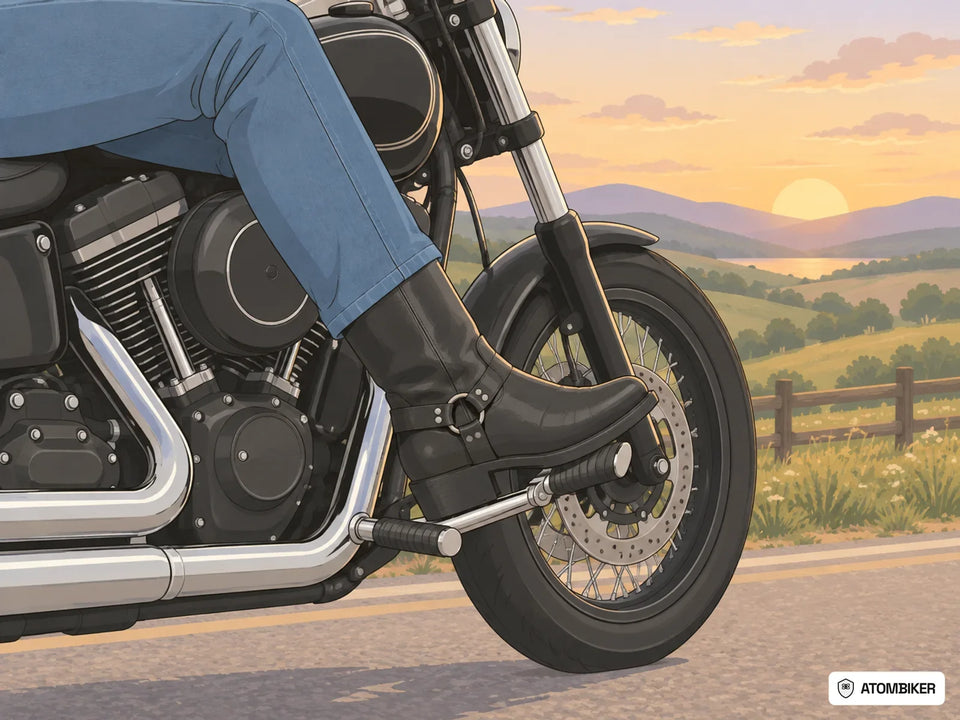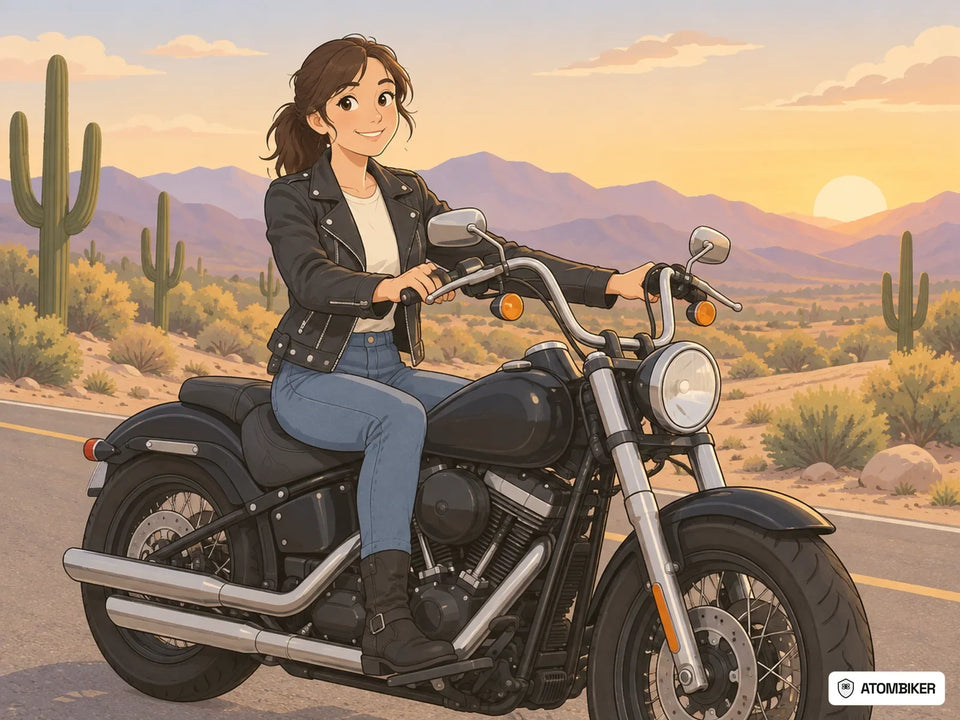

A cruiser motorcycle jacket is a riding jacket cut for an upright seat with your feet forward, where your chest and throat take the wind on an unfaired bike. The right one is longer in back than in front, seals at the collar and cuffs, and hides real armor under a classic leather or textile shell.
Vanson Leathers cuts its Sport Cruiser with sleeves set closer to 5 o'clock than its sportbike jacket's 4 o'clock, and drops the rear hem about 4.5 in (11 cm) below the front. Snap-down collars, wind flaps and zippered cuffs keep air out at highway speed, while Harley-Davidson and Vanson hide CE-rated armor inside classic-looking leather. Brando, café-style, long-back, textile and vest-over styles differ most in collar, back length and the armor they ship with. A leather vest alone leaves your arms bare, and vents with a mesh liner stretch a cruiser jacket into summer.
What makes a jacket right for cruiser riding?
A jacket is right for cruiser riding when its cut matches an upright seat, feet on forward controls and hands at or below chest height, because that posture puts your chest, throat and wrists straight into the wind. A cruiser riding jacket is shaped for sitting tall. A sportbike jacket is shaped for leaning forward.
Vanson Leathers, which makes both kinds, describes the difference by sleeve angle. The sleeves on its Cobra sportbike jacket hang naturally at about 4 o'clock, cut for a rider leaning forward. Its Sport Cruiser version is cut "for a more upright riding position," with sleeves closer to 5 o'clock, a looser chest and armholes, and a slightly longer body.
Wind is the other half of the job. Most cruisers have no fairing, so at 70 mph on the interstate the full windblast lands on the front of the jacket. Any gap at the neck, the front zip or the wrists turns into a cold draft, and any loose panel flaps. A batwing fairing or a tall windshield moves most of that wind off your chest, and behind one, letting air in matters more than keeping it out.
How long should a cruiser jacket be?
A cruiser jacket should reach your belt line when you stand and still cover your lower back when you sit, which on a well-cut cruiser jacket means a back hem that drops lower than the front. Fox Creek Leather sets the same test in its 2024 fit guide: the jacket should rest on your thighs when you're seated, and its kidney panel should cover your lower back.
With your feet on forward controls, your hips roll back and the hem rides up. A dipped rear hem answers that. Vanson's Sport Cruiser is cut to cover the top of the belt line with a dipped rear waistband, and the measurements listed with its size 42 give a back length of 25.5 in (65 cm) against a front length of 21 in (53 cm). Fox Creek goes further on its Classic Motorcycle Jacket II, which is extra long in the back with a padded kidney panel.
Bar height changes the answer as much as the jacket does. High or pull-back bars raise your hands, lift the whole jacket and draw the sleeves back from your wrists. Sit on your own bike with your hands on the grips before you judge the length, and read both back and front length on the size chart when a maker lists them.
Which collar and closure styles work on a cruiser?
A collar that snaps flat or closes snug at the throat, a front zip backed by a wind flap and zippered cuffs work best on a cruiser, because an upright rider's neck and chest meet the wind head-on. The neck and front fastening decide how much cold air reaches you at speed.
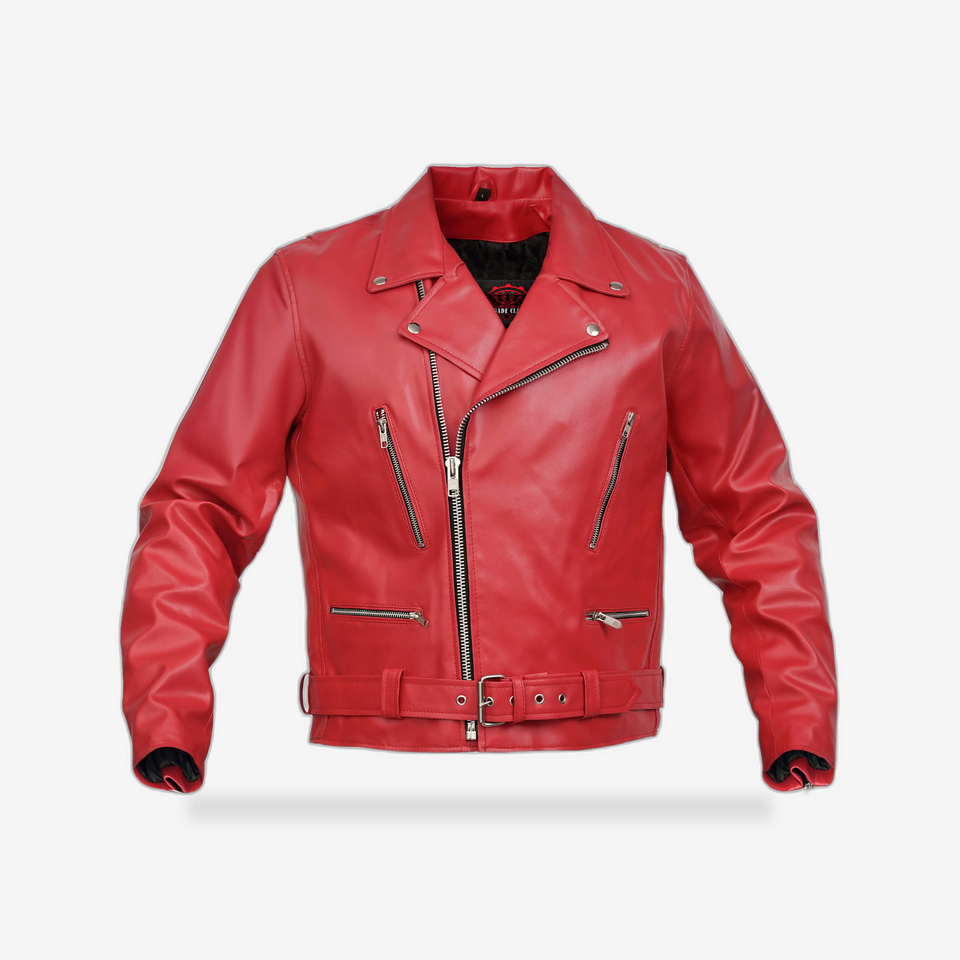
The Brando style closes with an off-center zip, snap-down lapels and a belted waist. Snap those lapels down before you ride, or they flap against your chin, and cinch the belt so the wind can't lift the hem.
A center zip with a wind flap is the other common front. Fox Creek's Classic Motorcycle Jacket II puts an internal wind flap behind its front zipper and adds a hide-away fleece neck warmer, two details aimed at cold air on an upright bike.
A band or mandarin collar, the café-style choice, has nothing to flap and sits close to the neck. Vanson's Sport Cruiser uses a leather-lined snap-back mandarin collar with wind-tight zip-close sleeves.
Cuffs finish the seal. On an unfaired bike, a loose wrist lets air run up the sleeve, so look for zippered cuffs that close neatly with your gloves on.
How do classic cruiser jackets add protection?
Classic cruiser jackets add protection by hiding CE-rated armor in pockets under the leather at the shoulders, elbows and back, and by adding double leather, padding and removable liners while the outside keeps its vintage lines. CE-rated armor here means pads tested to EN 1621-1, the European standard for limb impact protectors, or EN 1621-2 for back protectors.
Three makers show how the protection hides. Harley-Davidson's Brawler leather jacket lists CE-approved armor included at the shoulders and elbows, an armor pocket at the back and a removable windproof liner. Vanson's Sport Cruiser comes with CE Level 2 shoulder and elbow armor, a second layer of leather over the shoulders and elbows, and room for an optional back pad. Fox Creek's Grayson ships with armor pockets at the elbows, shoulders and back, and Fox Creek notes that aftermarket armor may need trimming to fit its elbow pockets.
A heritage cut sits at the other end. Schott's 618 Perfecto product page lists no armor at all, so a jacket like it stays a style piece until protection goes in.
Zip-out liners handle the cruiser rider's cold mornings. Fox Creek fits a removable insulated liner in its Classic Motorcycle Jacket II, so one leather jacket covers a cold start and a warm afternoon. A pocket doesn't guarantee armor, though, and the steps in our jacket armor pocket guide tell CE armor from a foam pad.
How do cruiser jacket styles compare?
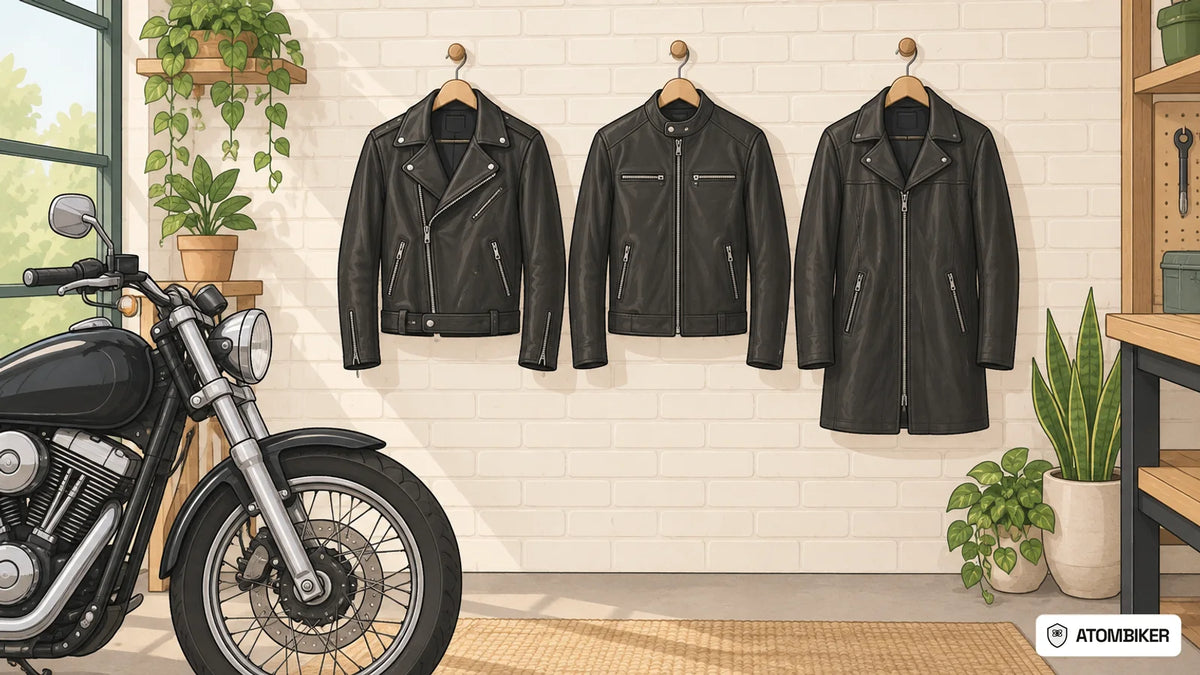
Cruiser jacket styles differ most in collar, back length and the armor they ship with, and those three decide how each jacket handles wind and a crash on an upright seat. The table compares five styles cruiser riders choose between.
| Cruiser jacket style | Collar and closure | Back length | Wind and weather | Armor as sold | Suits |
|---|---|---|---|---|---|
| Brando (asymmetric) leather | Snap-down lapels, off-center zip, belted waist | Waist length | Blocks wind with lapels snapped and zip closed; not waterproof | None on heritage cuts such as the Schott 618; pockets or CE armor on riding versions | Riders who want the classic look and will add armor |
| Café-style leather | Band or snap-tab collar, center zip | Short | Seals close at the neck; not waterproof | Often minimal | Short rides on smaller cruisers and bobbers |
| Long-back leather cruiser | Snap-down or mandarin collar, center zip with wind flap | Dipped rear hem or kidney panel | Wind flap, neck warmer and zip cuffs on models such as Fox Creek's | Armor pockets or included CE armor, as on Vanson's Sport Cruiser | Highway miles on an unfaired bike |
| Textile or mixed-material cruiser | Varies by model | Varies by model | Waterproof membrane on some, such as the Helstons Cruiser | CE Level 1 shoulder, elbow and back armor on the Helstons Cruiser | Rain and cool-weather riding |
| Leather vest over a jacket | Vest worn over the jacket's own closure | Same as the jacket | Same as the jacket underneath | Protection comes from the jacket, not the vest | Patches and pockets over an armored jacket |
Read the table against your bike and your season, not against a photo. A long-back leather jacket and a textile cruiser both suit a Road King on a cold spring tour, while a café-style jacket suits a short run on a bobber.
What should you check before buying a cruiser jacket?
Check five things before buying a cruiser jacket, ideally while sitting on your own bike: back length, sleeve reach, collar seal, armor and label. The cruiser jacket checks run in order of importance.
- Cruiser jacket back length passes when the hem covers your lower back with your feet on the forward controls.
- Cruiser jacket sleeves pass when they still reach your wrists with your hands on the grips at your own bar height.
- A cruiser jacket collar passes when it closes flat against your throat and you still turn your head freely to check traffic.
- Cruiser jacket armor passes when the shoulder, elbow and back pockets hold CE-rated pads that sit on your joints while you're seated.
- A cruiser jacket label passes when it states an EN 17092 class, the European standard for motorcycle protective garments, or the product page names the armor standard.
Snugness and the general seated fit checks apply to every jacket type. The hide, its thickness and the seams decide how the leather survives a slide, and our guide to riding leather vs fashion leather covers that crash-worthiness test.
Is a leather vest enough on a cruiser?
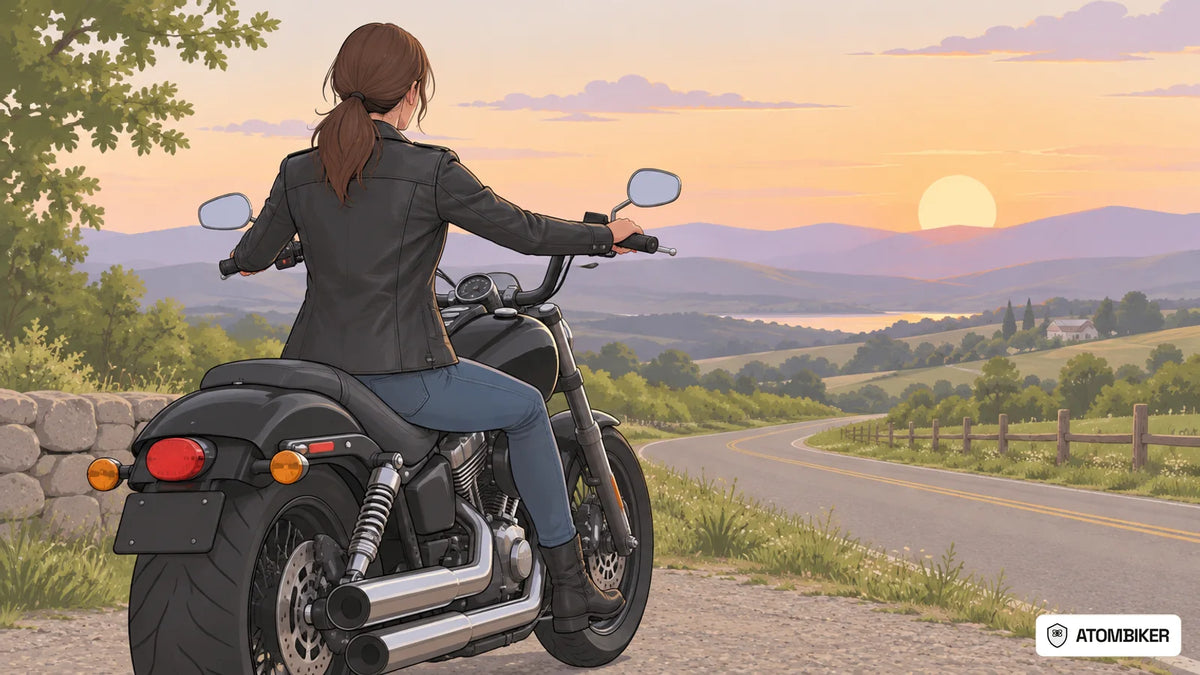
No, a leather vest isn't enough on a cruiser, because it leaves your arms, elbows and shoulders bare and carries no impact armor. Worn over an armored jacket, a vest keeps the patches and pockets while the jacket does the protecting.
Can a cruiser jacket work in summer?
Yes, a cruiser jacket can work in summer when it has zip vents and a mesh liner that lets air through once the vents open. Fox Creek's Classic Motorcycle Jacket II pairs front, rear and sleeve vents with a mesh shell liner, and Vanson's Sport Cruiser adds rear exhaust vents and vented sleeves. For Phoenix or Houston heat, mesh motorcycle jackets move far more air than vented leather.
Where can you see a leather cruiser jacket?
AtomBiker, a US online store for motorcycle helmets, jackets, gloves, boots and pants, sells the Skull Sprint leather cruiser jacket, a heavyweight leather jacket in classic cruiser styling with a centered front zip, two vertical zippered side pockets and a zip-out insulated liner. Its product page doesn't list armor or armor pockets, so run the armor check above before you ride in it.
Frequently asked questions
Why do biker jackets have an asymmetrical zipper?
An asymmetrical zipper runs off-center on a biker jacket, away from the middle of the chest, and Schott NYC says the one on its 618 Perfecto is there for added warmth and protection. With the lapels snapped down and the zip closed, the front lies flat against the wind.
Why do cruiser jackets have a belt?
A belt on a cruiser jacket closes the hem around your waist so wind doesn't get under the leather at speed. Schott NYC lists the belt among the features on its 618 Perfecto that help resist the elements. Jackets without a belt use side laces or snap tabs for the same job, as Fox Creek does on its Classic Motorcycle Jacket II and Grayson.
How tight should a cruiser jacket be?
A cruiser jacket should be snug enough that it doesn't flap at highway speed and the armor stays on your shoulders and elbows. Measure your chest over your heaviest base layer, and size up if you'll add a back protector. The full set of seated fit checks is in our guide on how tight a motorcycle jacket should be.
Do you still need a riding jacket behind a windshield?
Yes, you still need a riding jacket behind a windshield, because a screen or fairing moves wind off your chest but does nothing in a slide. Behind a tall screen, zip vents earn their place more than a wind-sealing collar does.
What is the difference between a cruiser jacket and a café racer jacket?
A cruiser jacket is roomier and longer for an upright seat, while a café racer jacket is short and slim with a band collar for a slight forward lean. Both are usually leather, and the five main styles are compared in our guide to motorcycle jacket types.
What boots go with a cruiser jacket?
Over-the-ankle leather riding boots go with a cruiser jacket, in both look and protection. Heel height, shift pads and soles for forward controls are covered in our guide to cruiser motorcycle boots.
Shop this guide
Start with the right questions.
Compare construction, fit and features. Open each product for its available sizes, current price and stated certifications.