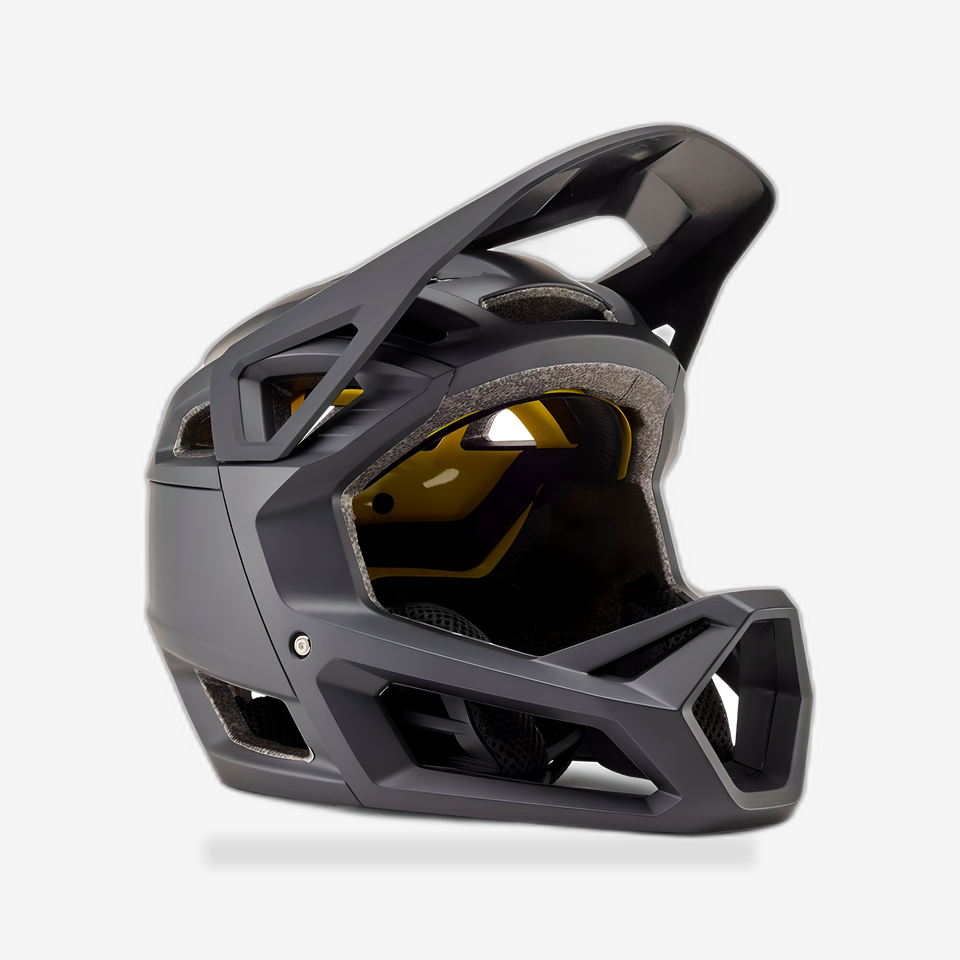

The best motorcycle helmet for glasses has eyeglass channels or pockets that give the temple arms room, an eye port tall and wide enough to clear the frames, and cheek pads that don't pin the arms against your head. Modular and open-face helmets go on easiest with glasses, and a full-face helmet with channels works well too.
Eyeglass channels sit in the comfort padding, never in the EPS foam, and Scorpion's KwikFit cheek pads and the liner of Bell's SRT Modular are two factory examples. A try-on with the exact glasses you ride in goes helmet first and glasses second on a full-face, then checks temple pressure after 10 minutes and again in your riding position. Thin temple arms on a shorter frame fit best. Sizing up to make room for glasses trades one problem for a looser helmet.
What makes a helmet good for glasses wearers?
A helmet is good for glasses wearers when its liner gives the temple arms a path, its eye port clears the frames, and its fit stays snug without pressing the arms into your temples.
Five helmet features decide how well glasses fit, and the first one matters most.
- Eyeglass channels or pockets in the helmet's liner or cheek pads give the temple arms a path between the padding and your head.
- A tall, wide eye port keeps the top and bottom of your frames clear of the helmet's brow pad and chin bar, and keeps the frame edges out of your side view.
- Cheek pads with a soft or shaped upper edge let the temple arms slide into the helmet without bending.
- A flip-up chin bar opens the front of a modular helmet, so glasses go on and off with the helmet in place.
- Speaker pockets that sit clear of the temple arms keep a helmet intercom from pressing the arms against your head.
A helmet without these features still has to fit snugly, so the fix for tight glasses is a different model or a different frame, not a bigger shell.
What are eyeglass channels?
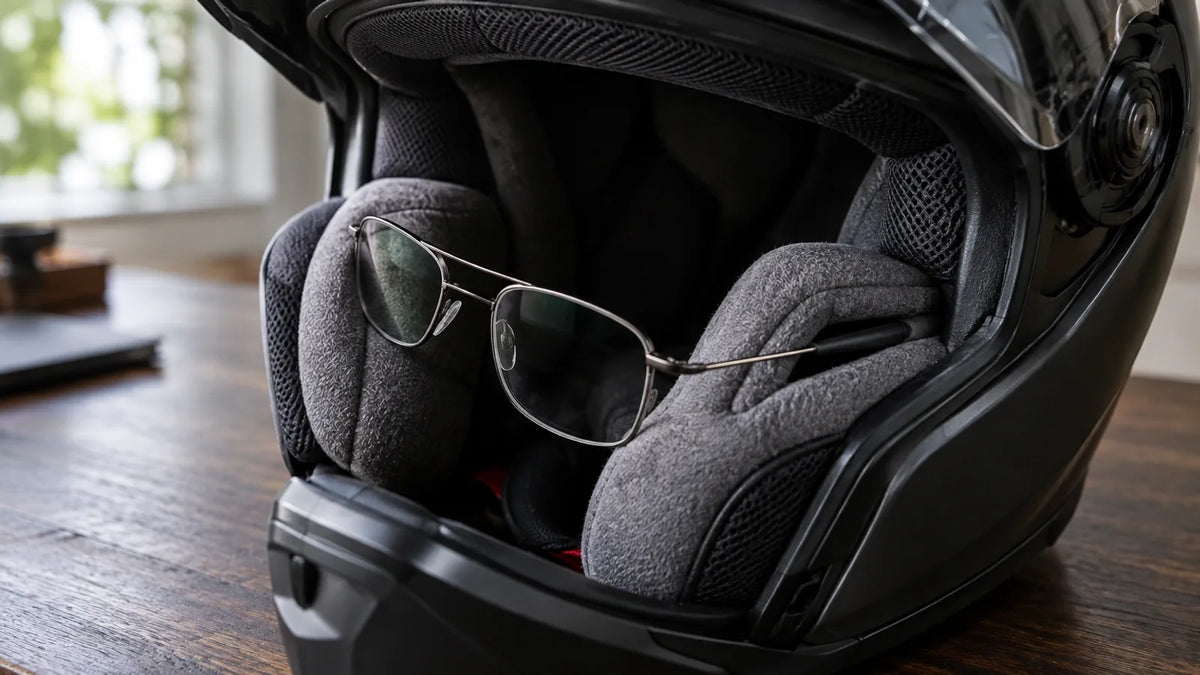
Eyeglass channels are grooves or pockets in a helmet's comfort liner or cheek pads, at temple height, that let the arms of your glasses slide in between the padding and your head without pressing on your temples. Makers also call them eyewear pockets or glasses grooves.
Two factory examples show where they sit. Scorpion says its KwikFit cheek pads have a pre-cut channel that lets you put glasses on and take them off while wearing the helmet. Bell describes "eyewear arm pockets" woven into the interior liner of its SRT Modular.
Channels live in the soft comfort padding, not in the EPS (expanded polystyrene) foam liner that absorbs an impact. Scorpion builds the channel into the cheek pad and Bell builds it into the liner, so in both designs the shell and its impact foam stay whole.
Which helmet types work best with glasses?
Modular helmets work best with glasses, open-face helmets come next, and full-face helmets work well once you follow one rule: helmet first, glasses second.
Each helmet type handles glasses in its own way.
- A modular helmet goes on with glasses in place, because the raised chin bar opens the whole front.
- An open-face 3/4 helmet leaves room around the face, but your glasses take wind, dust and bugs unless you add a face shield or goggles made to fit over glasses.
- A full-face helmet protects the most, and the glasses go in through the eye port after the helmet is on and fastened.
Pick the helmet type for your riding first and make the glasses fit second. A modular's trade-offs beyond glasses, such as the chin bar latch, are covered in our guide to modular flip-up helmet pros and cons.
How do you try on a helmet with your glasses?
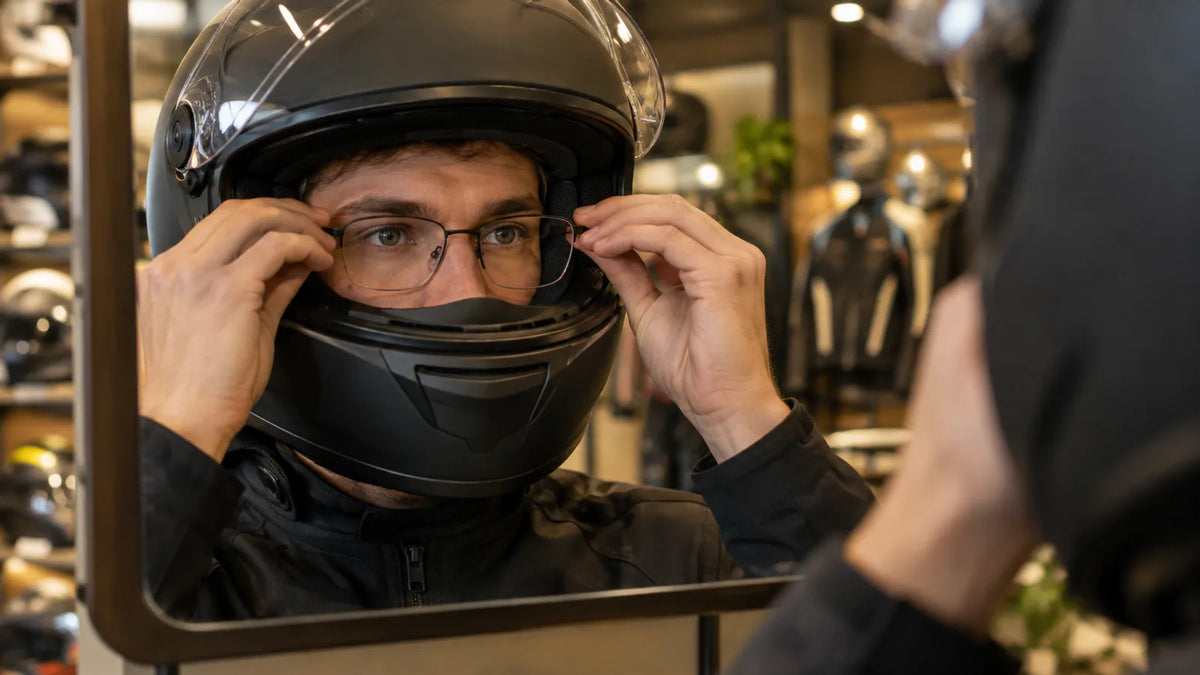
Try on a helmet with the exact glasses you ride in: fasten the helmet first, slide the glasses in through the eye port, and wear both for at least 10 minutes before you judge the pressure on your temples.
Run this try-on routine in order, at home or in a store, with your riding glasses.
- Put the helmet on without your glasses (or with a modular's chin bar raised), then fasten the chin strap.
- Hold the glasses level and slide the temple arms in through the eye port, feeding each arm into the eyeglass channel or along the top of the cheek pad.
- Stop and try another helmet when the temple arms have to bend hard to get in.
- Check in a mirror that the glasses sit where they sit without a helmet, not pushed up, down or sideways on your nose.
- Wear the helmet and glasses for 10 minutes, then feel for pressure at your temples and behind your ears.
- Lean into your riding position and turn your head both ways, checking that the brow pad doesn't press the top of the frame and the frame edges don't hide your mirrors.
- Close the face shield and lower the internal sun visor, if the helmet has one, and check that both clear your lenses and the bridge of your nose.
- Take the glasses off with the helmet still on, the way you would at a fuel stop.
The glasses checks sit on top of the standard fit tests, not in place of them. Run the pressure-point and roll-off tests in our helmet fit test guide with your glasses on as well.
Which glasses frames work best under a helmet?
Glasses frames with thin temple arms, a flexible build and a lens height that fits inside the eye port work best under a helmet, because they slide past the padding instead of being pushed against your head.
Each frame feature below changes how glasses sit inside a helmet.
| Frame feature | Fits under a helmet | Causes trouble | Why it matters |
|---|---|---|---|
| Temple arm thickness | Thin arms | Thick, wide arms | Thick arms press into your temples under the padding |
| Temple arm shape | Straight or gently curved arms | Arms that wrap tightly around the ear | Straight arms slide along a channel; tight curves snag on the cheek pads |
| Frame material | Thin metal or flexible frames | Rigid, chunky plastic frames | A flexible frame gives a little where the padding presses |
| Hinges | Spring-loaded hinges | Fixed hinges | Spring hinges flex as the arms feed in |
| Frame height | Shorter lenses | Tall lenses | Tall frames hit the brow pad or chin bar and get pushed out of place |
| Frame width | Fronts narrower than the eye port | Wide or wraparound fronts | Wide fronts touch the eye port edges and block side vision |
Sources split on one detail. Cycle Gear's Common Tread prefers straight arms that don't hook over the ears, while Begin Motorcycling recommends thin arms that hook behind them, so test both styles with your helmet.
What else helps riders who wear glasses?
Riders who wear glasses also get help from a dedicated riding pair, a spare pair in a hard case and an optician who has seen the helmet.
Take the helmet to the optician when you order riding glasses. Staff can suggest thin, flexible frames or spring hinges that suit it, and they can add the lens treatments you ask for.
Pack a spare pair in a hard case, a lens cloth and a photo of your prescription on your phone. With a spare pair along, a cracked lens far from home costs you a stop, not the ride.
One small habit saves a lot of frames: don't set your glasses on the bike seat while you put the helmet on.
Can you wear contact lenses instead?
Yes, contact lenses work under a motorcycle helmet and remove frame pressure entirely, but the airflow inside a helmet can dry them out. Cycle Gear's Common Tread notes that riders may need eye drops and more stops, and a lens lost at the roadside is hard to replace, so carry spares. Contacts are a decision for you and your eye doctor, and they still need a closed face shield or goggles in front of them.
Do glasses fog more inside a helmet?
Yes, glasses fog more inside a helmet, because the face shield traps warm breath around the lenses instead of letting it blow away. A Pinlock insert keeps the shield clear but does nothing for the lenses, so an anti-fog treatment on your riding glasses helps. The breath deflector and vent fixes are in our guide to stopping helmet visor fog.
Where can you see a modular helmet for glasses wearers?
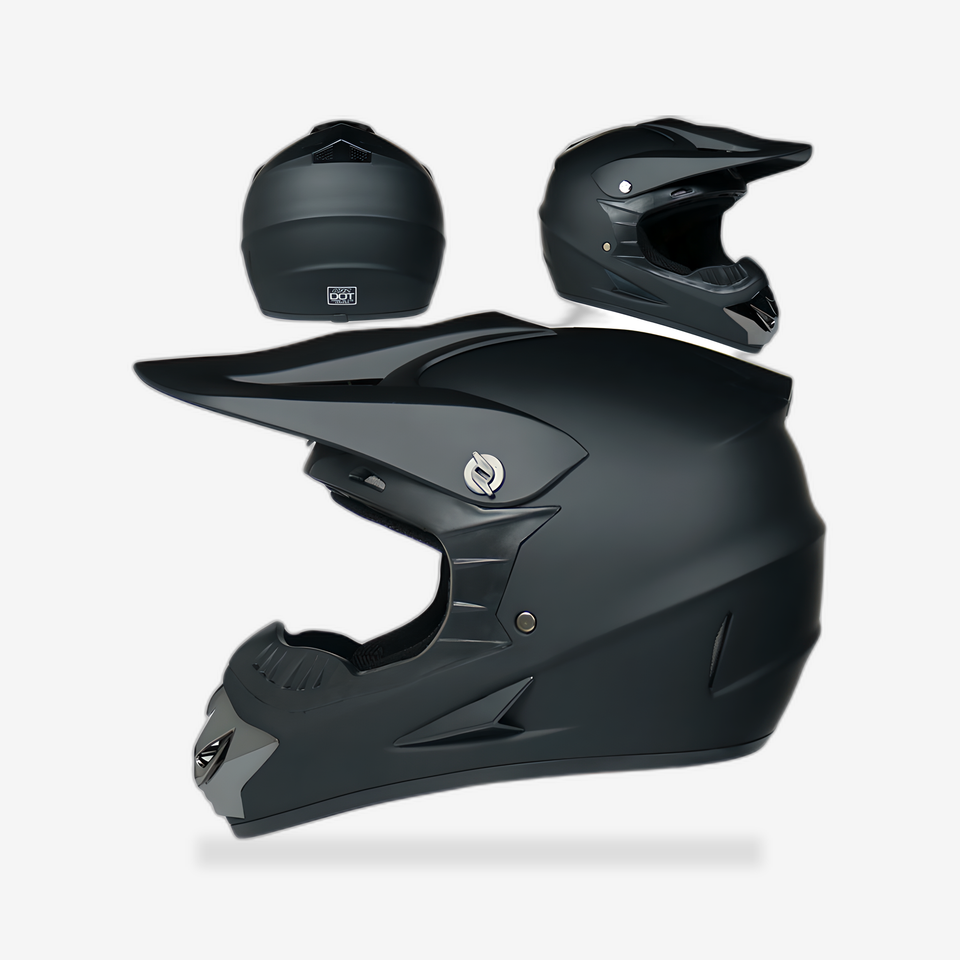
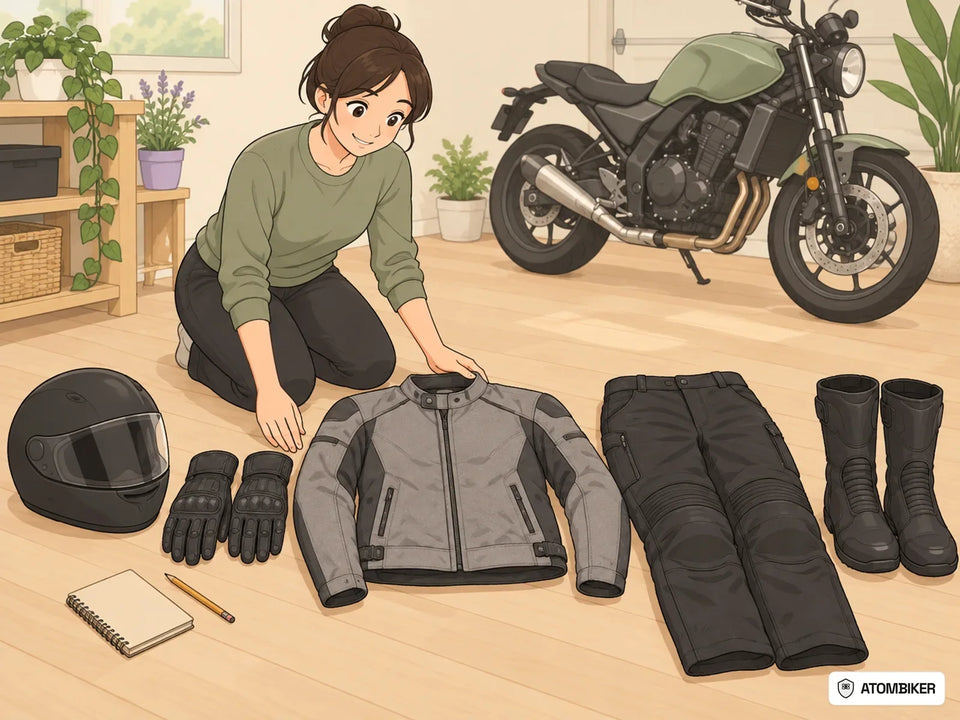
AtomBiker, a US online store for motorcycle helmets, jackets, gloves, boots and pants, sells a Modular Full Face Motorcycle Helmet with a flip-up chin bar, an ABS shell and a removable, washable liner and cheek pads, and its product page states it meets FMVSS 218 and DOT. The page doesn't mention eyeglass channels, so run the eight-step glasses try-on at home first. AtomBiker's 30-day returns give you time to do that, so check the return conditions before you ride in it.
Frequently asked questions
Should you buy a bigger helmet to fit your glasses?
No, buy the size your head measures and solve the glasses problem with channels or thinner frames. A helmet should feel snug with no pressure points and shouldn't rotate, and it pays to err on the snug side because the liner compresses. A bigger helmet moves on your head and fails the roll-off test sooner.
Can you cut channels in a helmet liner for glasses?
No, never cut or carve a helmet's EPS foam liner, because that foam absorbs the energy of an impact. Look for cheek pads with built-in channels for your model, or choose a helmet with eyewear pockets from the factory.
Can you wear sunglasses under a motorcycle helmet?
Yes, sunglasses work under a helmet when they have the same thin temple arms as good riding glasses. Nolan's N87 owner's manual adds a caution: sunglasses make sudden light changes, such as a tunnel entrance, harder to handle, because you can't clear the tint quickly.
Do eyeglass channels fit every pair of glasses?
No, eyeglass channels suit thin, fairly straight temple arms, and thick or sharply curved arms still press against your head. Treat a "glasses-friendly" label as a starting point and test the helmet with the exact frames you ride in.
Can you wear glasses with an open-face helmet?
Yes, an open-face helmet is one of the easiest helmets to wear with glasses, because nothing covers the front of your face. Your eyes and lenses take the wind and grit, though, so add a face shield or goggles made to fit over glasses for anything beyond town speeds.
Why do your glasses get pushed down your nose in a helmet?
Glasses get pushed down when the brow pad or the top of the eye port presses on the frame, or when tight cheek pads push the temple arms down. Try a shorter frame first. A helmet that presses hard on your forehead may be the wrong interior shape for your head, which the head-shape step in our guide to choosing a motorcycle helmet by riding style and head shape helps you check.
Shop this guide
Start with the right questions.
Compare construction, fit and features. Open each product for its available sizes, current price and stated certifications.